
Prime Minister Benjamin Netanyahu, today:
“Citizens of Israel, here is a brief update on my most recent conversation with US President Joe Biden.https://t.co/j7dioaFmh4
— Prime Minister of Israel (@IsraeliPM) March 20, 2024
Author: Mike Nova
FirstBank Puerto Rico Selects nCino to Transform Commercial Lending Services Russellville Courier
The post FirstBank Puerto Rico Selects nCino to Transform Commercial Lending Services – Russellville Courier first appeared on The Puerto Rico Times – The News And Times.
As Christians Suffer, Biden Rewards Azerbaijan’s Aggression with Climate Leadership Role National Catholic Register
The post As Christians Suffer, Biden Rewards Azerbaijan’s Aggression with Climate Leadership Role – National Catholic Register first appeared on The South Caucasus News – The News And Times.
Kaloukian to Play for Armenia U-21 Syracuse University Athletics
The post Kaloukian to Play for Armenia U-21 – Syracuse University Athletics first appeared on The South Caucasus News – The News And Times.
A modern democratic state is the result of advances in our global civilization. Since the 18th century, led by the western world, democracies have evolved in many geographies. As monarchies either ended or became formalities, democracy has become a manifestation of our love of personal freedom. When the free world was threatened in the 1930s by fascism, modern democracies rallied with great sacrifice to save what we cherish. Armenia, with its long and resilient history, is a natural ambassador of this form of governance. On a per capita basis, no nation has sacrificed more and defended itself against greater odds for the values that have been at the center of the Armenian people for centuries. In a nation state, sovereignty is cherished, as it reflects the right of a people to self determine their fate. The Armenians have been a relatively peaceful nation who have valued cordial relations with neighbors and have defended only what has been theirs for centuries. They have never been considered an aggressor nation in the last thousand years.
Despite Armenia’s contributions to world civilization as a cultured society, it has had the misfortune of neighbors, particularly from the west and east, that seek Armenia’s complete demise. The core of the problem can be defined in relatively simple terms. Although latecomers to the neighborhood, the leaders of the Turkic people, represented by the Ottoman Empire, Republic of Turkey and now Azerbaijan, have sought to destroy the existence of the indigenous Armenians in order to further their racist pan-Turkic alliances. The players and political dynamics have changed, but the same fundamental intent has existed for over 150 years. Whether it was Cilicia, the western highlands, Nakhichevan or Artsakh, Armenians have been forced into a smaller footprint by massacres, deportation and genocide. The current attacks on the Republic of Armenia must be viewed in this context of the greater goal of the Turkish alliance, which has displayed a lack of satisfaction with the considerable concessions made by Armenia. Its appetite for Armenian lives, and concessions seems insatiable until the nation is vanquished. If it was up to the Turks, the Armenians would be comparable to the Kurds, Assyrians and Palestinians as a stateless people.
Armenia is engaged in two diplomatic campaigns concurrently with Azerbaijan and Turkey. The quest for peace has been plagued by a disingenuous effort by Azerbaijan, despite Armenia operating in good faith. Azerbaijan has refused to recognize the territorial integrity of Armenia, in contradiction to the agreement on borders in 1991 at Alma-Ata. Armenia even conceded Artsakh in a very painful and internally divisive decision. Unfortunately, Azerbaijan has not become a more reliable and reasonable negotiating partner as a result. It has responded to Armenian gestures with demands for a sovereign road that would split Armenia and relegate lower Syunik to an island. Azerbaijan has also made absurd demands regarding Armenian territory and new border delineations. It has further demonstrated its disrespect for international law by illegally imprisoning Armenians as hostages, including eight government officials of the Artsakh Republic. One can only conclude that these “new” demands are part of a larger scheme to delay negotiations and wait for an opportune time for a renewed military escalation based on the geo-political environment.
 NATO Secretary General Jens Stoltenberg and Armenian Prime Minister Nikol Pashinyan
If discussions with the Republic of Turkey on “normalization” went any slower, they would be in reverse. The mutual goal of opening the border has been limited to rhetoric with no real progress. Turkey, with its NATO power and political leverage, is an authority on duplicity. While Turkey speaks of hopes for normalization with Armenia to other audiences such as the United States, EU and even Russia, we know that it is just a matter of time before the next Turkish “precondition” arrives. It wasn’t that long ago that the Turks stated that they would engage with Armenia in good faith negotiations “without pre-condition.” Shortly thereafter, they announced that the “Karabakh issue” must be resolved in Azerbaijan’s favor before normalization. Despite the painful and genocidal loss of Artsakh, Turkey has simply moved on to either more delays or new pre-conditions.
Both Azerbaijan and Turkey have had the audacity to demand changes to the Armenian Constitution to eliminate references to Artsakh and western Armenia. How can a diplomatic process proceed when one party chooses at will to interfere in the internal affairs of the other and demands to reduce the sovereignty of the nation? Turkey’s behavior is a diplomatic charade for western nations. They have no real intention of “normalizing” anything with Armenia. Turkey is direct in its disdain for the Armenian diaspora and works actively to create divisions between the homeland and the diaspora. This is a dangerous risk for Armenians, given the Turks’ long term goals. Compromise is usually reserved among civilized and good faith negotiating parties. The next agreement the Turks and Azeris honor will be their first.
Given the enormity of the challenges facing the Armenians, this is a time for unprecedented intra-national cooperation. We can all contribute to national unity. The diaspora should focus its energy on becoming more effective. Our priority must be to defend the Republic. The diaspora needs to be more disciplined with its commentary. In a democracy, criticism must be civil and solution oriented. Where is the opposition, or are we simply satisfied with complaining? Many of the comments from the diaspora have been emotional and easy to make from a distance. There is no doubt that the loss of Artsakh is painful, and the current security challenges are frustrating, but we are either a functioning democracy or we are not. Our Achilles heel has always been our disunity. When our views do not prevail, we seek to weaken the alternative. Those of us in the diaspora should understand our limitations. Most of us are not citizens of the Republic of Armenia and fewer live there full time. There are times when the diaspora feels that its relationship with Armenia is one way. The truth is that, without citizenry and physical residence, our relationship will always be different. Our role is to support the unifying purpose of a democratic and sovereign Armenia, with no strings attached. It is a difficult role, but wanton criticism without solutions will not help. How can we lobby for Armenia in the diaspora without a close working relationship with the government? In a sense, all diaspora advocacy works for Armenia. If we believe in democracy, then we must persevere. Truthfully, the most damaging outcome from the diaspora has been growing ambivalence. There will always be a strong core of diaspora patriots, but many others seemed bored or overly disappointed. Supporting the homeland is a marathon without a finish line.
There is no doubt that the loss of Artsakh is painful, and the current security challenges are frustrating, but we are either a functioning democracy or we are not. Our Achilles heel has always been our disunity. When our views do not prevail, we seek to weaken the alternative.
The most significant external political dynamic taking place in Armenia is the complex migration towards western democracies. The direction is clear, but the path is a minefield. The western diaspora communities should be pleased with Armenia’s evolving relationships with the United States, Europe and even NATO. We all tend to advocate based on where we reside and have become integrated. Armenia’s relationship with Russia has always been a subordinated serfdom, sometimes through overt and punitive measures. The western democracies use different tactics but can be equally duplicitous. Ask the Kurds of Syria after their courageous efforts completing the bulk of ground attacks to purge ISIS. Ask the Georgians, who moved quickly to the west and lost South Ossetia and Abkhazia in 2014 despite western assurances. In our own recent experiences, western rhetoric on holding Azerbaijan accountable before, during and after the genocide in Artsakh is nauseating. There have always been concerns regarding the commitment of the west in this region.
Instead, Armenia needs security guarantees from the West to prevent attacks from Azerbaijan. Sanctions and other economic and political options are a possibility but have never been agreed to, despite the criminal record of the Azeris, and may not serve as deterrents for dictators like Aliyev, who rely on bold, offensive moves to keep their domestic popularity intact. Even as Armenia advances its relationships with the United States and France, Azerbaijan holds Armenian territory and hostages and threatens the sovereignty of the nation. More advanced weapons and a physical presence of western militaries could halt Azeri aggression, but western reluctance is predictable. A one way street could be deadly. The western orientation advocated by Armenia is the best long term survival plan, but serious interim measures are lacking.
The most evident roadblock is that the Caucasus is still the backyard of regional powers Russia, Iran and Turkey. Iran enjoys good relations with Armenia and a common important border. They have been clear about their opposition to the so-called “Zangezur Corridor” and their intolerance of such a change. Would Iran confront Turkey and Azerbaijan or leave it to a protest? This week, Iran warned Armenia against moving too close to the west, echoing statements from Russia. How far can the elastic be stretched to allow Armenia to co-develop meaningful relationships with both the west and Iran? This week, the Secretary General of NATO, Jens Stoltenberg, visited Armenia and declared support for Armenia’s territorial integrity. The next day, he visited Baku and praised the military “cooperation” between NATO, Turkey and Azerbaijan. Apparently, Stoltenberg believes that this alliance with criminal Azerbaijan and unreliable NATO member Turkey is an asset. Relying on this type of “support” is a non-starter. They seem more interested in planting a few seeds in the Caucasus and not worrying about the collateral damage.
Armenia has no choice but to continue down this risky path. We must build credible diplomatic alliances while preparing the country for war. The Turks know that any war will be of a short duration with third party intervention. Their plan would be to seize and then hold territory as the endless diplomatic process ensures. We must protect our borders with that reality in mind. If the west is to provide any meaningful support to back up their substantial rhetoric, it should be directed at “ally” Turkey controlling its children in Azerbaijan. As Armenians, we must all take meaningful steps to understand the serious nature of our regional dynamics and subordinate all activities to supporting the survival of the homeland. Think about this in terms of the spring of 1918 – will we rally together for a new beginning?
Author information
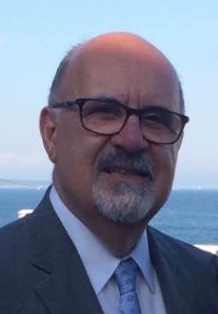
Stepan Piligian
Columnist
Stepan was raised in the Armenian community of Indian Orchard, MA at the St. Gregory Parish. A former member of the AYF Central Executive and the Eastern Prelacy Executive Council, he also served many years as a delegate to the Eastern Diocesan Assembly. Currently , he serves as a member of the board and executive committee of the National Association for Armenian Studies and Research (NAASR). He also serves on the board of the Armenian Heritage Foundation. Stepan is a retired executive in the computer storage industry and resides in the Boston area with his wife Susan. He has spent many years as a volunteer teacher of Armenian history and contemporary issues to the young generation and adults at schools, camps and churches. His interests include the Armenian diaspora, Armenia, sports and reading.
|
The post Armenia’s dilemma, diaspora and rogue Azerbaijan appeared first on The Armenian Weekly.
The post Armenia’s dilemma, diaspora and rogue Azerbaijan first appeared on The South Caucasus News – The News And Times.
This is not the first time that autocratic Azerbaijan has come under scrutiny for handing out billions of dollars in bribes to Western officials to ignore its massive violations of the human rights of its own population and Artsakh Armenians.
The term “caviar diplomacy” was coined to describe specifically the corrupt practices of Azerbaijan in European institutions. Regrettably, some equally corrupt European officials were happy to pocket the millions of dollars offered to them by Azerbaijan.
“Bringing this intricate web of influence and manipulation to light is a groundbreaking film by German broadcaster ARD, ‘Am Abgrund’ (on the precipice). Though the film is fiction, it is based on a series of investigations dubbed ‘Azerbaijani Laundromat,’ exposing how the Azerbaijani government bribed the Council of Europe politicians. The investigations published in 2017 discovered how the government of Azerbaijan was the driving force behind a $2.9 billion secret slush fund that may have helped it pay off European politicians,” Lamiya Adilgizi wrote on globalvoices.org.
“Baku has cleverly navigated the corridors of power in Europe, winning over politicians with a mix of luxurious trips and direct cash payments. The aim? To ensure these influential voices speak up for Azerbaijan’s interests, particularly within the halls of the Parliamentary Assembly of the Council of Europe (PACE) and even Germany’s own Bundestag,” Adilgizi continued.
 “Am Abgrund” film poster
The film, directed by investigative reporter Daniel Harrich, premiered at an event organized by the German Parliament on February 20. A follow-up documentary is planned to further reveal Azerbaijan’s corrupt lobbying efforts in Europe.
The film exposes both the bribe-giving Azeris and bribe-taking European officials. “At the heart of this tale is both Azerbaijan, a country rich in energy resources and scrutinized over its ruling government’s authoritarian practices, but also European countries, known as champions of democracy, rule of law and human rights, who have long been mentors to the emerging nations from the Soviet era. But here’s the twist – instead of spreading these cherished values, it seems they, too, are vulnerable to corruption…”
The movie starts with Azerbaijan’s efforts to silence its domestic opponents who are thrown in jail for bravely exposing the regime’s human rights violations. It features “dramatic scenes that replicate footage from hidden cameras planted in the bedroom of renowned journalist Khadija Ismayilova in 2012, exposing her private life. Ismayilova penned a series of investigations into government corruption linked to the ruling family of Aliyevs. The leaked footage aimed to tarnish the journalist’s reputation. Ismayilova was later jailed on bogus charges and spent two years behind bars as a result.”
The film follows “Gerd Meineke, a fictional member of the German Bundestag who also serves in the Council of Europe. Meineke discovers that the latter institution created back in 1949 to foster democracy and the rule of law has been compromised and that German Members of Parliament have been swayed by Azerbaijan’s regime, trading their votes in the Council of Europe for money, gold, prostitutes and other bribes, betraying the principles of democracy and human rights.”
Meineke’s attempt to pass a resolution condemning Azerbaijan for its numerous political prisoners is defeated by other members after receiving bribes from Azerbaijan.
During the discussion following the screening of the film, director Harrich said: “The issue extended beyond the government of Azerbaijan and implicated Western politicians and societies in the corrupt practices fueled by Azerbaijan’s natural resources. Among the guests to the screening was the German Member of Parliament Frank Schwabe who has recently become known for his loud criticism of the Azerbaijani government. It was Schwabe who challenged the credentials of the Azerbaijani delegation at the PACE during the Assembly’s opening winter session in January 2024.”
Schwab told Global Voices that his attempt to tell the truth about Azerbaijan “aligns with the mission of the Council of Europe. If a member of this organization doesn’t respect its principles, then action is necessary.” After boycotting Russian gas due to the war in Ukraine, Europe started buying gas from Azerbaijan, which is partly imported from Russia. However, “it’s crucial that we don’t overlook human rights violations for the sake of trade relationships,” Schwab said.
After PACE’s refusal to ratify the credentials of Azerbaijan’s delegation in January 2024, “the timing [for the film’s launch] couldn’t be better,” said Gerald Knaus, the chairman of the European Stability Initiative, a think tank, and a vocal critic of the Azerbaijani government, in an interview with Global Voices. His think tank coined the term “caviar diplomacy” in 2012 and was the first to document Azerbaijan’s influence at the Council of Europe.”
Knaus warned of the possible expulsion of Azerbaijan from the Council of Europe if it does not release its political prisoners by April 2024, the 75th anniversary of the Council of Europe.
There are over 200 political prisoners in Azerbaijan.
Author information

Harut Sassounian
California Courier Editor
Harut Sassounian is the publisher of The California Courier, a weekly newspaper based in Glendale, Calif. He is the president of the Armenia Artsakh Fund, a non-profit organization that has donated to Armenia and Artsakh one billion dollars of humanitarian aid, mostly medicines, since 1989 (including its predecessor, the United Armenian Fund). He has been decorated by the presidents of Armenia and Artsakh and the heads of the Armenian Apostolic and Catholic churches. He is also the recipient of the Ellis Island Medal of Honor.
|
The post German television exposes Azerbaijan’s massive bribery of European officials appeared first on The Armenian Weekly.
The post German television exposes Azerbaijan’s massive bribery of European officials first appeared on The South Caucasus News – The News And Times.
Opening Day baseball games played outside the US MLB.com
The post Opening Day baseball games played outside the US – MLB.com first appeared on The Puerto Rico Times – The News And Times.
