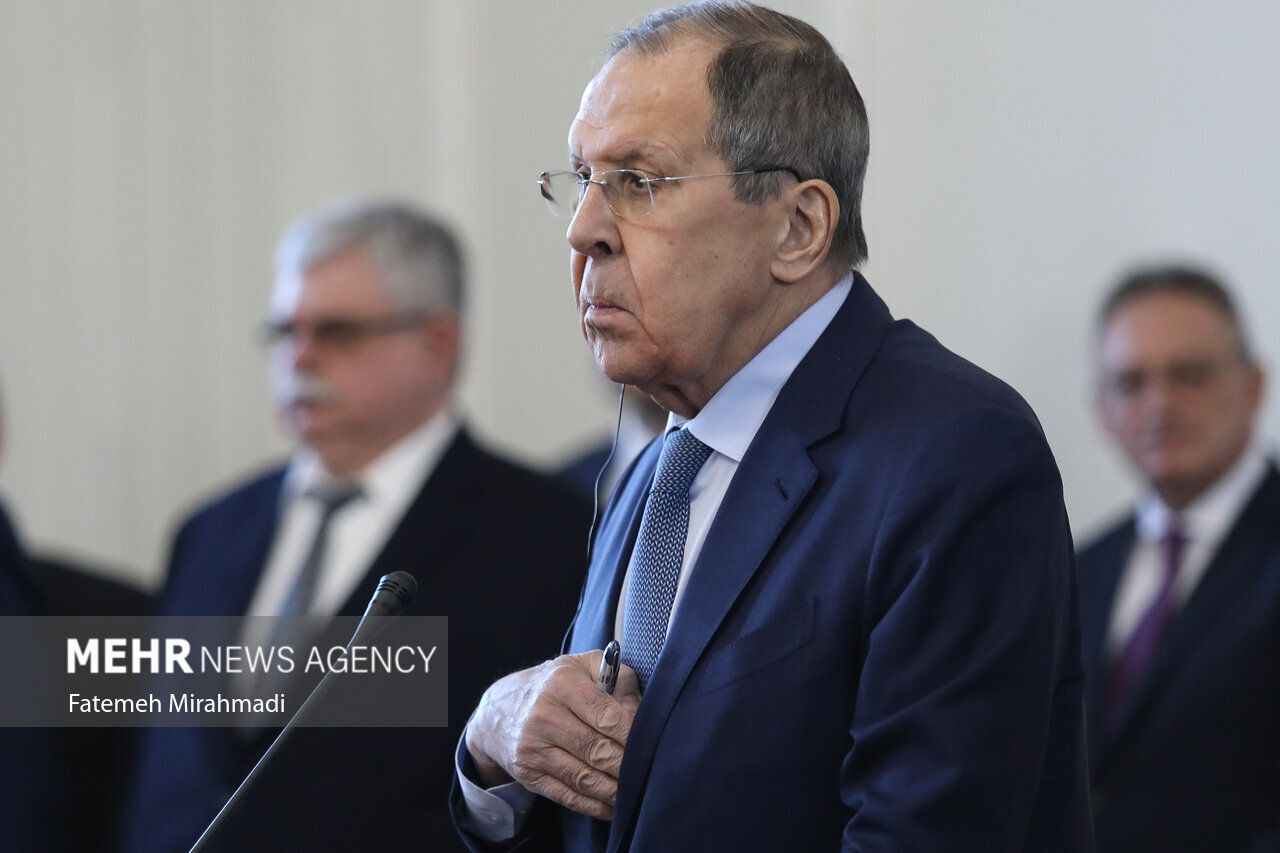
TEHRAN, Oct. 19 (MNA) – Russian Foreign Minister Sergey Lavrov will travel to Tehran on Monday for ongoing bilateral consultations and to review regional and international developments.
 The World Web Times - worldwebtimes.com
On today’s show, the French President Emmanuel Macron has called for dialogue after the country’s worst street violence in years. The far-left and far-right have accused each other of stirring up the disorder. European stock futures and French bond futures fell.
Ukraine’s President Volodymyr Zelenskyy has accused US President Donald Trump of trying to pressure Kyiv into surrendering to Russia, escalating a week-long row.
And growth in China accelerated more than expected in the third quarter, boosting the odds of the economy reaching Beijing’s annual target of 4.5%-5%.
Today’s guests: Fabrice Pothier, Rasmussen Global, CEO & Tatjana Greil Castro, Muzinich & Co, Global Head of Investments.
Chapters:
00:00:00 – Daybreak Europe
00:01:20 – Traders Weigh Flare-Ups in Mideast Fighting
00:04:12 – France Faces Worst Street Violence in Years
00:07:27 – French Violence Raises Alert as Protests Flare Across Europe
00:11:58 – Asia Stocks Pare Decline
00:15:06 – Zelenskyy Says Trump Pushing Ukraine to Yield to Russia
00:17:46 – Ukraine in Talks Over Grain Corridor
00:20:58 – China’s Growth Rebound Tops Forecasts to Close In on Target
00:23:50 – Nasdaq Futures Rebound From Tech Selloff, Oil Dips
00:26:00 – France Struggles to Contain Fallout From Nationwide Protests
00:28:48 – Fabrice Pothier, Rasmussen Global, CEO
00:33:04 – Tatjana Greil Castro, Muzinich & Co, Global Head of Investments
00:38:41 – NSCALE Faces IPO Valuation Pushback
00:42:30 – Earnings Season Kicks Off in Europe
——–
More on Bloomberg Television and Markets
Like this video? Subscribe and turn on notifications so you don’t miss any videos from Bloomberg Markets & Finance: https://tinyurl.com/ysu5b8a9
Visit http://www.bloomberg.com for business news & analysis, up-to-the-minute market data, features, profiles and more.
Connect with Bloomberg Television on:
X: https://twitter.com/BloombergTV
Facebook: https://www.facebook.com/BloombergTelevision
Instagram: https://www.instagram.com/bloombergtv/
Connect with Bloomberg Business on:
X: https://twitter.com/business
Facebook: https://www.facebook.com/bloombergbusiness
Instagram: https://www.instagram.com/bloombergbusiness/
TikTok: https://www.tiktok.com/@bloombergbusiness?lang=en
Reddit: https://www.reddit.com/r/bloomberg/
LinkedIn: https://www.linkedin.com/company/bloomberg-news/
More from Bloomberg:
Bloomberg Radio: https://twitter.com/BloombergRadio
Bloomberg Surveillance: https://twitter.com/bsurveillance
Bloomberg Politics: https://twitter.com/bpolitics
Bloomberg Originals: https://twitter.com/bbgoriginals
Watch more on YouTube:
Bloomberg Technology: https://www.youtube.com/@BloombergTechnology
Bloomberg Originals: https://www.youtube.com/@business
Bloomberg Quicktake: https://www.youtube.com/@BloombergQuicktake
Bloomberg Espanol: https://www.youtube.com/@bloomberg_espanol
Bloomberg Podcasts: https://www.youtube.com/@BloombergPodcasts
UN humanitarian chief Tom Fletcher has warned of worsening conditions in conflict zones, describing places such as Sudan and Gaza as an “atrocities lab”, where new weapons are being developed and tested amid devastating human suffering.
Subscribe to our channel: https://www.youtube.com/c/euronews?sub_confirmation=1
Watch our LIVE here: https://www.youtube.com/c/euronews/live
Subscribe to our thematic channels:
NoComment: https://www.youtube.com/c/nocommenttv?sub_confirmation=1
Euronews Green: http://bit.ly/2sMsaDB
Euronews Next: https://www.youtube.com/c/EuronewsNext?sub_confirmation=1
Euronews Travel: https://www.youtube.com/c/EuronewsTravel?sub_confirmation=1
Euronews is available on YouTube in 12 languages: https://www.youtube.com/user/euronewsnetwork/channels
#EuropeToday

The past week has been particularly difficult for Ukraine. Amid relentless Russian strikes, it stopped receiving U.S. warnings about ballistic missile launches, which the U.S. administration blamed on weather conditions. Ukraine also faced restrictions on Starshield satellite connectivity, which appear to remain in place, and neither Musk nor Trump has taken responsibility for them. This episode showed how vulnerable any country’s military capabilities and civilian protection become when they depend on external actors pursuing their own agendas.
In this edition:
Ukraine Faces New Starlink Restrictions amid Ceasefire Pressure;
Ukraine Seeks to Paralyze Moscow Airports;
How Russia Continues to Reinvent the One-Way Attack Drone (CSIS Podcast);
additional developments in Ukraine and Russia.
As much as I love long and detailed reports, I’ve decided to save you reading time and make my newsletter more concise. Each issue will now take no more than 15 minutes to read. Let me know what you think of this new version.
Thank you for reading and supporting my work!
Subscribe
Ukraine Faces New Starlink Restrictions amid Ceasefire Pressure
Last week, Ukraine faced major disruptions, including restrictions on Starlink/Starshield connectivity and pauses in U.S. intelligence sharing. These developments followed a renewed ceasefire request by the U.S. administration, which Ukraine accepted by temporarily suspending strikes on Russian energy infrastructure, while Russia decided not to reciprocate.
On October 14, several units and Ukraine’s Ministry of Defence confirmed that they had begun facing new restrictions on the use of Starlink. The restriction applies to SpaceX’s Starshield military service package and is set at 100 mph, or about 161 km/h. It is limited to Ukrainian territory; European countries are not subject to it.
When an unmanned system exceeds the speed threshold, its terminal loses connectivity. The speed at which the connection is lost varies across platforms and military units, ranging from approximately 72 to 161 km/h. During UAV flights, the connection could be lost for 10-20 seconds. The drones keep moving, but these interruptions make them harder to control. Ukraine’s defence forces had not been warned in advance about the restriction. As a result, several combat missions have been disrupted.
This significantly affects Ukraine’s capabilities, particularly in operating mid-range drones at the tactical-operational level, which have created serious difficulties for Russian forces at the front throughout 2026. This year, Ukraine has launched several mid-range strike campaigns targeting Russian logistics, energy hubs, and missile launchers in Russian-occupied territories. Read my report: How Middle-Strike Drones Are Destroying Russian Logistics.
Another capability affected by the current restrictions is Ukraine’s interceptor drones, which use Starlink to counter jet-powered and conventional Geran drones. Adviser to President Zelenskyy, Serhii FLASH, said that “by taking these steps, our partners are depriving us of one of the few options we have for defending the country against jet-powered Shaheds”.
Ukraine has used Starlink only for defensive and counter-offensive purposes, as the service does not work over Russian territory. This new round of restrictions, following similar patterns throughout the war, underscores the vulnerability of relying on commercial services for strategic capabilities, especially as such dependencies could be used to pressure Ukraine into a ceasefire or peace deal with Russia.
Polish Foreign Minister Sikorski called on SpaceX CEO Musk to refrain from using his company’s products as a tool of political pressure. Poland allocates approximately $50 million annually to cover Starlink subscription fees for Ukraine. Other countries, such as Germany and the UK, also sponsor this service.
The European Commission plans to connect Ukraine to its secure satellite communications system, GOVSATCOM. However, it remains unclear whether this solution can match the capabilities of Starshield before Europe’s planned IRIS² constellation of around 300 satellites becomes operational in 2029.
Musk said the U.S. military and President Trump control access to Starshield, while Trump said he had not ordered the restriction on Ukraine.
Ukraine’s MoD has been actively engaging with SpaceX and the Pentagon to lift Starlink restrictions.
Ukraine’s need for its own independently controlled satellite communications system is evident. The country already has such a project—UASAT LEO, developed by Ukrainian company STETMAN in partnership with Denmark’s GomSpace. However, the project’s status remains unclear. The CEO of the Ukrainian Council of Defence Industry, Ihor Fedirko, revealed that he had personally participated in negotiations with German partners last year concerning the development of such a system; however, the negotiations unexpectedly collapsed for unclear reasons.
My earlier reports on Starlink in Ukraine and Russia:
Ukraine Seeks to Paralyze Moscow Airports
In recent weeks, Ukraine has focused on targeting Russian dual-use infrastructure affecting the daily lives of Russian citizens, who have remained largely unaffected by the war for years. Strikes on data centers have continued, while Ukraine is now intensifying its operation codenamed M&Ms, aimed at disrupting civilian air traffic, particularly in Moscow.
While President Trump has focused on halting Ukrainian strikes on Russian energy facilities, he has not objected to attacks on other targets deep inside Russia. According to Russian sources, 2,730 Ukrainian UAVs flew toward the Moscow region between October 10 and 17, most of which were intercepted by Russian air defences before reaching their targets.
Moscow’s four airports were closed for a combined 101 hours during the first 14 days of October, compared with just 46 hours throughout September. On the evening of October 16 and overnight into October 17, renewed restrictions resulted in more than 350 delayed or cancelled flights, with Sheremetyevo airport particularly affected. Putin and his entourage were reportedly unable to land in Moscow after returning from Turkmenistan due to flight restrictions imposed at Moscow airports under the so-called “Carpet” emergency protocol in response to drone threats.
The airport disruptions are only the beginning of Ukraine’s operation codenamed M&Ms, The Atlantic reports. A more ambitious phase is expected to involve the deployment of AI-enabled drones capable of autonomously evading Russian air defences and directly striking airports. These drones are designed to operate without relying on U.S. intelligence support, with plans to scale up production in the near future.
Discussions concerning these capabilities have been ongoing since summer but were disrupted following the dismissal of Defence Minister Fedorov.
These strikes show the various ways Ukraine can increase economic pressure on Russia. Persistent disruptions to flight schedules at Moscow’s airports have far-reaching consequences for air travel across Russia, as Moscow remains the country’s largest aviation hub.
Read this article on Ukrainian strikes on Yandex data centers with my comments: Data Center Warfare: Ukraine’s Retaliatory Strategy Hits Russian Tech Hubs.
How Russia Continues to Reinvent the One-Way Attack Drone (CSIS podcast)
Russia continues to improve and adapt one of its key capabilities—the Geran long-range attack drone, considered among the world’s best systems in its category. Since 2022, major improvements have included enhanced EW resilience, onboard communication capabilities, and increased lethality. The latest variant, the Geran-5, represents a significant leap in speed, leaving Ukraine with limited options to counter this evolving threat.
Main argument of the CSIS podcast: what makes the Geran drone dangerous is how fast Russia changes it.
Russia acquired the design for the Geran family from Iran in August 2022 and deployed it a month later. Here is how Russia has transformed this platform throughout the years:
EW resilience: July 2023: Russia began fitting Gerans with Kometa-M, a homegrown controlled reception pattern antenna (CRPA). Its multiple antenna elements neutralize jamming from several directions, and Russia keeps adding more elements to filter out more jamming and spoofing.
Onboard communication capabilities: early Gerans had none (they operated on fire-and-forget logic).
November 2023: Geran deployed with a 4G modem and a Ukrainian SIM card. It works as a tracker and can transmit its location throughout the flight.
February 2024: It contained a Raspberry Pi mini-computer and two 3G modems; this is still present in the Geran today.
It works on Ukraine’s cell network, and every drone becomes a data point. For Ukraine, its own air defence infrastructure becomes an exposure – the Gerans record and transmit data on how Ukraine’s air defence disables them.
Next shift, summer 2025: airborne communication networks. Drones are equipped with mesh radio modules that turn a drone into a signal repeater for other drones flying nearby. This allows the formation of an airborne communication network in which drones flying next to one another relay data as a chain of nodes. The network is very robust to disruption: if one node is shot down, the group can regroup and relay through the remaining nodes.
Another aspect is lethality, which can be seen in the development of warheads. There were several 50 kg alternatives, but Russia is moving to heavier approaches (90 kg). Also, Russia crams two 50 kg warheads into the fuselage for a combined explosive weight.
Geran becomes a multi-purpose platform. Russia is experimenting with alternative payloads: mid-flight release of two PTM-3 anti-tank mines, or a Soviet-era R-60 air-to-air missile strapped to the fuselage to target approaching helicopters mid-flight. FPV drones: two were mounted on top of each wing for mid-flight release.
The most recent version is the Geran-5: Russia developed a new airframe that looks more like a cruise missile and is twice as big as previous versions. It can develop speeds of 600 km/h – well beyond the reach of Ukraine’s interceptor drones that currently fly at 300 km/h. The interception rate was over 85% for the Geran-2; with the Geran-5, it fell to 65%.
According to analysts, by replacing the original Iranian-designed Shahed piston engine with a small jet engine, Russia has produced a drone that is faster, harder to shoot down, and still much cheaper than a cruise missile. This allows Russia to carry out sustained long-range attacks without relying exclusively on expensive missiles, keeping those for the most heavily defended or strategically important targets.
Military Support to Ukraine
Ukraine has run out of missiles for the U.S. Patriot air defence system, a CNN source reports. This information should be seen critically, as it is not possible to verify it, although Ukraine has been facing an interceptor missile shortage for months. According to Zelenskyy, Ukraine needs roughly 300 interceptors to survive this winter.
President Trump accused Ukraine of selling U.S.-supplied weapons, including Tomahawk missiles, despite no confirmed deliveries of Tomahawks to Kyiv.
In response, Ukraine’s Independent Anti-Corruption Commission (NAKO) revealed that the Trump administration had terminated funding for its project to monitor U.S. military aid, declaring it no longer in the U.S. national interest.
On October 15, President Zelenskyy said that Ukraine had lost access to U.S. early-warning intelligence on ballistic missile launches. According to him, the United States is its only source of information about ballistic missile launches.
France’s Foreign Ministry stated that European partners provide two-thirds of the intelligence Ukraine receives.
On October 18, it was announced that the U.S. resumed intelligence sharing with Ukraine.
The UK will be sending Ukraine more long-range Storm Shadow missiles. Also, the UK will accelerate deliveries of British Lightweight Multirole Missiles (LMMs), which have proven effective against jet-powered drones.
Defence Innovation in Ukraine
Six Ukrainian companies are mass-producing miniature turbojet engines, while a total of 11 companies in Ukraine are involved in their development. Expanding domestic production of these engines is a key step toward scaling up the manufacturing of new interceptor drones against Russian jet-powered threats.
Ukraine and NATO created innovative AI-based military models for predicting enemy drone deployment near the contact line. One of them is a tool capable of forecasting adversary UAV usage based on an analysis of historical data, weather conditions, and the current battlefield situation. The other module, supporting the decision-making, tests the capability for the automated generation of artillery operation plans.
Russia and Allies
Belarus is deploying a new secure military communications system for its MoD, designed to support the deployment and movement of Russian forces toward NATO countries’ borders.
According to a report by Der Spiegel, the Turkish organized crime group known as the Daltons may have been behind an arson attack on a Starlink satellite communications station in Poland, allegedly acting on orders from Russian intelligence services.
Developments on the Frontline
Ukraine’s 3rd Army Corps has completed the fourth and final phase of its counteroffensive operation Vivaldi, which began in late May. According to Ukraine, Russian forces suffered approximately 8,000 killed and wounded during the operation. Ukrainian forces regained control of 277 sq. km of territory and liberated 16 settlements. My earlier report: Vivaldi: Ukraine’s Counteroffensive Operation.
NATO has estimated that Russia suffered more than 50,000 casualties in its war against Ukraine in September, of whom 28,000 were killed. According to Bloomberg sources, Ukraine suffered 5,000 casualties in September.
If you found this useful, consider becoming a free or paid subscriber. My Substack recently passed 10,000 subscribers and is a bestseller.
You’ll get the full weekly issue every Monday, and VIP members also receive my detailed Saturday drone roundup.
Subscribe
World News – 2024 – Video Playlist | Video Playlists | Sites: | newsandtimes.org | links-newsandtimes.com | worldwebtimes.com | southcaucasusnews.com | russianworld.net | jossica.com | octobersurprise2016.org | bklyntimes.com | oceanavenuenews.com | fbireform.com | bloggersunite.net | octobersurprise-2024.org | Trump-News.org | Audio-Posts.com | Bklyn-NY.com | Posts Review – newsandtimes.org