Windows 11 provides privacy settings that let you control how your data is used for recommendations and personalization. These include the Windows Advertising ID, website access to your language list, and Start and search personalization settings, which use your activity and preferences to customize content and suggestions across Windows.
Day: June 5, 2026
#FBI #DOJ #ODNI
News Review Summary
x.com/mikenov/status/2062868…Michael Novakhov (@mikenov) #FBI #News #Security
FBI News and Video Review
thenewsandtimes.blogspot.com…
News Review In Brief
rss.app/feeds/_WIo9T6DgNc4li…
Security Clearances and Intelligence Programs Face Pushback rss.app/brief/posts/6642f605…
AI Brief
Security Clearances and Intelligence Programs Face Pushback
Friday, June 5, 20267:47 AM
Key Stories
Nominee for top intelligence post lacked prior security clearance — Reports indicate that the individual chosen to lead the U.S. intelligence community did not hold a security clearance at the time of their selection.
Senate halts key surveillance program amid intelligence concerns — The U.S. Senate has blocked a major surveillance initiative after a backlash regarding recent intelligence leadership appointments.American citizen admits to acting as an agent for China — A U.S. citizen has pleaded guilty to charges of working as an illegal agent for the Chinese government.
Federal crackdown targets fraud in Ohio — Officials have launched a significant new initiative to identify and prosecute fraud cases across the state of Ohio.
Indonesian minister proposes civilian roles in national police — Minister Pigai has floated the idea of allowing civilians to take on official roles within the Indonesian National Police to broaden the force.
Summary
Political tensions are rising as the Senate blocks a major surveillance program following controversies over high-profile intelligence picks. Meanwhile, news broke that a key nominee lacked security clearance before being chosen for a top role.
–Review of Recent Tweets:
– x.com/mikenov/status/2062862… x.com/mikenov/status/2062859…
– x.com/mikenov/status/2062857…
– x.com/mikenov/status/2062856…
– x.com/mikenov/status/2062855…
– x.com/mikenov/status/2062853…
– x.com/mikenov/status/2062853…
-— https://x.com/mikenov/status/2062868445377499546— Michael Novakhov (@mikenov) Jun 5, 2026
Categories
Security and Intelligence
|
||||||||||||||||||||||||||||||||||||||||||||||||||||||||||||||||||||||||||||||||||||||||||||||||||||
|




Categories
Russia and Ukraine
|
||||||||||||||||||||||||||||||||||||||||||||||||||||||||||||||||||||||
|


The Azerbaijan Culture Ministry has announced the opening of applications for the financing of undergraduate and graduate studies abroad under its Special Scholarship Program for Cultural and Creative Industries, AzerNEWS reports.
The post Culture Ministry launches scholarship program for creative industries students studying abroad first appeared on The South Caucasus News – SouthCaucasusNews.com.
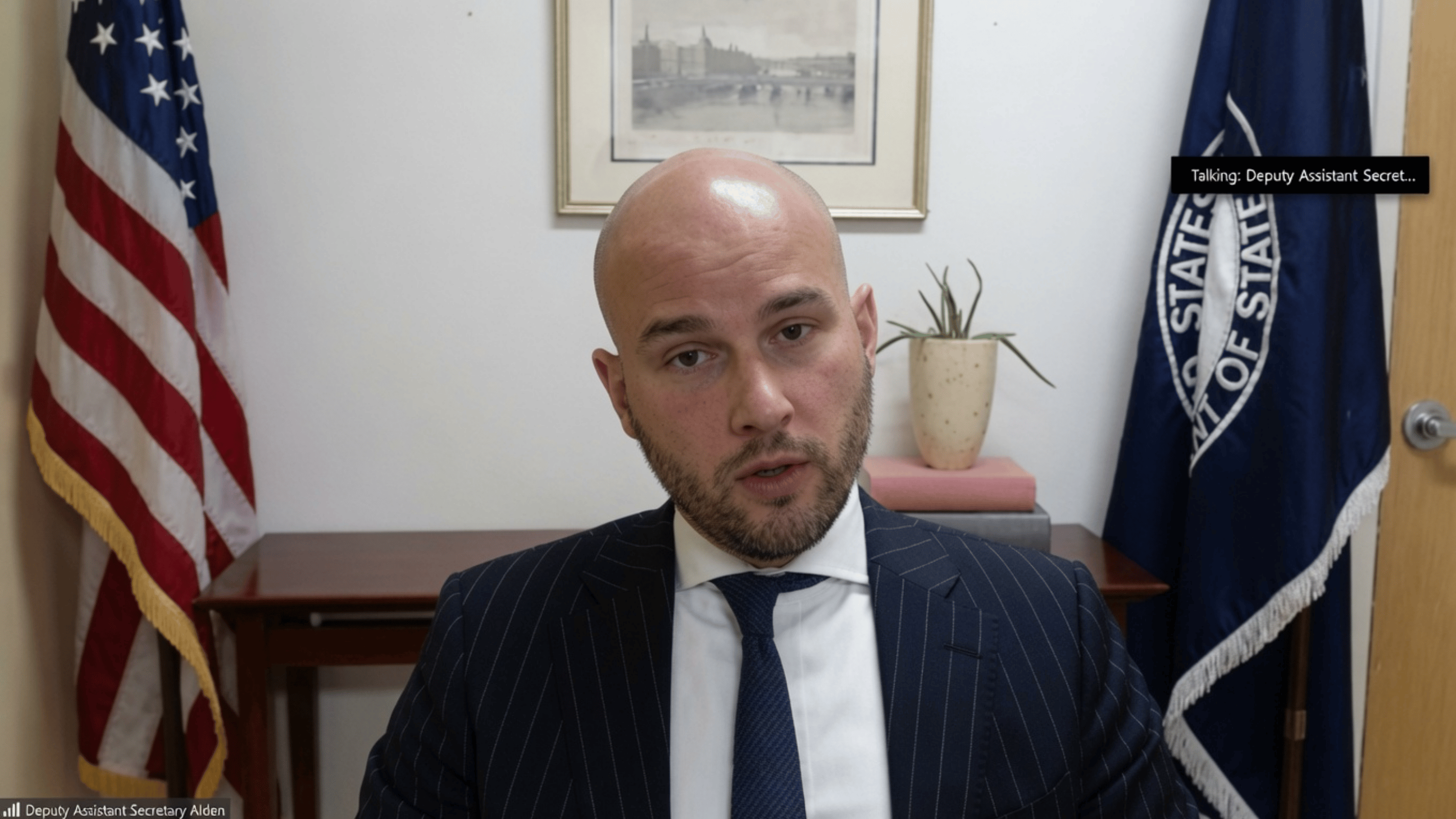
US President Donald Trump nominated Virginia resident Alexander Alden on 1 June to serve as Ambassador Extraordinary and Plenipotentiary to Azerbaijan and submitted his nomination to the Senate.
The US Embassy in Baku is currently headed by Chargé d’Affaires Amy Carlon. The previous ambassador, Mark Libby, announced his departure at the end of 2024.
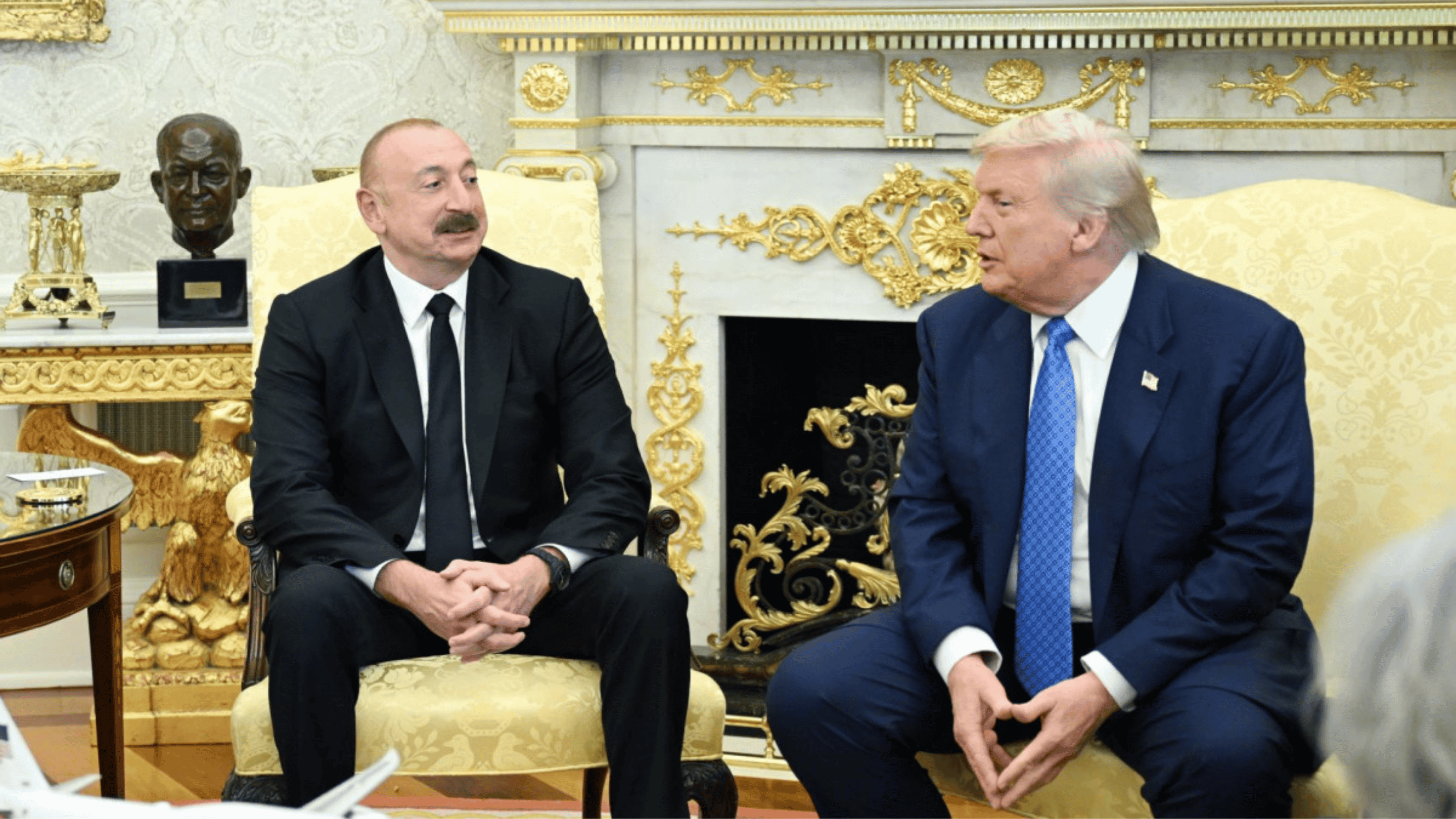
The significance of Alden’s appointment lies largely in its timing. Following the initialling of a draft peace agreement at the Azerbaijan-Armenia-US summit in Washington on 8 August 2025, attended by Trump, the subsequent development of a strategic partnership framework between the United States and Azerbaijan, the extension of the waiver to Section 907 restrictions, and the signing of a Strategic Partnership Charter in Baku by JD Vance in February 2026, the new ambassador arrives not to “restore relations” but to help move political, defence and technological cooperation into the implementation phase.
Who is ambassadorial nominee Alexander Alden?
Alden is not a traditional career diplomat. Instead, he appears to be a political appointee whose background lies in security and geopolitics.
According to his biography, during the first Trump administration he served as Deputy Assistant Secretary of State in the Bureau of European and Eurasian Affairs, where he oversaw US relations with the European Union and issues related to “countering China’s regional influence”.
He later served as Acting Assistant Secretary of State in the Bureau of Conflict and Stabilization Operations.
Before joining the State Department, Alden worked at the US National Security Council as Senior Director for Emerging Technologies and Director for Defense Policy and Strategy. He also served as a special policy adviser at the Pentagon.
Alden holds a master’s degree from Johns Hopkins University and a bachelor’s degree from Southern Illinois University. He speaks Italian, Serbian, Croatian and Bosnian.
His professional background points to two broad conclusions.
- First, Alden belongs to a group of specialists who view post-conflict stabilisation, border security and great-power competition as interconnected elements of a single strategic framework.
- Second, his current work reinforces that assessment. Alden serves as a non-resident senior fellow at the Atlantic Council and as a principal adviser to Palantir Technologies, where he focuses on expanding cooperation with allied governments and private-sector partners.
The company says it was founded to help intelligence agencies use data more safely and effectively. Today, it develops software solutions for the defence and intelligence sectors.
By the end of 2025, the value of Palantir’s active government contracts had reached $4.4bn.
At the same time, the company’s cooperation with US Immigration and Customs Enforcement (ICE), its large-scale data integration projects and its work involving medical information have drawn criticism from organizations such as American Civil Liberties Union and Amnesty International, as well as from some investors concerned about human rights and civil liberties.
In other words, the qualities that may make Alden an attractive figure for Baku also come with ethical controversies surrounding his professional environment.
Alongside potential advantages, his appointment could therefore bring a number of more controversial dimensions as well.
Regional implications
Based on Alden’s professional background, his likely agenda in Azerbaijan will focus on three key areas.
The first concerns stabilisation and implementation of the peace process. The State Department bureau where Alden previously served focused on conflict prevention, conflict resolution and security-sector stabilisation.
This suggests that Washington intends to advance the peace agreement through mechanisms related to border security, incident management, the functioning of transit routes and the creation of new frameworks for cooperation.
The second area involves technology and supply chains.
Alden’s biography highlights his work on “countering China’s regional influence” and advancing emerging technologies. Meanwhile, the Strategic Partnership Charter signed by the United States and Azerbaijan envisages cooperation in artificial intelligence, digital infrastructure and the transit of critical minerals.
This makes his nomination particularly significant from a technological and economic perspective.
The third area relates to broader geoeconomic processes.
The TRIPP initiative and the Middle Corridor are viewed both as routes that can bypass Russia and Iran and as the South Caucasus component of a broader Western technological and industrial strategy.
Regional capitals are likely to interpret the appointment differently.
For Baku, it signals Washington’s intention to ensure institutional continuity for the strategic course that has taken shape since 2025.
For Yerevan, the key question remains how deepening US-Azerbaijan cooperation will be balanced with parallel arrangements involving Armenia and the broader framework of the TRIPP initiative.
Moscow officially welcomed the initialling of the 2025 agreement. At the same time, it continues to retain instruments of influence amid Armenia’s growing engagement with the West.
Tehran also reacted positively to the agreed text of the peace deal. However, it later openly opposed a corridor model involving the United States.
Ankara officially welcomed the progress achieved in Washington and supports greater regional connectivity. Brussels has likewise endorsed the normalisation process and expressed its readiness to facilitate implementation.
As a result, if Alden arrives in Baku as ambassador, he will be operating in an environment shaped by sensitive competition among major powers and regional actors.
Senate confirmation process and outlook
Alden’s nomination has already been submitted to the Senate and referred to the Senate Foreign Relations Committee for consideration. However, the committee’s public calendar does not yet include a separate announcement regarding confirmation hearings for his nomination.
That does not necessarily indicate a delay, but it also does not guarantee confirmation.
If the Senate approves Alden’s nomination, he is likely to arrive in Baku not as a traditional protocol-oriented ambassador but as an envoy with a clearly defined implementation agenda.
His priorities would probably include the next phase of the peace agreement’s implementation, political and technical coordination of the TRIPP initiative, the expansion of cooperation in technology and energy, and security issues complicated by the roles of Russia and Iran.
Such an appointment could facilitate deeper US engagement in South Caucasus affairs, strengthen the region’s economic connectivity and help create additional institutional safeguards for maintaining peace.

Trump’s Azerbaijan ambassador nominee
The post Trump’s ambassador nominee to Azerbaijan: who is Alexander Alden and what could his appointment mean for region? first appeared on The South Caucasus News – SouthCaucasusNews.com.
Categories
Putin and Putinism
|
||||||||||||||||||||||||||||||||||||||||||||||||||||||||||||||||||||||||||||||||||||||||||||||||||
|