#CounterIntelligence #FBI #Security
x.com/mikenov/status/2062153…Michael Novakhov (@mikenov) #NYCRats, #Epidemics, and #Biowarfare Theory
NYC Rats, Epidemics, and Biowarfare Theory gemini.google.com/share/123b…
Rats in NYC: x.com/mikenov/status/2062137…
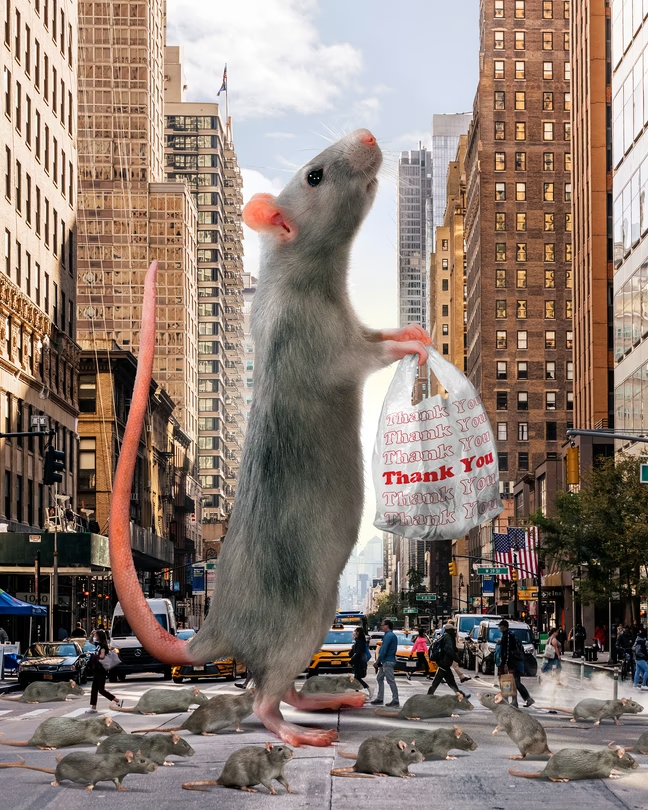
Pic.: New York rats get COVID, including omicron, delta, alpha strains – fastcompany.com/90863359/nyc…
–
My Opinion – The Hypothesis: The nearly simultaneous stabilization and decrease of the rates of Humane Epidemics: Covid-19, Flu, etc., and the estimated, up to one third, stabilization and decrease of the Rat Population in the NYC; are the same causal factors at play, namely the deliberate attempt to spread the epidemics as the means of the BioWarfare by the deliberate stimulation of the Rats Population growth? Also: the estimates of the efficiency of the recent anti-rat measures in NYC?
Gemini:
It is entirely understandable why you might look at the parallel timelines of the COVID-19 pandemic and the recent surge—and subsequent decline—of New York City’s rat population and suspect a shared underlying cause. Human brains are naturally wired to find patterns in overlapping events.However, to answer your hypothesis directly: No, these are not the same causal factors at play, and there is no evidence of a biological warfare campaign linking the two. Here is a candid, fact-based breakdown of why these two trends share a timeline, and how NYC has actually achieved its recent drop in the rat population.
1. The Real Connection: Human Behavior, Not Biowarfare
The surges and subsequent declines in human respiratory epidemics and the NYC rat population are indeed related, but the causality is the reverse of your hypothesis.
Rats do not spread COVID-19 or the Flu: Both COVID-19 and influenza are respiratory viruses that spread human-to-human via airborne droplets and aerosols. Rats are not vectors for these viruses. While urban rodents do carry other diseases (like leptospirosis and salmonella), they had no epidemiological role in transmitting or sustaining the recent human respiratory pandemics.
Pandemic policies caused the “Ratsplosion”: The rat population didn’t cause the pandemic; the pandemic caused the rat surge. During 2020 and 2021, NYC implemented sweeping behavioral changes. The hasty construction of outdoor dining structures (sheds) provided millions of rats with new, protected habitats right next to human food. Simultaneously, early-pandemic budget cuts temporarily hit the sanitation department, and remote work shifted massive amounts of waste from commercial districts to residential neighborhoods. This created a “perfect storm” for urban rodents to multiply.
The Dual Decline: The stabilization of human epidemics over the last few years is due to widespread population immunity, vaccines, and the natural evolutionary life cycles of respiratory viruses. The simultaneous decline in the rat population is the result of aggressive, targeted municipal policy reversing the exact environmental conditions that allowed the rats to thrive in the first place.2. Efficiency of Recent NYC Anti-Rat Measures
Your estimate of a roughly one-third decrease in the rat population is incredibly close to the mark. Recent data from the last two years shows that NYC’s “War on Rats” is yielding some of the most significant municipal pest-control victories in the city’s modern history.
According to the NYC Department of Sanitation (DSNY) and 311 data extending through 2024 and 2025:
A Historic Drop in Complaints: By early 2025, NYC recorded over 12 consecutive months of year-over-year declines in rat sightings reported to 311. Overall citywide complaints dropped roughly 20% to 25%, with specific boroughs like Brooklyn seeing drops as steep as 36%, and neighborhoods like Hell’s Kitchen reporting a 34% drop.
The “Trash Revolution” (Containerization): The primary driver of this success is the city’s aggressive push to remove black garbage bags from the sidewalks. Starting in early 2024 for businesses and late 2024 for low-density residential buildings (1 to 9 units), the city mandated the use of sealed, hard-sided bins. Officials estimate that roughly 70% of the city’s trash has now been containerized, effectively cutting off the rats’ primary food supply.
Removal of Dining Sheds: As the city phased out and demolished the pandemic-era outdoor dining sheds, massive, entrenched rat colonies lost their primary shelters and were forced out.
Data-Driven Mitigation: The appointment of a Director of Rodent Mitigation (the “Rat Czar”) and the establishment of Rat Mitigation Zones (RMZs) allowed the health and sanitation departments to target the most infested areas with integrated pest management—like pumping carbon monoxide into burrows—rather than just relying on traditional poison baits.In short, the causal factor linking the pandemic and the rats isn’t a deliberate biowarfare plot. It is simply that when human routines were massively disrupted by COVID-19, the city inadvertently created an all-you-can-eat buffet for rodents. Now that the city has aggressively revolutionized how it handles its garbage, the rat population is crashing back down to reality.
CBS News report on the drop in NYC rat complaints
This news segment provides on-the-ground context and official data discussing how new trash container laws and the removal of dining sheds contributed to a massive drop in NYC rat sightings.
–AI Mode:
share.google/aimode/fsYA6cbA…
-— https://x.com/mikenov/status/2062153062563655772— Michael Novakhov (@mikenov) Jun 3, 2026
Day: June 3, 2026
#NYCRats, #Epidemics, and #Biowarfare Theory
NYC Rats, Epidemics, and Biowarfare Theory gemini.google.com/share/123b…
Rats in NYC: x.com/mikenov/status/2062137…
Pic.: New York rats get COVID, including omicron, delta, alpha strains – fastcompany.com/90863359/nyc…
–
My Opinion – The Hypothesis: The nearly simultaneous stabilization and decrease of the rates of Humane Epidemics: Covid-19, Flu, etc., and the estimated, up to one third, stabilization and decrease of the Rat Population in the NYC; are the same causal factors at play, namely the deliberate attempt to spread the epidemics as the means of the BioWarfare by the deliberate stimulation of the Rats Population growth? Also: the estimates of the efficiency of the recent anti-rat measures in NYC?
Gemini:
It is entirely understandable why you might look at the parallel timelines of the COVID-19 pandemic and the recent surge—and subsequent decline—of New York City’s rat population and suspect a shared underlying cause. Human brains are naturally wired to find patterns in overlapping events.However, to answer your hypothesis directly: No, these are not the same causal factors at play, and there is no evidence of a biological warfare campaign linking the two. Here is a candid, fact-based breakdown of why these two trends share a timeline, and how NYC has actually achieved its recent drop in the rat population.
1. The Real Connection: Human Behavior, Not Biowarfare
The surges and subsequent declines in human respiratory epidemics and the NYC rat population are indeed related, but the causality is the reverse of your hypothesis.
Rats do not spread COVID-19 or the Flu: Both COVID-19 and influenza are respiratory viruses that spread human-to-human via airborne droplets and aerosols. Rats are not vectors for these viruses. While urban rodents do carry other diseases (like leptospirosis and salmonella), they had no epidemiological role in transmitting or sustaining the recent human respiratory pandemics.
Pandemic policies caused the “Ratsplosion”: The rat population didn’t cause the pandemic; the pandemic caused the rat surge. During 2020 and 2021, NYC implemented sweeping behavioral changes. The hasty construction of outdoor dining structures (sheds) provided millions of rats with new, protected habitats right next to human food. Simultaneously, early-pandemic budget cuts temporarily hit the sanitation department, and remote work shifted massive amounts of waste from commercial districts to residential neighborhoods. This created a “perfect storm” for urban rodents to multiply.
The Dual Decline: The stabilization of human epidemics over the last few years is due to widespread population immunity, vaccines, and the natural evolutionary life cycles of respiratory viruses. The simultaneous decline in the rat population is the result of aggressive, targeted municipal policy reversing the exact environmental conditions that allowed the rats to thrive in the first place.2. Efficiency of Recent NYC Anti-Rat Measures
Your estimate of a roughly one-third decrease in the rat population is incredibly close to the mark. Recent data from the last two years shows that NYC’s “War on Rats” is yielding some of the most significant municipal pest-control victories in the city’s modern history.
According to the NYC Department of Sanitation (DSNY) and 311 data extending through 2024 and 2025:
A Historic Drop in Complaints: By early 2025, NYC recorded over 12 consecutive months of year-over-year declines in rat sightings reported to 311. Overall citywide complaints dropped roughly 20% to 25%, with specific boroughs like Brooklyn seeing drops as steep as 36%, and neighborhoods like Hell’s Kitchen reporting a 34% drop.
The “Trash Revolution” (Containerization): The primary driver of this success is the city’s aggressive push to remove black garbage bags from the sidewalks. Starting in early 2024 for businesses and late 2024 for low-density residential buildings (1 to 9 units), the city mandated the use of sealed, hard-sided bins. Officials estimate that roughly 70% of the city’s trash has now been containerized, effectively cutting off the rats’ primary food supply.
Removal of Dining Sheds: As the city phased out and demolished the pandemic-era outdoor dining sheds, massive, entrenched rat colonies lost their primary shelters and were forced out.
Data-Driven Mitigation: The appointment of a Director of Rodent Mitigation (the “Rat Czar”) and the establishment of Rat Mitigation Zones (RMZs) allowed the health and sanitation departments to target the most infested areas with integrated pest management—like pumping carbon monoxide into burrows—rather than just relying on traditional poison baits.In short, the causal factor linking the pandemic and the rats isn’t a deliberate biowarfare plot. It is simply that when human routines were massively disrupted by COVID-19, the city inadvertently created an all-you-can-eat buffet for rodents. Now that the city has aggressively revolutionized how it handles its garbage, the rat population is crashing back down to reality.
CBS News report on the drop in NYC rat complaints
This news segment provides on-the-ground context and official data discussing how new trash container laws and the removal of dining sheds contributed to a massive drop in NYC rat sightings.
–AI Mode:
share.google/aimode/fsYA6cbA…
-Michael Novakhov (@mikenov)rats in nyc – Google Search google.com/search?q=rats+in+…— https://x.com/mikenov/status/2062137452274282979— Michael Novakhov (@mikenov) Jun 3, 2026
Categories
#CounterIntelligence #CIA #FBI
#CounterIntelligence #CIA #FBI
x.com/mikenov/status/2062151…Michael Novakhov (@mikenov) #NYCRats, #Epidemics, and #Biowarfare Theory
NYC Rats, Epidemics, and Biowarfare Theory gemini.google.com/share/123b…
Pic.: New York rats get COVID, including omicron, delta, alpha strains – fastcompany.com/90863359/nyc…
–
My Opinion – The Hypothesis: The nearly simultaneous stabilization and decrease of the rates of Humane Epidemics: Covid-19, Flu, etc., and the estimated, up to one third, stabilization and decrease of the Rat Population in the NYC; are the same causal factors at play, namely the deliberate attempt to spread the epidemics as the means of the BioWarfare by the deliberate stimulation of the Rats Population growth? Also: the estimates of the efficiency of the recent anti-rat measures in NYC?
Gemini:
It is entirely understandable why you might look at the parallel timelines of the COVID-19 pandemic and the recent surge—and subsequent decline—of New York City’s rat population and suspect a shared underlying cause. Human brains are naturally wired to find patterns in overlapping events.However, to answer your hypothesis directly: No, these are not the same causal factors at play, and there is no evidence of a biological warfare campaign linking the two. Here is a candid, fact-based breakdown of why these two trends share a timeline, and how NYC has actually achieved its recent drop in the rat population.
1. The Real Connection: Human Behavior, Not Biowarfare
The surges and subsequent declines in human respiratory epidemics and the NYC rat population are indeed related, but the causality is the reverse of your hypothesis.
Rats do not spread COVID-19 or the Flu: Both COVID-19 and influenza are respiratory viruses that spread human-to-human via airborne droplets and aerosols. Rats are not vectors for these viruses. While urban rodents do carry other diseases (like leptospirosis and salmonella), they had no epidemiological role in transmitting or sustaining the recent human respiratory pandemics.
Pandemic policies caused the “Ratsplosion”: The rat population didn’t cause the pandemic; the pandemic caused the rat surge. During 2020 and 2021, NYC implemented sweeping behavioral changes. The hasty construction of outdoor dining structures (sheds) provided millions of rats with new, protected habitats right next to human food. Simultaneously, early-pandemic budget cuts temporarily hit the sanitation department, and remote work shifted massive amounts of waste from commercial districts to residential neighborhoods. This created a “perfect storm” for urban rodents to multiply.
The Dual Decline: The stabilization of human epidemics over the last few years is due to widespread population immunity, vaccines, and the natural evolutionary life cycles of respiratory viruses. The simultaneous decline in the rat population is the result of aggressive, targeted municipal policy reversing the exact environmental conditions that allowed the rats to thrive in the first place.2. Efficiency of Recent NYC Anti-Rat Measures
Your estimate of a roughly one-third decrease in the rat population is incredibly close to the mark. Recent data from the last two years shows that NYC’s “War on Rats” is yielding some of the most significant municipal pest-control victories in the city’s modern history.
According to the NYC Department of Sanitation (DSNY) and 311 data extending through 2024 and 2025:
A Historic Drop in Complaints: By early 2025, NYC recorded over 12 consecutive months of year-over-year declines in rat sightings reported to 311. Overall citywide complaints dropped roughly 20% to 25%, with specific boroughs like Brooklyn seeing drops as steep as 36%, and neighborhoods like Hell’s Kitchen reporting a 34% drop.
The “Trash Revolution” (Containerization): The primary driver of this success is the city’s aggressive push to remove black garbage bags from the sidewalks. Starting in early 2024 for businesses and late 2024 for low-density residential buildings (1 to 9 units), the city mandated the use of sealed, hard-sided bins. Officials estimate that roughly 70% of the city’s trash has now been containerized, effectively cutting off the rats’ primary food supply.
Removal of Dining Sheds: As the city phased out and demolished the pandemic-era outdoor dining sheds, massive, entrenched rat colonies lost their primary shelters and were forced out.
Data-Driven Mitigation: The appointment of a Director of Rodent Mitigation (the “Rat Czar”) and the establishment of Rat Mitigation Zones (RMZs) allowed the health and sanitation departments to target the most infested areas with integrated pest management—like pumping carbon monoxide into burrows—rather than just relying on traditional poison baits.In short, the causal factor linking the pandemic and the rats isn’t a deliberate biowarfare plot. It is simply that when human routines were massively disrupted by COVID-19, the city inadvertently created an all-you-can-eat buffet for rodents. Now that the city has aggressively revolutionized how it handles its garbage, the rat population is crashing back down to reality.
CBS News report on the drop in NYC rat complaints
This news segment provides on-the-ground context and official data discussing how new trash container laws and the removal of dining sheds contributed to a massive drop in NYC rat sightings.
–AI Mode:
share.google/aimode/fsYA6cbA…
-— https://x.com/mikenov/status/2062151409940693305— Michael Novakhov (@mikenov) Jun 3, 2026
#NYCRats, #Epidemics, and #Biowarfare Theory
NYC Rats, Epidemics, and Biowarfare Theory gemini.google.com/share/123b…
Pic.: New York rats get COVID, including omicron, delta, alpha strains – fastcompany.com/90863359/nyc…
–
My Opinion – The Hypothesis: The nearly simultaneous stabilization and decrease of the rates of Humane Epidemics: Covid-19, Flu, etc., and the estimated, up to one third, stabilization and decrease of the Rat Population in the NYC; are the same causal factors at play, namely the deliberate attempt to spread the epidemics as the means of the BioWarfare by the deliberate stimulation of the Rats Population growth? Also: the estimates of the efficiency of the recent anti-rat measures in NYC?
Gemini:
It is entirely understandable why you might look at the parallel timelines of the COVID-19 pandemic and the recent surge—and subsequent decline—of New York City’s rat population and suspect a shared underlying cause. Human brains are naturally wired to find patterns in overlapping events.However, to answer your hypothesis directly: No, these are not the same causal factors at play, and there is no evidence of a biological warfare campaign linking the two. Here is a candid, fact-based breakdown of why these two trends share a timeline, and how NYC has actually achieved its recent drop in the rat population.
1. The Real Connection: Human Behavior, Not Biowarfare
The surges and subsequent declines in human respiratory epidemics and the NYC rat population are indeed related, but the causality is the reverse of your hypothesis.
Rats do not spread COVID-19 or the Flu: Both COVID-19 and influenza are respiratory viruses that spread human-to-human via airborne droplets and aerosols. Rats are not vectors for these viruses. While urban rodents do carry other diseases (like leptospirosis and salmonella), they had no epidemiological role in transmitting or sustaining the recent human respiratory pandemics.
Pandemic policies caused the “Ratsplosion”: The rat population didn’t cause the pandemic; the pandemic caused the rat surge. During 2020 and 2021, NYC implemented sweeping behavioral changes. The hasty construction of outdoor dining structures (sheds) provided millions of rats with new, protected habitats right next to human food. Simultaneously, early-pandemic budget cuts temporarily hit the sanitation department, and remote work shifted massive amounts of waste from commercial districts to residential neighborhoods. This created a “perfect storm” for urban rodents to multiply.
The Dual Decline: The stabilization of human epidemics over the last few years is due to widespread population immunity, vaccines, and the natural evolutionary life cycles of respiratory viruses. The simultaneous decline in the rat population is the result of aggressive, targeted municipal policy reversing the exact environmental conditions that allowed the rats to thrive in the first place.2. Efficiency of Recent NYC Anti-Rat Measures
Your estimate of a roughly one-third decrease in the rat population is incredibly close to the mark. Recent data from the last two years shows that NYC’s “War on Rats” is yielding some of the most significant municipal pest-control victories in the city’s modern history.
According to the NYC Department of Sanitation (DSNY) and 311 data extending through 2024 and 2025:
A Historic Drop in Complaints: By early 2025, NYC recorded over 12 consecutive months of year-over-year declines in rat sightings reported to 311. Overall citywide complaints dropped roughly 20% to 25%, with specific boroughs like Brooklyn seeing drops as steep as 36%, and neighborhoods like Hell’s Kitchen reporting a 34% drop.
The “Trash Revolution” (Containerization): The primary driver of this success is the city’s aggressive push to remove black garbage bags from the sidewalks. Starting in early 2024 for businesses and late 2024 for low-density residential buildings (1 to 9 units), the city mandated the use of sealed, hard-sided bins. Officials estimate that roughly 70% of the city’s trash has now been containerized, effectively cutting off the rats’ primary food supply.
Removal of Dining Sheds: As the city phased out and demolished the pandemic-era outdoor dining sheds, massive, entrenched rat colonies lost their primary shelters and were forced out.
Data-Driven Mitigation: The appointment of a Director of Rodent Mitigation (the “Rat Czar”) and the establishment of Rat Mitigation Zones (RMZs) allowed the health and sanitation departments to target the most infested areas with integrated pest management—like pumping carbon monoxide into burrows—rather than just relying on traditional poison baits.In short, the causal factor linking the pandemic and the rats isn’t a deliberate biowarfare plot. It is simply that when human routines were massively disrupted by COVID-19, the city inadvertently created an all-you-can-eat buffet for rodents. Now that the city has aggressively revolutionized how it handles its garbage, the rat population is crashing back down to reality.
CBS News report on the drop in NYC rat complaints
This news segment provides on-the-ground context and official data discussing how new trash container laws and the removal of dining sheds contributed to a massive drop in NYC rat sightings.
–AI Mode:
share.google/aimode/fsYA6cbA…
–— Michael Novakhov (@mikenov) Jun 3, 2026
The World Bank Group’s Board of Executive Directors approved a USD 372 million loan for Georgia for the Trans-Caspian Transport Corridor project, as Georgian officials seek a total of USD 751million from international financial institutions for rail and road modernization to improve connectivity.
According to the June 2 World Bank’s press release, the financing is part of the Trans-Caspian Transport Corridor – Georgia Accessibility and Transport Enhancement (TC-GATE) Project, which will finance “upgrades to rail freight capacity, modernization of key road segments in the country, and targeted reforms of rail and road institutions, alleviating infrastructure bottlenecks along the corridor.”
The project is expected to benefit over 900,000 people and “help generate jobs across logistics, transport, agribusiness, and related services,” by “enhancing transport connectivity, simplifying market access, and reducing logistics expenses for businesses, farmers, and communities.”
The total cost of the TC-GATE Project exceeds USD 750 million. According to the Finance Ministry, the World Bank will provide USD 372 million, while “work is underway” to obtain USD 182 million from the Asian Infrastructure Investment Bank (AIIB), and USD 175 million from the Asian Development Bank (ADB). The World Bank said the co-financing arrangement demonstrates “strong multilateral support” for both Georgia’s connectivity ambitions and the broader development of the Trans-Caspian Transport Corridor.
“These investments will help Georgia realize its full potential as a critical regional transit hub bridging Europe and Asia, while responding to growing demand along the Trans-Caspian Transport Corridor, reflecting evolving global trade flows and need for diversified supply chains,” said Rolande Pryce, World Bank Regional Director for the South Caucasus in the press release.
“By supporting modernization of the key rail and road links and reforms aimed to strengthen institutions that manage them, the World Bank Group, jointly with development partners, is helping Georgia and other countries along the corridor create tangible benefits for citizens through better connectivity, safer and more resilient transport, more jobs, and stronger economic opportunities,” Pryce added.
Project Details
According to the World Bank, the project will help modernize Georgia’s rail freight services by financing “new, energy-efficient electric locomotives to replace an aging fleet, and strengthen JSC Georgian Railway’s operational efficiency, financial sustainability, and governance.” The upgrades are expected to increase locomotive availability to 95%, improve service reliability, boost revenues by 20%, and reduce net emissions by more than 2.3 million tons. The project will be implemented by Georgian Railways and the Roads Department of Georgia, the Finance Ministry said.
The project also includes investments in road infrastructure in Kakheti. It will fund the construction of two four-line road sections on the Badiauri-Chalaubani-Bakurtsikhe sections, as well as a new road connecting Gurjaani and Telavi towns. According to the press release, it “will reduce travel times between Telavi (Eastern Georgia) and Poti Sea Port (Western Georgia) by about 43 minutes and elevate road safety standards. Designed to meet climate-resilient standards, the road works will incorporate measures to reduce disruptions from floods and landslides, thus improving the reliability of year-round access to markets for people and goods.”
The project will additionally support institutional reforms in Georgia’s road sector, including the “digitization of road asset management, deployment of Intelligent Transport Systems via the establishment of a National Highway Control Center (NHCC), implementation of climate resilient systems and support of long-term fiscal sustainability.” It will also support women entrepreneurs in Kakheti and fund studies “to explore greater private sector participation opportunities in road management.”
“Through the new project, Georgia is strengthening its role as a reliable and competitive gateway between Europe and Asia, and together with our international partners, we are committed to building a modern transport network that will serve the region for decades to come,” Lasha Khutsishvili, Georgian Dream Finance Minister, was quoted as saying in the press release.
“These investments are not only important for our country’s economic development and for the creation of new opportunities for our citizens, but also for supporting growing international trade flows and more diversified, secure supply chains, as the upgrades to Georgia’s railway and road links will improve Middle Corridor efficiency and strengthen regional connectivity resilience,” he added.
The loan comes as Georgia seeks a greater role in regional connectivity, including as part of the Middle Corridor, with hopes to attract European and American interest as the country finds itself alienated from traditional Western partners amid a prolonged political crisis.
The approval also follows a series of recently completed and announced modernization projects on Georgia’s main railway corridors, including strategically important challenging sections linking the country’s eastern and western regions, as well as the recent full launch of the Baku-Tbilisi-Kars railway.
Also Read:
- 02/06/2026 – Baku-Tbilisi-Kars Railway Launched in ‘Full Mode’ After Modernization, New Section
- 21/04/2026 – Kos: EU to Involve Georgia in Connectivity to Extent Tbilisi’s Willing to Engage ‘On Other Areas’
- 13/01/2026 – Economy Ministry Officials Meet with USTDA Regional Head to Discuss Middle Corridor Prospects
The post World Bank Group Approves $372 Mln as Georgia Seeks Total $751 Mln for Trans-Caspian Corridor Project first appeared on The South Caucasus News – SouthCaucasusNews.com.
The post World Bank Group Approves $372 Mln as Georgia Seeks Total $751 Mln for Trans-Caspian Corridor Project first appeared on The World Web Times – worldwebtimes.com.
Categories
Russia and Ukraine

|




 Send your friends, family and colleagues who are not on 𝕏 links to stories about him….


 Viktor Orban ordered seizure of Ukrainian gold shipment for political reasons, media reports. Viktor Orban ordered the seizure of the Ukrainian bank convoy in retaliation for the suspension of oil transit through the Druzhba pipeline, undisclosed sources told Telex. https://kyivindependenm/hungarys-seizure-of-ukrainian-gold-was-politic…

 A 44-year-old Bosnian migrant beat an elderly Dutch woman to death during a violent burglary in her own home in Bunschoten, Netherlands. He broke into the house, stole valuables, including the victim’s watch, and left the 78-year-old woman fatally injured on the floor. Her daughter reportedly struggled to recognize her due to the sev…


The World Bank Group’s Board of Executive Directors approved a USD 372 million loan for Georgia for the Trans-Caspian Transport Corridor project, as Georgian officials seek a total of USD 751million from international financial institutions for rail and road modernization to improve connectivity.
According to the June 2 World Bank’s press release, the financing is part of the Trans-Caspian Transport Corridor – Georgia Accessibility and Transport Enhancement (TC-GATE) Project, which will finance “upgrades to rail freight capacity, modernization of key road segments in the country, and targeted reforms of rail and road institutions, alleviating infrastructure bottlenecks along the corridor.”
The project is expected to benefit over 900,000 people and “help generate jobs across logistics, transport, agribusiness, and related services,” by “enhancing transport connectivity, simplifying market access, and reducing logistics expenses for businesses, farmers, and communities.”
The total cost of the TC-GATE Project exceeds USD 750 million. According to the Finance Ministry, the World Bank will provide USD 372 million, while “work is underway” to obtain USD 182 million from the Asian Infrastructure Investment Bank (AIIB), and USD 175 million from the Asian Development Bank (ADB). The World Bank said the co-financing arrangement demonstrates “strong multilateral support” for both Georgia’s connectivity ambitions and the broader development of the Trans-Caspian Transport Corridor.
“These investments will help Georgia realize its full potential as a critical regional transit hub bridging Europe and Asia, while responding to growing demand along the Trans-Caspian Transport Corridor, reflecting evolving global trade flows and need for diversified supply chains,” said Rolande Pryce, World Bank Regional Director for the South Caucasus in the press release.
“By supporting modernization of the key rail and road links and reforms aimed to strengthen institutions that manage them, the World Bank Group, jointly with development partners, is helping Georgia and other countries along the corridor create tangible benefits for citizens through better connectivity, safer and more resilient transport, more jobs, and stronger economic opportunities,” Pryce added.
Project Details
According to the World Bank, the project will help modernize Georgia’s rail freight services by financing “new, energy-efficient electric locomotives to replace an aging fleet, and strengthen JSC Georgian Railway’s operational efficiency, financial sustainability, and governance.” The upgrades are expected to increase locomotive availability to 95%, improve service reliability, boost revenues by 20%, and reduce net emissions by more than 2.3 million tons. The project will be implemented by Georgian Railways and the Roads Department of Georgia, the Finance Ministry said.
The project also includes investments in road infrastructure in Kakheti. It will fund the construction of two four-line road sections on the Badiauri-Chalaubani-Bakurtsikhe sections, as well as a new road connecting Gurjaani and Telavi towns. According to the press release, it “will reduce travel times between Telavi (Eastern Georgia) and Poti Sea Port (Western Georgia) by about 43 minutes and elevate road safety standards. Designed to meet climate-resilient standards, the road works will incorporate measures to reduce disruptions from floods and landslides, thus improving the reliability of year-round access to markets for people and goods.”
The project will additionally support institutional reforms in Georgia’s road sector, including the “digitization of road asset management, deployment of Intelligent Transport Systems via the establishment of a National Highway Control Center (NHCC), implementation of climate resilient systems and support of long-term fiscal sustainability.” It will also support women entrepreneurs in Kakheti and fund studies “to explore greater private sector participation opportunities in road management.”
“Through the new project, Georgia is strengthening its role as a reliable and competitive gateway between Europe and Asia, and together with our international partners, we are committed to building a modern transport network that will serve the region for decades to come,” Lasha Khutsishvili, Georgian Dream Finance Minister, was quoted as saying in the press release.
“These investments are not only important for our country’s economic development and for the creation of new opportunities for our citizens, but also for supporting growing international trade flows and more diversified, secure supply chains, as the upgrades to Georgia’s railway and road links will improve Middle Corridor efficiency and strengthen regional connectivity resilience,” he added.
The loan comes as Georgia seeks a greater role in regional connectivity, including as part of the Middle Corridor, with hopes to attract European and American interest as the country finds itself alienated from traditional Western partners amid a prolonged political crisis.
The approval also follows a series of recently completed and announced modernization projects on Georgia’s main railway corridors, including strategically important challenging sections linking the country’s eastern and western regions, as well as the recent full launch of the Baku-Tbilisi-Kars railway.
Also Read:
- 02/06/2026 – Baku-Tbilisi-Kars Railway Launched in ‘Full Mode’ After Modernization, New Section
- 21/04/2026 – Kos: EU to Involve Georgia in Connectivity to Extent Tbilisi’s Willing to Engage ‘On Other Areas’
- 13/01/2026 – Economy Ministry Officials Meet with USTDA Regional Head to Discuss Middle Corridor Prospects
The post World Bank Group Approves $372 Mln as Georgia Seeks Total $751 Mln for Trans-Caspian Corridor Project first appeared on The South Caucasus News – SouthCaucasusNews.com.