
Essen gehen in 1120 und Umgebung. Hier findest du Restaurants für jeden Geschmack auf einer großen Karte für 1120 und Umgebung.
Month: December 2025
According to recent media reports, Defense Secretary Pete Hegseth verbally ordered special forces to “kill everybody” ahead of a Sept. 2 operation targeting alleged drug traffickers in international waters. That order allegedly resulted in a follow-on “double tap” strike that killed two survivors who were clinging to wreckage.
I agree with Professor Jack Goldsmith that if the media reporting is accurate, this military operation is a “dishonorable strike” that is illegal under international law and the laws of war. This sentiment and logic was echoed by former U.S. military lawyers. The illegal order also runs contrary to longstanding U.S. military doctrine and U.S. Navy Regulations governing the treatment of survivors at sea. (See, also, this analysis by Michael Schmitt, Ryan Goodman and Tess Bridgeman.)
But beyond the troubling legal issues associated with the strike, killing unarmed and vulnerable survivors is stunningly shortsighted. Killing survivors of a military strike is not just patently illegal and morally reprehensible; it is strategically reckless.
The United States, which has military forces deployed around the globe, cannot build a safer world for its own servicemembers by discarding basic laws of war. History shows that when America blatantly abandons humane norms and the law of war, it ultimately endangers its own people.
Compliance with international law—including the laws of war—is built, in many respects, on reciprocity. If the United States abandons these rules, it cannot expect its adversaries to follow them when Americans are the ones captured, isolated, shipwrecked, or shot down. And it’s not just reciprocity. Weakening the legitimacy of such fundamental rules also corrodes the underlying foundation of a system that serves U.S. servicemembers time and again. As the world’s most widely deployed maritime power, the United States relies on these protections more than any other nation. And what’s more, illegal orders create moral, reputational, and strategic harm long after the violations of law have ceased.
Here’s how.
International law, including the laws of war, exists to protect our people—not just “theirs”
The duty to rescue or protect shipwrecked or wounded survivors at sea is among the oldest and most widely respected requirements in international law. Nearly every maritime nation abides by it, and not just because abiding by the rule of law is the honorable path. There’s also a strong incentive to ensure this particular rule is respected because anyone can become a shipwreck survivor—including U.S. Sailors, Marines, special operators, and Coast Guard crews.
This duty is reflected in both the laws of war, which apply during armed conflict, and in international human rights law and law of the sea requirements (it remains a highly contestable proposition that the United States is at war with narco-terrorists). Regardless of whether or not this is an armed conflict, killing survivors violates longstanding requirements that protect U.S. servicemembers.
The United States helped enshrine this principle during WWII.
Compliance with international law—including the laws of war—is built, in many respects, on reciprocity.
In the Pacific theater in World War II, certain Japanese naval units adopted “no survivors” policies, killing Allied sailors adrift at sea. The U.S. Navy explicitly rejected this approach. The U.S. State Department protested “this inhuman form of warfare practiced by Japanese forces in brutally attacking helpless survivors of a torpedoed vessel … which are contrary to all standards of civilized conduct.” In contrast, American rescuing practices not only upheld the rule of law but also strengthened U.S. claims to humane treatment for American POWs. Leading by example, American practices became part of the foundation of the postwar law of the sea.
In the Atlantic theater, the actions of German U-boat 852 provides an even clearer example. After sinking the SS Peleus, a Greek vessel under charter for the British military, the U-boat crew fired on shipwrecked survivors. Five German sailors were prosecuted for war crimes by the United Kingdom in a military court in Hamburg. The German commander claimed “operational necessity,” while others argued they were following orders. The court quickly rejected both defenses, after deliberating for just 40 minutes. Three were sentenced to death; two received lengthy prison terms. The message was unmistakable: killing survivors is a war crime, and “following orders” is no excuse.
Violating this longstanding principle is not a one-off tactical decision; it fundamentally reshapes global expectations of U.S. conduct. If America signals that it may kill survivors, adversaries will feel free to do the same when the situation is reversed. That puts a wide range of U.S. personnel at risk, and not just those who may be shipwrecked—it threatens pilots who eject over hostile territory, soldiers separated from their units, and special operators isolated behind enemy lines.
It also erodes the related requirement to provide assistance to vessels or people in distress—a requirement the United States relies on in the Pacific, in the Middle East, in the Arctic, and elsewhere when operating outside of armed conflict. Humane treatment of shipwrecked survivors is not charity; it is a shield protecting American servicemembers and American mariners in need.
That’s why, when Iranian forces detained American Sailors aboard two Navy vessels in January 2016, the United States could credibly and immediately demand humane treatment. During this incident, one of the Navy vessels suffered a mechanical issue while in Iranian waters. The Sailors were released unharmed within hours—an outcome far less likely if the United States then had a practice of killing survivors at sea.
I was serving as a Navy JAG at the time of this incident, and helped lead the investigation of Iran’s detention of the American sailors. A declassified version of the lengthy report on their detention is now publicly available. Our report noted that Iran had a duty to assist and aid the American sailors conducting innocent passage, consistent with Article 98 of the UN Convention on the Law of the Sea.
Violating the law undermines the United States’s moral legitimacy and carries real strategic costs
Violating international law also undermines the moral legitimacy underpinning current and future U.S. military operations. Moral legitimacy is a strategic asset, not a “nice extra.”
When the United States abides by the laws of war, it strengthens its ability to shape global expectations, sustain coalitions, and demand humane treatment for its own forces.
But if the United States authorizes the killing of defenseless survivors, it sends a clear message to the world: the United States does not take maritime law, fundamental human rights, or the law of armed conflict seriously. Why then should adversaries—or even partners—respect these rules?
Forfeiting the moral high ground also makes it harder to maintain cohesion with allies. The U.S. experience with torture after 9/11 offers a stark warning: America’s willingness to violate humanitarian norms still haunts its global reputation and weakens its ability to demand humane treatment for its own servicemembers.
Violating the law corrodes internal discipline and harms U.S. servicemembers from within
For many American servicemembers, the military’s honor code and commitment to the rule of law are central to why they serve. We are supposed to be the “good guys.” Indeed, the U.S. Navy’s core values are honor, courage, and commitment. When the state abandons those values, it can demoralize troops, create long-lasting moral injury, and fuel distrust within the ranks.
The continual psychological and institutional damage of post-9/11 abuses is well documented. Illegal orders create moral injury, erode discipline, and breed cynicism. They degrade the professional code, weaken force discipline, and make future misconduct more likely. A military that is asked to carry out illegal or dishonorable actions suffers long after the moment has passed.
History shows the corrosive consequences of illegal actions
The United States has already experienced the consequences of abandoning the laws of war. After 9/11, the Justice Department’s Office of Legal Counsel purported to authorize torture. Putting the well-known human and moral toll aside, the strategic results were also catastrophic: unreliable intelligence, diminished global credibility, damaged alliances, rallying of extremists, and the erosion of America’s ability to demand humane treatment for its own captured personnel. In an investigation into the CIA’s Detention and Interrogation Program, the Senate Select Committee on Intelligence found that the CIA program “caused immeasurable damage to the United States’ public standing” and to the “United States’ longstanding global leadership on human rights in general.”
The Abu Ghraib torture and prison scandal in Iraq led to broad strategic consequences with people around the world questioning the legitimacy of the U.S. mission there. During the floor debate on the Detainee Treatment Act, Senator John McCain—who experienced torture while detained at the Hanoi Hilton in Vietnam—stated, “[M]istreatment of our prisoners endangers U.S. troops who might be captured by the enemy—if not in this war, then in the next.”
The Path Forward
Both the House and Senate Armed Services Committees have promised rigorous oversight of Pentagon operations in the Caribbean. At minimum, this must include full release of any relevant videotapes, especially of the Sept. 2 incident, and the accompanying Office of Legal Counsel opinion purporting to justify the overall operations. And central to this investigation must include an examination of the consequences of this action, to include the increased risk that this incident has on American servicemembers who are operating around the globe.
The stakes are clear. If America chooses a path where killing defenseless survivors becomes acceptable, American servicemembers will pay the price for that choice. The United States as a whole will see a loss to our reputation, alliances, and our ability to appeal to the rule of law in the myriad ways that support vital U.S. interests.
The laws of war and fundamental human rights aren’t a restraint—they’re a shield.
They protect American lives today and preserve America’s honor tomorrow.
The post Killing Shipwrecked Survivors is Not Just Illegal—It Endangers U.S. Servicemembers appeared first on Just Security.
The post Killing Shipwrecked Survivors is Not Just Illegal—It Endangers U.S. Servicemembers first appeared on Audio Posts – audio-posts.com.
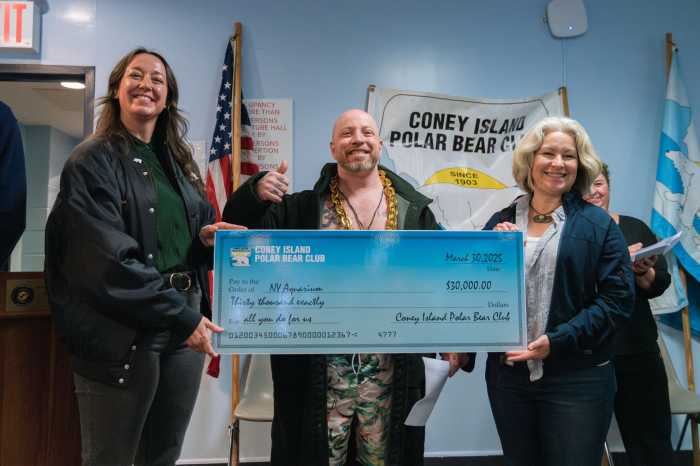
It’s not too early to start planning for 2026, and registration is officially open to bring in the new year the Brooklyn way — at the Coney Island Polar Bear Plunge.
Thousands of people are expected to join the Coney Island Polar Bear Club for their annual New Year’s Day swim in the frigid Atlantic Ocean. The event is free and open to the public, and swimmers can sign up online through New Year’s Eve or in-person on New Year’s Day, but advance sign-up and donations of at least $30 are encouraged. While supplies last, participants who raise more than $50 will receive a limited-edition Polar Bear Plunge beanie.
Money raised at the Plunge is donated to local nonprofits — last year, the event raised $60,000 for seven groups, including the New York Aquarium, Coney Island USA, and the Coney Island library.
“The Plunge is more than a tradition; it’s a lifeline,” said Cindy Vourderis, public relations manager for the Alliance for Coney Island, in a statement. “Every dollar raised helps support things like free public programming, youth education, job training, and other initiatives that keep Coney Island thriving. We depend on the generosity of our plungers to make this impact possible.”
The Coney Island Polar Bear Plunge has been a beloved local tradition since 1903. While the Polar Bears plunge year-round, most of their events are closed to the public, and the New Year’s Day swim is the only time New Yorkers can join them. Though the weather in recent years has been warmer-than-average, ocean temps usually hover around 40 degrees Fahrenheit — well below the temperature usually considered comfortable for a dip in the sea.
Below-freezing temps don’t dissuade dedicated swimmers, who flock to the beach in thousands every year, many dressed up in costumes and festive attire. The cold waves are a good way to “wash off the old year” one swimmer, Laura, told Brooklyn Paper in 2023. It can also mark new beginnings in a new year.

“This year I want to be kinder to myself so that I can also be kinder to others,” another 2023 swimmer, Jose, told Brooklyn Paper at the time. “I think [the Polar Bear Plunge] is a good way to start that since I’m doing something fun for me but also I donated to the charities as well.”
For some, the Plunge is just good clean fun.
“It was a really good time,” said 2024 swimmer Joshua North. “Everyone was in good spirits having a good time just enjoying themselves and no one seemed to be too cold or struggling with it. I definitely think it’s going to be a new tradition.”

Online registration is open now, and will remain open up until New Year’s Day. In-person check-in and registration begins at 10 a.m. on Jan. 1, 2026, on Stillwell Avenue near the Riegelmann Boardwalk. Swimmers of all ages and experience levels are open, though participants under age 18 must have a completed waiver signed and have a parent or guardian present at check-in. As of Dec. 1, one month before the plunge, more than 1,000 people had signed up, per the Polar Plunge website, and had raised $11,103 of the event’s $150,000 fundraising goal.
“In legendary NYC tradition, the Coney Island Polar Bear Club will once again open our den to the public for our New Year’s Day Plunge,” said Jarred Lustgarten, President of the Coney Island Polar Bear Club, in a statement. “We invite all weird and non-weird folks to be baptized into 2026 with heart-pounding fun in the frigid Atlantic. No experience needed, just bring a towel, a friend, a stranger… anyone! Expect live music, hot cocoa, and epic vibes. And don’t forget to dig that paw deep in your wallet to support local charities. Swim safe, smile big!”
The post Sign-ups open to dive into 2026 at the Coney Island Polar Bear Plunge first appeared on Audio Posts – audio-posts.com.

Keir Starmer has been pushed to defend his chancellor after she was accused of lying in the run-up to the autumn budget. Rachel Reeves is alleged to have misled the public by citing bleak economic forecasts from the Office for Budget Responsibility to justify tax rises, even though the figures were more positive than she suggested. Lucy Hough is joined by the head of national news, Archie Bland. Help support our independent journalism at theguardian.com/infocus
The post Has Rachel Reeves been economical with the truth? first appeared on Audio Posts – audio-posts.com.


