Categories
Sites

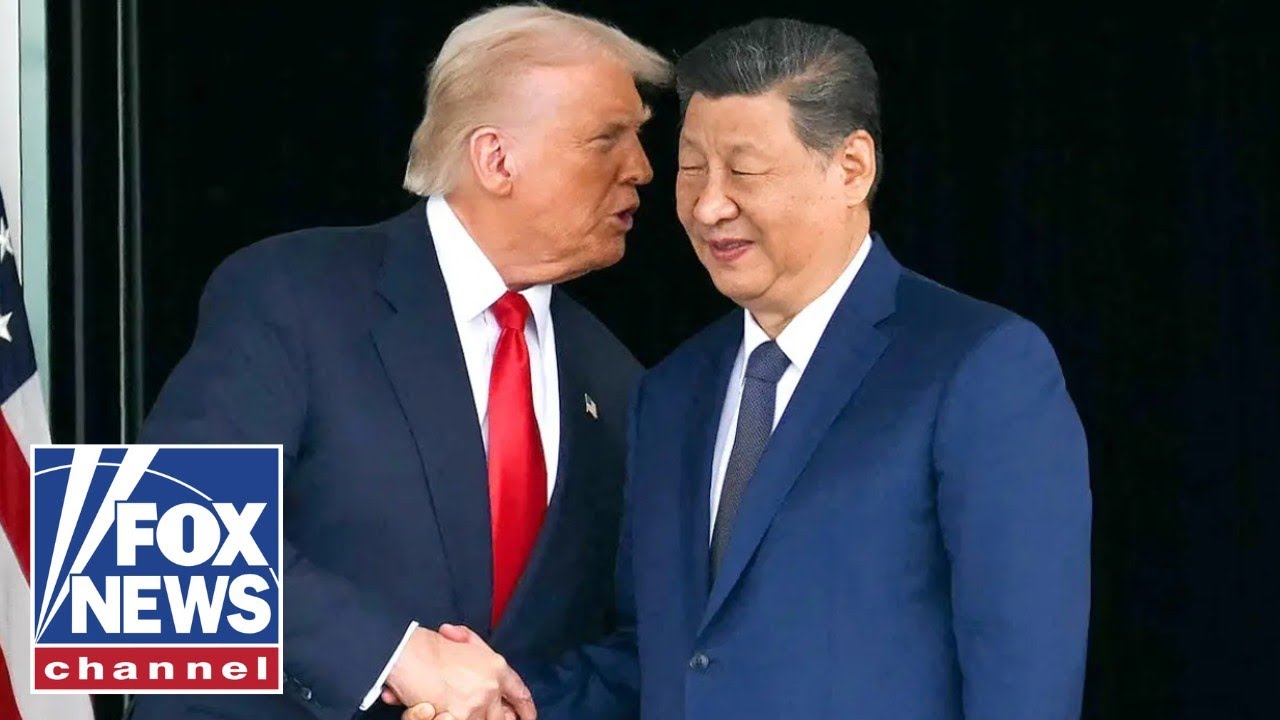
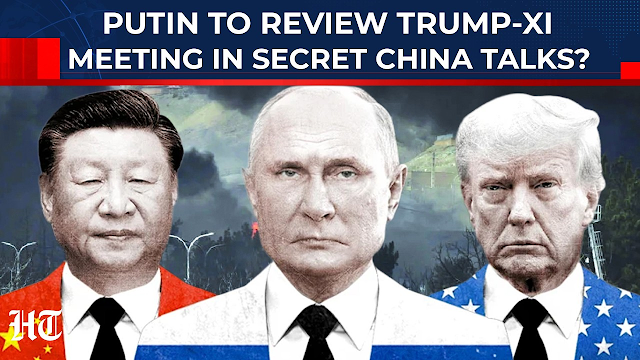
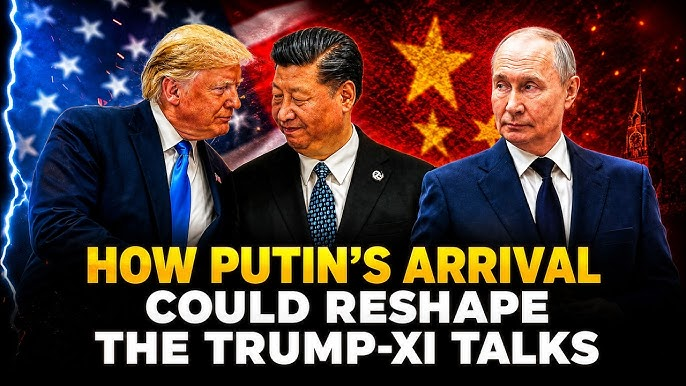
Chinese President Xi Jinping is positioning himself as the central mediator in global politics, hosting back-to-back summits with the leaders of the United States and Russia. While Trump’s visit concluded with a mix of pageantry and unresolved tension, Putin is set to arrive in Beijing just days later to reinforce the Sino-Russian partnership.


AI Brief

Summary

Chinese President Xi Jinping is positioning himself as the central mediator in global politics, hosting back-to-back summits with the leaders of the United States and Russia. While Trump’s visit concluded with a mix of pageantry and unresolved tension, Putin is set to arrive in Beijing just days later to reinforce the Sino-Russian partnership.

Key Stories

  • Trump concludes China visit with mixed results — President Trump finished his high-stakes visit to Beijing where he discussed the Iran conflict and Taiwan, though the talks ended without major breakthroughs on key stalemates.

  • Putin scheduled for immediate follow-up summit — Just hours after Trump’s departure, the Kremlin announced Vladimir Putin will visit Beijing on May 19 to celebrate 25 years of friendship and deepen strategic ties with China.

  • Stark warnings over Taiwan and security — During the meetings, Xi Jinping reportedly issued serious warnings regarding Taiwan, emphasizing that any mishandling of the situation could lead to direct conflict between the world powers.

  • Extreme security measures on Air Force One — In a notable display of caution, U.S. staff reportedly discarded all items received in China, including press badges and burner phones, before boarding the presidential plane. 

Putin and the Trump-Xi talks

Putin and the Trump-Xi talks

Putin and the Trump-Xi talks – 11:54 AMhttps://share.google/aimode/55v5lXRMQsEN3DwMB AI ModeRussian President Vladimir Putin is scheduled to visit Beijing on May 19–20, 2026, for high-stakes talks with Chinese President Xi Jinping, less than 24 hours after U.S. President Donald Trump concluded his own state visit to China. The Kremlin announced the timing on May 16, 2026, revealing that Putin had closely watched the Trump-Xi summit and is using his upcoming trip to discuss what transpired between the American and Chinese leaders, while securing Russia’s strategic and economic reliance on China. [1, 2, 3] The Context of the Back-to-Back SummitsThe rapid scheduling highlights China’s delicate balancing act as a dominant global mediator engaging rival superpowers within the same week. [3] The Trump-Xi Summit (May 13–15, 2026): President Trump completed a highly publicized, two-day visit to Beijing. Talks focused primarily on trade, Taiwan, and the escalating war involving Iran. Trump praised improving U.S.-China ties and extended an invitation for Xi to visit the White House on September 24, 2026. However, the meetings yielded few substantive breakthroughs on core issues like trade disputes or the Russia-Ukraine war.The Putin-Xi Meeting (May 19–20, 2026): Officially timed to mark the 25th anniversary of the Sino-Russian Treaty of Friendship, Putin’s upcoming two-day trip serves as an immediate check-in. According to Kremlin spokesperson Dmitry Peskov, the trip provides an opportune moment for Russia and China to “share opinions on the contacts that the Chinese had with the Americans.” [1, 2, 3, 4, 5, 6, 7, 8, 9] Putin’s Geopolitical ObjectivesWith Russia deeply isolated by Western sanctions over the Ukraine war, Putin is visiting China from a position of economic dependence, seeking to reaffirm their “no limits” partnership. His core agenda includes: [3, 9] Energy Breakthroughs: Putin signaled that major oil and gas agreements are nearing completion. The focus will center heavily on expanding hydrocarbon trade and advancing the Power of Siberia 2 pipeline to divert Russian gas away from European markets toward China.Economic Agreements: In addition to meeting Xi, Putin will hold sessions with Chinese Premier Li Qiang to deepen bilateral intergovernmental and economic trade cooperation.Diplomatic Reassurance: During a private garden tour at Zhongnanhai, Xi explicitly name-dropped Putin to Trump, pointing out that Putin is one of the very few foreign leaders regularly permitted into the elite government compound. Analysts suggest Putin’s immediate arrival is intended to show the West that Trump’s overtures have not disrupted the Moscow-Beijing axis. [2, 3, 4, 8, 10, 11] Putin Heads To China Days After Historic Xi-Trump Summit …, YouTube · MIRROR NOW · 2026 M05 15[1] https://www.nytimes.com[2] https://www.cbsnews.com[3] https://www.msn.com[4] https://www.bbc.com[5] https://www.cnn.com[6] https://www.youtube.com[7] https://www.youtube.com[8] https://www.euronews.com[9] https://www.aljazeera.com[10] https://timesofindia.indiatimes.com[11] https://www.nytimes.com-Xi’s Diplomatic Maneuvering: US, Russia https://gemini.google.com/share/2edc837d6363 The recent diplomatic sequencing in Beijing presents a masterclass in high-level leadership maneuvering. Less than 24 hours after U.S. President Donald Trump concluded a highly publicized state visit to China on May 15, 2026, the Kremlin announced that Russian President Vladimir Putin will arrive in Beijing for his own two-day summit with Chinese President Xi Jinping on May 19–20.This back-to-back scheduling places Xi at the fulcrum of current global power dynamics, forcing both Washington and Moscow to navigate their strategic objectives through Beijing.The Trump-Xi TalksTrump’s visit, his first to China in nearly a decade, involved significant pageantry—including a private meeting at the Zhongnanhai compound—but concluded with profound differences still on the table.The Iran Conflict: A major focal point was the ongoing U.S.-Israeli war with Iran. Trump sought to ensure alignment, noting that China—Iran’s largest oil customer—agreed that the Strait of Hormuz must remain open and that Iran should not possess nuclear weapons.

Categories
Sites

Trump, China, Russia, Ukraine, Iran: The intersection of these five nations is currently the focal point of a massive shift in global power dynamics, playing out most visibly at the high-stakes summit in Beijing this week between President Donald Trump and President Xi Jinping.


Global Power Shifts: China, Iran, Russia https://gemini.google.com/share/6c8980cbaec6

Gemini: 

The intersection of these five nations is currently the focal point of a massive shift in global power dynamics, playing out most visibly at the high-stakes summit in Beijing this week between President Donald Trump and President Xi Jinping.

Occurring against the backdrop of both the ongoing Ukraine War and the recently escalated Iran War, the diplomatic maneuvering heavily features the strategic use of energy corridors and economic leverage to reshape military alliances. 


Trump, China, Russia, Ukraine, Iran

AI Mode: 
President Donald Trump’s foreign policy centers on resolving intersecting military crises with China, Russia, Ukraine, and Iran. The administration is managing a direct conflict with Iran, navigating a major trade and diplomatic summit with China, and pushing for an exit strategy in the Russia-Ukraine war. [1, 2, 3, 4, 5]

The U.S.-Iran War and the China Summit [1, 6, 7]

  • Beijing Negotiations: President Trump just concluded a three-day diplomatic summit in Beijing with Chinese President Xi Jinping, where the U.S.-led war against Iran and the blockade of the Strait of Hormuz dominated the agenda.
  • The Nuclear Impasse: Trump shifted U.S. policy by offering a 20-year timeline to deny Iran weaponized nuclear capability (moving away from an indefinite ban), but he maintains that the current terms of Iran’s peace proposal are unacceptable.
  • Points of Agreement: Trump and Xi found common ground on two core principles: Iran must not acquire a nuclear weapon and the Strait of Hormuz must be reopened to secure global energy flows.
  • Chinese Resistance: Despite this consensus, Xi refused to cut off Chinese imports of Iranian oil or directly pressure Tehran on behalf of the U.S.. Xi also explicitly warned Trump against crossing red lines regarding Taiwanese independence.
  • Potential Military Escalation: Having returned to Washington with no breakthrough, Trump is weighing whether to resume targeted military strikes. The Pentagon has already drafted plans to escalate operations if a temporary ceasefire fully collapses. [2, 4, 8, 9, 10, 11, 12, 13]

The Russia-Ukraine War Dynamics

  • Shifted American Priorities: The war in Ukraine has taken a backseat in Washington, as top U.S. negotiators (including Jared Kushner and Steve Witkoff) are heavily preoccupied with the Iran crisis.
  • Trump’s Stance on Putin: During an April 29 phone call, Russian President Vladimir Putin offered to take in Iran’s highly enriched uranium to help broker a nuclear deal. Trump rebuffed the offer, bluntly telling Putin to focus instead on ending Russia’s war with Ukraine.
  • Financial Compensation: Under Trump’s broader strategy, the administration continues to demand that Ukraine agree to a ceasefire with Russia while seeking $500 billion in mineral resource compensation from Kyiv to repay past U.S. wartime aid.
  • Russia’s Massive Aerial Escalation: While the U.S. pushes for negotiations, Russia has drastically escalated hostilities on the ground. In a deliberate two-day window, Russia fired over 1,500 drones and dozens of missiles at Ukraine, resulting in dozens of civilian casualties in Kyiv and extensive damage to energy infrastructure. [14, 15, 16, 17, 18, 19]

The China-Russia-Iran Alignment

  • Dual-Use Technology: The U.S. and European partners remain deeply concerned by China’s role as a non-neutral actor. Beijing supplies roughly 90 percent of Russia’s dual-use technology, directly fueling Moscow’s military production capabilities.
  • Strategic Coordination: While China, Russia, and Iran operate with a level of strategic ambiguity, their coordinated economic and diplomatic maneuvering presents a united front designed to test and stretch the limits of American military and economic leverage across both Europe and the Middle East. [3, 20, 21, 22]

Global Power Shifts: China, Iran, Russia https://gemini.google.com/share/6c8980cbaec6

The intersection of these five nations is currently the focal point of a massive shift in global power dynamics, playing out most visibly at the high-stakes summit in Beijing this week between President Donald Trump and President Xi Jinping.

Occurring against the backdrop of both the ongoing Ukraine War and the recently escalated Iran War, the diplomatic maneuvering heavily features the strategic use of energy corridors and economic leverage to reshape military alliances. 

Gemini: 

The intersection of these five nations is currently the focal point of a massive shift in global power dynamics, playing out most visibly at the high-stakes summit in Beijing this week between President Donald Trump and President Xi Jinping.

Occurring against the backdrop of both the ongoing Ukraine War and the recently escalated Iran War, the diplomatic maneuvering heavily features the strategic use of energy corridors and economic leverage to reshape military alliances.

Here is a breakdown of the current structural and diplomatic realities connecting these actors as of mid-May 2026:

The U.S.-China Summit & Energy Diplomacy

The central diplomatic push of President Trump’s visit to Beijing has been an attempt to sever, or significantly weaken, the economic lifeline between China and Iran.

  • The Energy Security Pivot: China currently imports roughly 40% of its oil from Iran. In a strategic play to alter this dependency, the U.S. is utilizing its domestic resource production as leverage. President Trump has signaled that an agreement is being structured wherein China would substitute its Iranian oil reliance with U.S. energy exports—specifically routing Chinese tankers to Texas, Louisiana, and Alaska.


Categories
Current News Blog

FBI News


Categories
Current News Blog

Elon Musk


Categories
Current News Blog

Blogs


Categories
News Review from The World Web Times

Buspirone: Side Effects, Dosage, Uses, and More – Healthline


Buspirone is an oral medication used to treat anxiety disorders. Learn about side effects, warnings, dosage, and more.

Categories
News Review from The World Web Times

Magasins à Kaysersberg (68240) : Horaires, Adresse et Avis


Liste des Magasins, Boutiques, Commerces à Kaysersberg (68240) : Horaires d’ouverture, adresse, avis clients et numéro de téléphone.

Categories
Sites

President of Serbia arrives in Azerbaijan on visit


On May 17, President of the Republic of Serbia Aleksandar Vučić arrived in Azerbaijan to participate in the 13th session of the UN World Urban Forum (WUF13), AzerNEWS reports.

The post President of Serbia arrives in Azerbaijan on visit first appeared on The South Caucasus News – SouthCaucasusNews.com.


Categories
Blog and Tweets

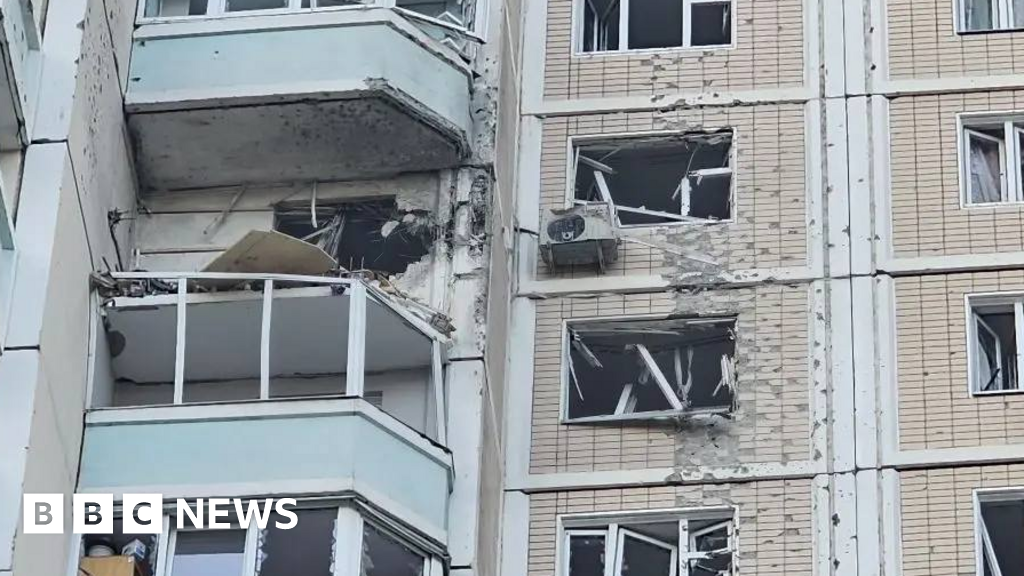
Ukraine launched more than 550 drones overnight, targeting more than a dozen Russian regions, including Moscow, Russian officials said, in a deadly attack that’s among the largest-scale aerial assaults aimed at the capital region since the war began. At least three people were killed … Ukraine’s Deep Drone Strikes on Russia https://gemini.google.com/share/b2a846f95091 https://share.google/aimode/bUUnSJLou6h4kjaT5 https://share.google/aimode/qTbcvJNGjuwm7x1gV


Categories
Blog and Tweets

Ukraine launched more than 550 drones overnight, targeting more than a dozen Russian regions, including Moscow, Russian officials said, in a deadly attack that’s among the largest-scale aerial assaults aimed at the capital region since the war began. At least three people were killed … Ukraine’s Deep Drone Strikes on Russia https://gemini.google.com/share/b2a846f95091 https://share.google/aimode/bUUnSJLou6h4kjaT5 https://share.google/aimode/qTbcvJNGjuwm7x1gV