
O governo federal anunciou o Novo Desenrola Brasil, em uma tentativa de reduzir o nível de endividamento das famílias e reorganizar o acesso ao crédito no país. A proposta combina renegociação de dívidas com oferta de crédito mais barato, mirando principalmente pessoas com renda mensal de até R$ 8.105.
Day: May 5, 2026
#CIA #FBI #ODNI
The USSR and the WW2: The Wound That Never Healed
x.com/mikenov/status/2051674…Michael Novakhov (@mikenov) #WW2 #USSR #Putin
USSR’s WW2 Victory: A Pyrrhic Triumph gemini.google.com/share/096d…
The outcome of the WW2: was it a victory or the concealed defeat for the USSR?
share.google/aimode/HFQ73tWh…
Gemini:
The outcome of World War II for the USSR is one of history’s most complex paradoxes. Officially and militarily, it was an undeniable, monumental victory. However, when historians and economists analyze the staggering costs and the long-term consequences, many argue it was a “Pyrrhic victory”—one won at such a devastating cost that it carried the seeds of a concealed defeat.Here is a breakdown of why both perspectives hold historical weight.
The Case for an Unquestionable Victory
From a geopolitical and military standpoint, the Soviet Union emerged from WWII as the primary victor in the European theater.
Military Triumph: The Red Army was the decisive force in destroying the Nazi war machine. The Soviet Union was responsible for roughly 75% to 80% of German military casualties during the war, ultimately capturing Berlin and ending the fascist threat in Europe.
Geopolitical Superpower: Before the war, the USSR was a largely isolated, pariah state. After 1945, it was one of the world’s two superpowers. Through the Yalta and Potsdam conferences, it secured a massive “buffer zone” in Eastern Europe, expanding its borders and installing allied communist governments.
Global Influence: The USSR secured a permanent seat and veto power on the newly formed United Nations Security Council, cementing its role in shaping post-war global policy.The Case for a “Concealed Defeat”
Despite the geopolitical triumph, the internal reality of the Soviet Union was one of near-total devastation. The argument that it was a “concealed defeat” rests on the idea that the USSR never truly recovered from the trauma and structural damage of the war.
Demographic Catastrophe: The human cost is almost unfathomable. The USSR lost approximately 27 million citizens (roughly 8.7 million military and 18-19 million civilians). This created a massive demographic crater, including a severe gender imbalance and a “lost generation” of young men, which stunted population growth and economic productivity for decades.
Economic Devastation: The western portion of the Soviet Union—its industrial and agricultural heartland—was completely obliterated. Thousands of towns, tens of thousands of villages, and tens of thousands of factories were destroyed. While the US emerged economically enriched by the war, the USSR spent the next decade just trying to rebuild the baseline infrastructure it had lost.
The Burden of Empire: To maintain control over its newly acquired Eastern European empire and to compete with the United States in the ensuing Cold War, the USSR was forced to maintain a massive, bloated military-industrial complex. This drained resources away from consumer goods, agriculture, and civilian innovation, ultimately contributing to the economic stagnation that caused the Soviet Union to collapse in 1991.
Ideological Paranoia: Millions of Soviet soldiers saw the outside world (and its comparatively higher living standards) for the first time as they marched through Europe. Fearing this exposure would undermine communist ideology, Stalin’s regime cracked down brutally after the war, sending hundreds of thousands of returning POWs and soldiers to the Gulag.The Verdict
Categorizing it purely as a victory or a defeat is difficult. It was a definitive military and geopolitical victory, but it was achieved through a catastrophic national trauma. The Soviet Union won the war and secured its empire, but the methods used and the blood spilled left the nation with structural and demographic wounds that never fully healed.
Are you more interested in exploring the immediate post-war economic recovery of the USSR, or how this demographic loss shaped Soviet society during the Cold War?— https://x.com/mikenov/status/2051674316413010331
— Michael Novakhov (@mikenov) May 5, 2026
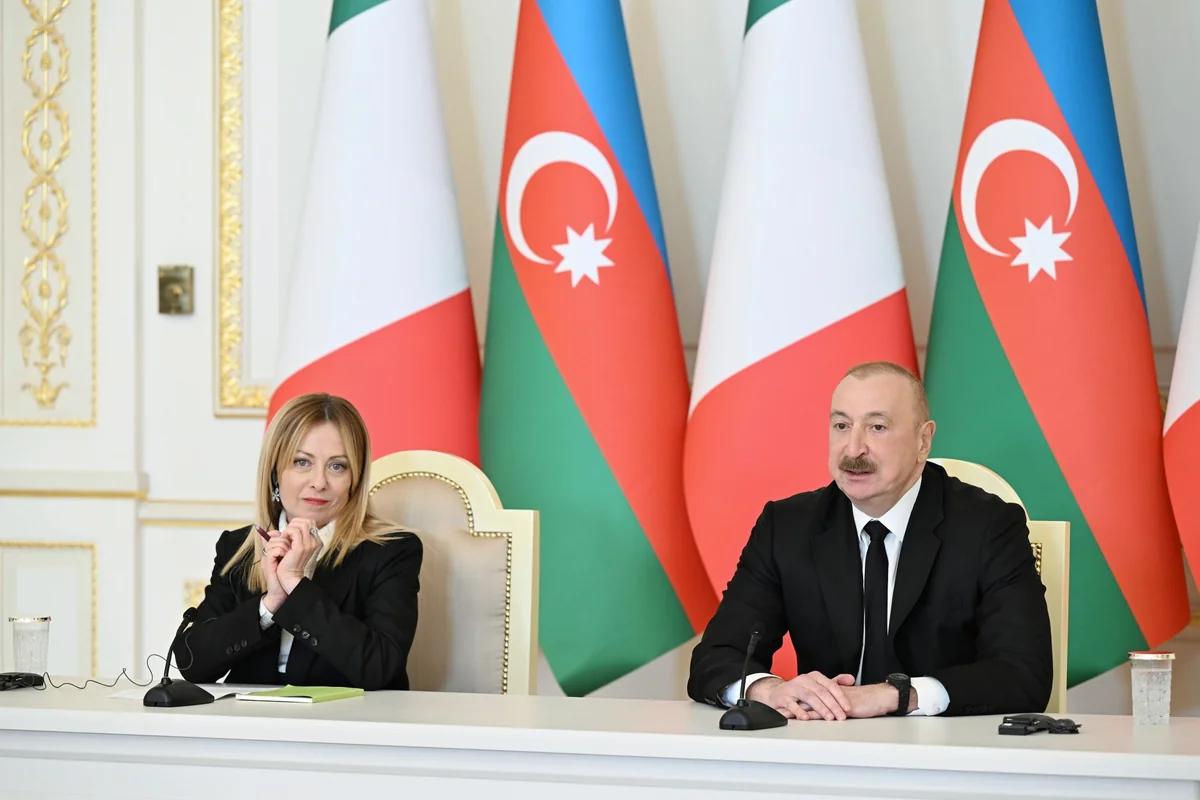
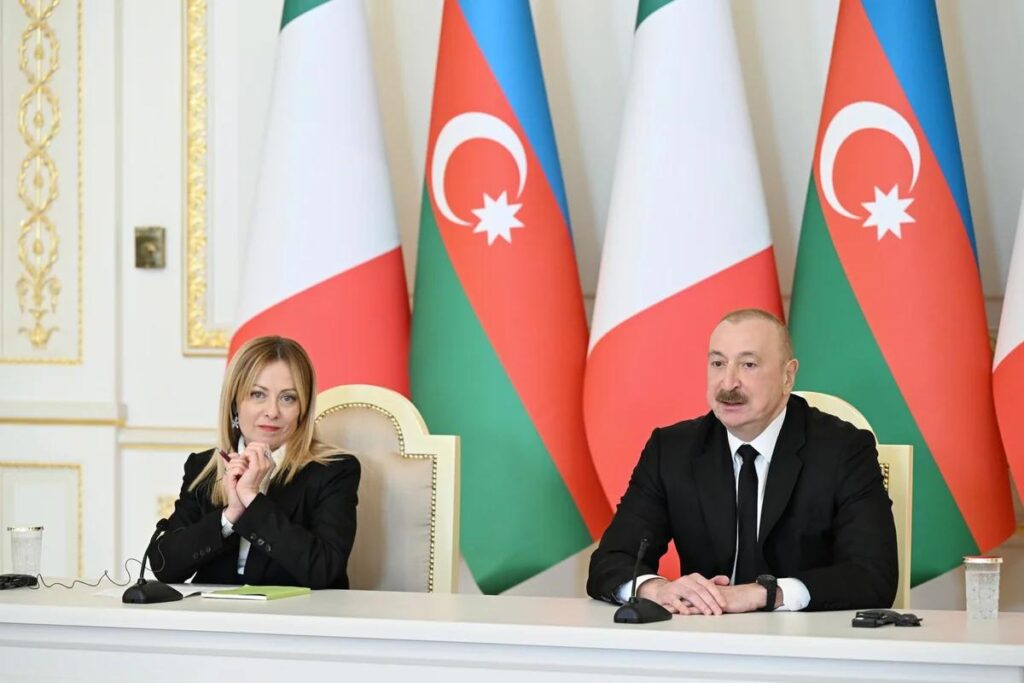
Giorgia Meloni in Baku
For Italian Prime Minister Giorgia Meloni, the visit to Baku on 4 May is not simply about continuing gas agreements. Several factors shape the visit. Three are key:
- Europe is moving away from Russian energy and looking for alternatives,
- the South Caucasus is at a sensitive stage in the post-conflict normalisation process,
- Azerbaijan is increasingly positioning itself as a regional energy hub.
Meloni arrived in Baku from Armenia, where she attended the 8th European Political Community summit.
This suggests that the political message sent from Rome to Baku was closely linked to Yerevan.
The visit is not only about Italy–Azerbaijan relations. It also reflects the growing role of the South Caucasus in Europe’s energy supply, transport connectivity and security.
The author of this analytical review has chosen to remain anonymous.
Key agreements reached during the visit
The official programme of Italian Prime Minister Giorgia Meloni’s visit was packed.
It began with a one-on-one meeting with President Ilham Aliyev, followed by talks in an expanded format. The leaders then made joint press statements, and the visit ended with a working dinner.
The following outcomes were announced:
- agreements in culture and food security,
- expanded energy cooperation, including plans to increase Azerbaijani gas exports to Italy and discussions on expanding the Trans Adriatic Pipeline (TAP),
- deeper defence and military cooperation through joint projects and production, combining Italian technology with Azerbaijan’s financial resources,
- a decision to hold an Azerbaijan–Italy business forum in Baku in the second half of 2026,
- the creation of a mechanism for ongoing political coordination, with future priorities to be defined jointly,
- expanded participation of Italian companies in the reconstruction of Karabakh and East Zangezur, alongside increased Italian investment in Azerbaijan.
Beyond energy: the context of Azerbaijan–Italy relations
Energy has long underpinned relations between Italy and Azerbaijan. But the partnership is no longer limited to that sector.
Strategic partnership declarations were signed in 2014 and 2020. This political framework is reflected in economic ties, with Italy Azerbaijan’s main trading partner.
At the sixth meeting of the intergovernmental commission in January 2026, Baku said:
Italy accounts for 25% of Azerbaijan’s foreign trade and 46.7% of its total exports.
At a joint briefing on 4 May, Azerbaijani President Ilham Aliyev said bilateral trade reached about $12bn in 2025.
The presence of around 130 Italian companies in Azerbaijan, along with 23 projects in Karabakh and East Zangezur implemented with Italian partners, suggests the relationship is moving into a “post-oil” phase.
Gas, however, remains the key pillar.
According to Aliyev, Azerbaijan exported 25 billion cubic metres of natural gas last year, with 9.5 bcm going to Italy.
Official data published in January 2026 shows that the Trans Adriatic Pipeline (TAP) has delivered 54.3 bcm of gas to Europe, including 45.4 bcm to Italy.
Azerbaijan’s Energy Ministry also said TAP met around 15% of Italy’s gas demand in 2025.
At the same time, ties are deepening in investment.
According to ministry data published in January, the portfolio of the State Oil Fund of Azerbaijan (SOFAZ) in Italy reached $2.8bn.
In 2025, the fund signed a deal to acquire a 49% stake in a solar energy portfolio in Italy with a capacity of 402 megawatts.
These figures suggest that ties between Baku and Rome are gradually expanding from fossil fuels towards green transition projects.
“Filling the gap”: the visit timeline and official signals
Italian Prime Minister Giorgia Meloni set the tone for the visit.
In Baku, she said no Italian prime minister had made an official visit to Azerbaijan in the past 13 years, and that this gap needed to be filled.
She said the sides had agreed to move cooperation into a format of “permanent political coordination” and to jointly define priorities.
Meloni also announced plans to hold a business forum in Baku in the second half of 2026.
This suggests the visit was less about signing major agreements immediately and more about shaping a new political and economic agenda.
Official statements also indicate that the agenda went beyond energy.
The discussions covered:
- expansion of the Trans Adriatic Pipeline (TAP),
- investment in new projects,
- defence cooperation, including joint production,
- cooperation in aerospace, maritime security and the protection of critical infrastructure.
Meloni described Azerbaijan as a “key hub” between Europe and Asia, and Italy as a “privileged gateway” to the European market.
She also highlighted Baku’s assistance in evacuating Italian citizens during the Iran crisis and in temporarily relocating Italy’s embassy from Tehran to Baku.
She also expressed support for the normalisation of relations with Armenia and described 2026 as an important year in this context..
Azerbaijan as part of Europe’s energy security
From the perspective of Europe’s energy security, Azerbaijan is not a “replacement giant”, but it clearly acts as a form of “strategic insurance”.
The European Commission says that in 2026 Baku continues to play an important role in reducing Europe’s dependence on Russian gas. Gas delivered via the Southern Gas Corridor helps make supplies more reliable and diversified.
Official data shows:
- Azerbaijan supplied around 13 billion cubic metres of gas to EU countries in 2025,
- in the same year, the EU imported 35 billion cubic metres of Russian gas.
In other words, Baku has not replaced Moscow, but it contributes to diversification of routes and sources, particularly along southern supply routes such as Italy.
A 2022 memorandum between the EU and Azerbaijan set a target of increasing supplies to at least 20 billion cubic metres by 2027.
However, progress depends on the gradual expansion of the Trans Adriatic Pipeline (TAP) and on securing financing in Europe.
Italian Prime Minister Giorgia Meloni’s visit to Baku, immediately after Yerevan, reflects Italy’s effort to strike a pragmatic balance in its South Caucasus policy.
Two parallel tracks are visible in Europe’s approach to the region:
- The EU–Armenia summit in Yerevan on 5 May focused on energy, transport, digitalisation and connectivity.
- At the same time, in Baku, Meloni described Azerbaijan as a strategic partner and a “bridge”.
This sequence does not make Rome a direct mediator between Azerbaijan and Armenia, but it reinforces the image of a European actor able to engage with both capitals.
This approach has limits — notably concerns over human rights.
The Carnegie Endowment for International Peace notes that EU–Azerbaijan relations remain largely energy-driven. Deeper political and economic rapprochement is constrained by disagreements over democracy, the rule of law and human rights.
This suggests that closer ties between Italy and Baku do not automatically translate into full alignment with Brussels’ broader agenda.
For Azerbaijan, the benefits are clear.
High-level contacts with a leading EU country strengthen Baku’s political standing.
Italy remains a stable buyer and an investment destination. A SOFAZ event in Baku in March — the “Azerbaijan–Italy Business and Investment Bridge” — highlighted efforts to give this cooperation a more institutional footing.
The involvement of Italian companies in projects in Karabakh and East Zangezur, along with prospects for defence cooperation, allows Baku to link post-conflict reconstruction with security cooperation.
Finally, against the backdrop of the Iran crisis, Baku’s role as a secure platform for Italy adds another layer of strategic trust to the relationship.

Risks remain significant
Risks, however, remain significant.
According to analytical materials from the European Parliament, after progress in the peace process in 2025, negotiations between Azerbaijan and Armenia have entered a prolonged pause.
The initialling of a peace agreement in Washington in August 2025 was an important step. But a number of sensitive issues that will determine the final signing and implementation of the deal remain unresolved.
The Chatham House also notes that proposed amendments to Armenia’s constitution — which Azerbaijan insists are needed, citing what it sees as territorial claims — and the status of regional transport routes remain disputed.
Moreover, rising military tensions around Iran in 2026 both increase the strategic importance of the South Caucasus and create new risks for regional stability, transport projects and the peace process.
In the energy sector, a different dilemma emerges.
The EU is diversifying gas supplies while also seeking to reduce reliance on fossil fuels. In this context, cooperation with Baku may expand. Over time, however, it is likely to rely less on gas and more on green energy and connectivity projects.
At this stage, ties between Baku and Rome are strengthening. But their long-term success will depend on how close the region comes to achieving a durable peace.
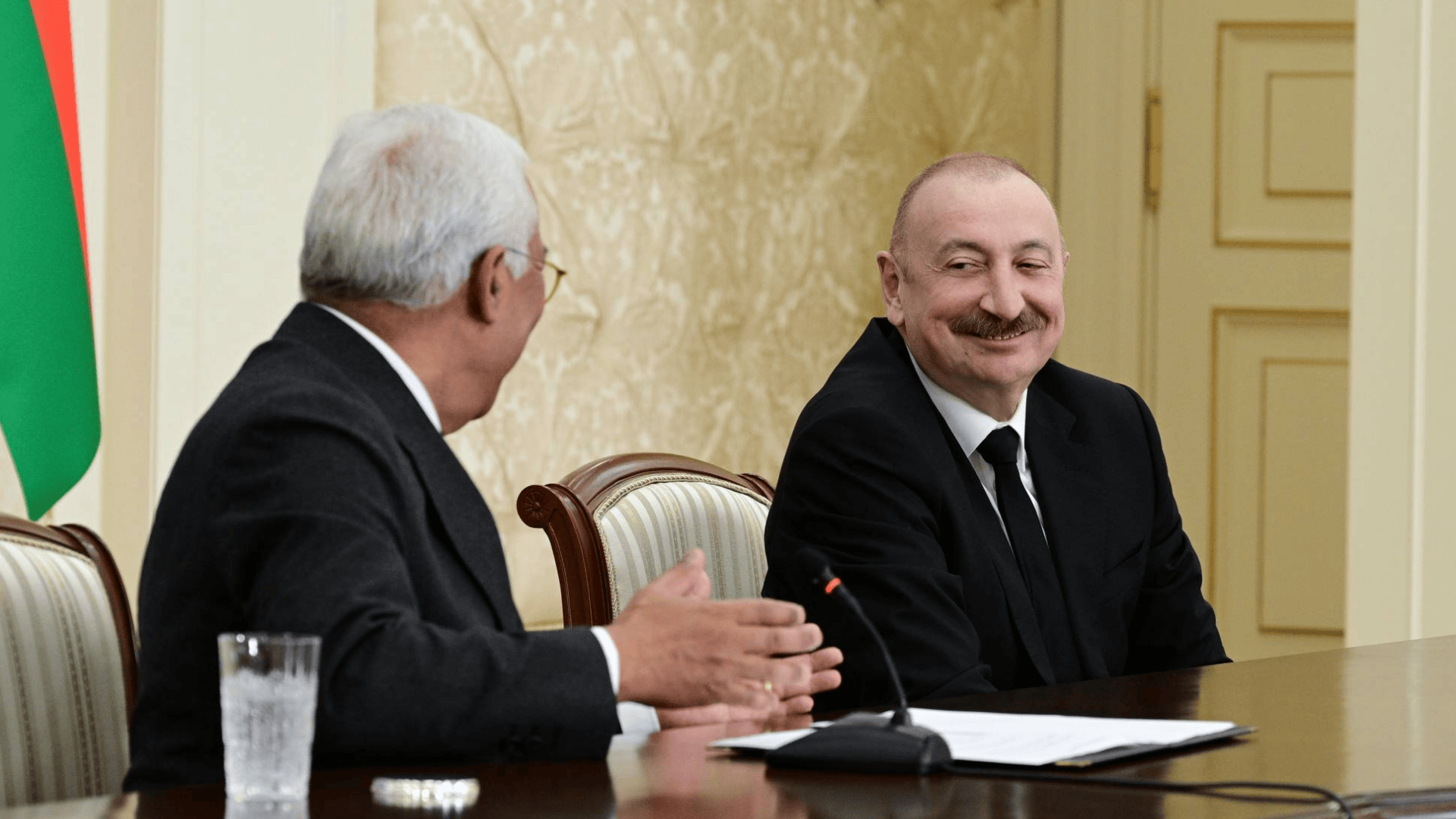
ДGiorgia Meloni in Baku
The post Opinion: Meloni’s Baku visit shows Europe balancing values and energy needs first appeared on The South Caucasus News – SouthCaucasusNews.com.
While quarterly company-specific data for 2024 remains limited, broader industry figures show that Azerbaijan’s sugar export sector had already been on an upward trajectory. In 2024, Azerbaijan exported sugar worth…
The post Azerbaijan Sugar Production Union boosts exports sharply in first quarter first appeared on The South Caucasus News – SouthCaucasusNews.com.
#CIA #FBI #ODNI
The USSR and the WW2: The Wound Unhealed
x.com/mikenov/status/2051674…Michael Novakhov (@mikenov) #WW2 #USSR #Putin
USSR’s WW2 Victory: A Pyrrhic Triumph gemini.google.com/share/096d…
The outcome of the WW2: was it a victory or the concealed defeat for the USSR?
share.google/aimode/HFQ73tWh…
Gemini:
The outcome of World War II for the USSR is one of history’s most complex paradoxes. Officially and militarily, it was an undeniable, monumental victory. However, when historians and economists analyze the staggering costs and the long-term consequences, many argue it was a “Pyrrhic victory”—one won at such a devastating cost that it carried the seeds of a concealed defeat.Here is a breakdown of why both perspectives hold historical weight.
The Case for an Unquestionable Victory
From a geopolitical and military standpoint, the Soviet Union emerged from WWII as the primary victor in the European theater.
Military Triumph: The Red Army was the decisive force in destroying the Nazi war machine. The Soviet Union was responsible for roughly 75% to 80% of German military casualties during the war, ultimately capturing Berlin and ending the fascist threat in Europe.
Geopolitical Superpower: Before the war, the USSR was a largely isolated, pariah state. After 1945, it was one of the world’s two superpowers. Through the Yalta and Potsdam conferences, it secured a massive “buffer zone” in Eastern Europe, expanding its borders and installing allied communist governments.
Global Influence: The USSR secured a permanent seat and veto power on the newly formed United Nations Security Council, cementing its role in shaping post-war global policy.The Case for a “Concealed Defeat”
Despite the geopolitical triumph, the internal reality of the Soviet Union was one of near-total devastation. The argument that it was a “concealed defeat” rests on the idea that the USSR never truly recovered from the trauma and structural damage of the war.
Demographic Catastrophe: The human cost is almost unfathomable. The USSR lost approximately 27 million citizens (roughly 8.7 million military and 18-19 million civilians). This created a massive demographic crater, including a severe gender imbalance and a “lost generation” of young men, which stunted population growth and economic productivity for decades.
Economic Devastation: The western portion of the Soviet Union—its industrial and agricultural heartland—was completely obliterated. Thousands of towns, tens of thousands of villages, and tens of thousands of factories were destroyed. While the US emerged economically enriched by the war, the USSR spent the next decade just trying to rebuild the baseline infrastructure it had lost.
The Burden of Empire: To maintain control over its newly acquired Eastern European empire and to compete with the United States in the ensuing Cold War, the USSR was forced to maintain a massive, bloated military-industrial complex. This drained resources away from consumer goods, agriculture, and civilian innovation, ultimately contributing to the economic stagnation that caused the Soviet Union to collapse in 1991.
Ideological Paranoia: Millions of Soviet soldiers saw the outside world (and its comparatively higher living standards) for the first time as they marched through Europe. Fearing this exposure would undermine communist ideology, Stalin’s regime cracked down brutally after the war, sending hundreds of thousands of returning POWs and soldiers to the Gulag.The Verdict
Categorizing it purely as a victory or a defeat is difficult. It was a definitive military and geopolitical victory, but it was achieved through a catastrophic national trauma. The Soviet Union won the war and secured its empire, but the methods used and the blood spilled left the nation with structural and demographic wounds that never fully healed.
Are you more interested in exploring the immediate post-war economic recovery of the USSR, or how this demographic loss shaped Soviet society during the Cold War?— https://x.com/mikenov/status/2051674316413010331
— Michael Novakhov (@mikenov) May 5, 2026
Joint initiative with Azerkhalcha OJSC highlights women’s empowerment and cultural heritage
The post Azercell presents ‘Strength, Woven Together’ carpet at International Carpet Festival first appeared on The South Caucasus News – SouthCaucasusNews.com.
#WW2 #USSR #Putin
USSR’s WW2 Victory: A Pyrrhic Triumph gemini.google.com/share/096d…
The outcome of the WW2: was it a victory or the concealed defeat for the USSR?
share.google/aimode/HFQ73tWh…
Gemini:
The outcome of World War II for the USSR is one of history’s most complex paradoxes. Officially and militarily, it was an undeniable, monumental victory. However, when historians and economists analyze the staggering costs and the long-term consequences, many argue it was a “Pyrrhic victory”—one won at such a devastating cost that it carried the seeds of a concealed defeat.Here is a breakdown of why both perspectives hold historical weight.
The Case for an Unquestionable Victory
From a geopolitical and military standpoint, the Soviet Union emerged from WWII as the primary victor in the European theater.
Military Triumph: The Red Army was the decisive force in destroying the Nazi war machine. The Soviet Union was responsible for roughly 75% to 80% of German military casualties during the war, ultimately capturing Berlin and ending the fascist threat in Europe.
Geopolitical Superpower: Before the war, the USSR was a largely isolated, pariah state. After 1945, it was one of the world’s two superpowers. Through the Yalta and Potsdam conferences, it secured a massive “buffer zone” in Eastern Europe, expanding its borders and installing allied communist governments.
Global Influence: The USSR secured a permanent seat and veto power on the newly formed United Nations Security Council, cementing its role in shaping post-war global policy.The Case for a “Concealed Defeat”
Despite the geopolitical triumph, the internal reality of the Soviet Union was one of near-total devastation. The argument that it was a “concealed defeat” rests on the idea that the USSR never truly recovered from the trauma and structural damage of the war.
Demographic Catastrophe: The human cost is almost unfathomable. The USSR lost approximately 27 million citizens (roughly 8.7 million military and 18-19 million civilians). This created a massive demographic crater, including a severe gender imbalance and a “lost generation” of young men, which stunted population growth and economic productivity for decades.
Economic Devastation: The western portion of the Soviet Union—its industrial and agricultural heartland—was completely obliterated. Thousands of towns, tens of thousands of villages, and tens of thousands of factories were destroyed. While the US emerged economically enriched by the war, the USSR spent the next decade just trying to rebuild the baseline infrastructure it had lost.
The Burden of Empire: To maintain control over its newly acquired Eastern European empire and to compete with the United States in the ensuing Cold War, the USSR was forced to maintain a massive, bloated military-industrial complex. This drained resources away from consumer goods, agriculture, and civilian innovation, ultimately contributing to the economic stagnation that caused the Soviet Union to collapse in 1991.
Ideological Paranoia: Millions of Soviet soldiers saw the outside world (and its comparatively higher living standards) for the first time as they marched through Europe. Fearing this exposure would undermine communist ideology, Stalin’s regime cracked down brutally after the war, sending hundreds of thousands of returning POWs and soldiers to the Gulag.The Verdict
Categorizing it purely as a victory or a defeat is difficult. It was a definitive military and geopolitical victory, but it was achieved through a catastrophic national trauma. The Soviet Union won the war and secured its empire, but the methods used and the blood spilled left the nation with structural and demographic wounds that never fully healed.
Are you more interested in exploring the immediate post-war economic recovery of the USSR, or how this demographic loss shaped Soviet society during the Cold War?
— Michael Novakhov (@mikenov) May 5, 2026
RT @charter_97: Зеленский хочет разоблачить «перемирие» Путина
Именно поэтому объявил свое:
qnl9lx-c97-org.cdn.ampprojec… t.co/OMuZoJkG…
— Michael Novakhov (@mikenov) May 5, 2026
RT @epochhealth: 🚨New Cause of Vaccine Adverse Events Found in Study
Read more
— Michael Novakhov (@mikenov) May 5, 2026
Ukrainian drone attacks in @Russia’s Cheboksary injure 3 youtube.com/watch?v=1rUa423u…
— Michael Novakhov (@mikenov) May 5, 2026
