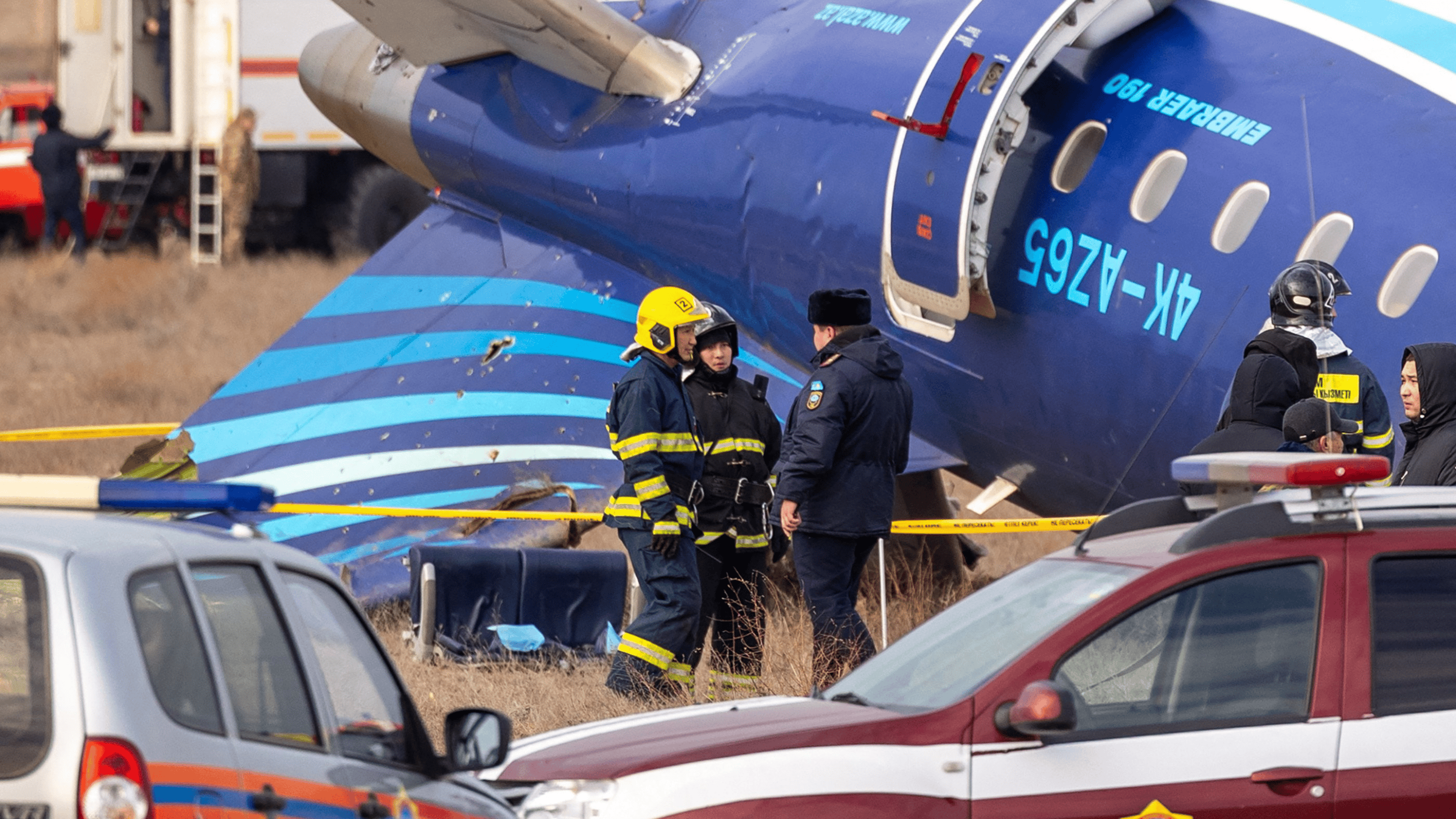
Agreement on the AZAL crash case
A joint statement by the foreign ministries of Azerbaijan and Russia on 15 April officially acknowledged that an Azerbaijani passenger plane operated by AZAL was unintentionally downed by Russian air defences on 25 December 2024.
The case, which had strained relations between the two countries for a year and a half, can now be considered closed.
During this period, Azerbaijan’s president and other officials consistently demanded that Moscow formally admit responsibility, punish those involved and pay compensation to the families of those killed and injured. The tragedy left 38 people dead and 29 survivors.
Of these three demands, two have effectively been met.
“In line with agreements reached by the presidents of Azerbaijan and the Russian Federation during their meeting in Dushanbe on 9 October 2025, the parties have reached an appropriate settlement of the consequences, including the issue of compensation payments,” the statement said.
According to the text, the tragedy resulted from the unintentional activation of an air defence system in Russian airspace.
The statement expressed deep condolences to the families of the victims and stressed that the decisions reflect a mutual intention to further develop cooperation based on allied relations.
Experts say the outcome of the 18-month standoff reflects the real balance of power and the nature of relations between Azerbaijan and Russia.
The crash: what happened
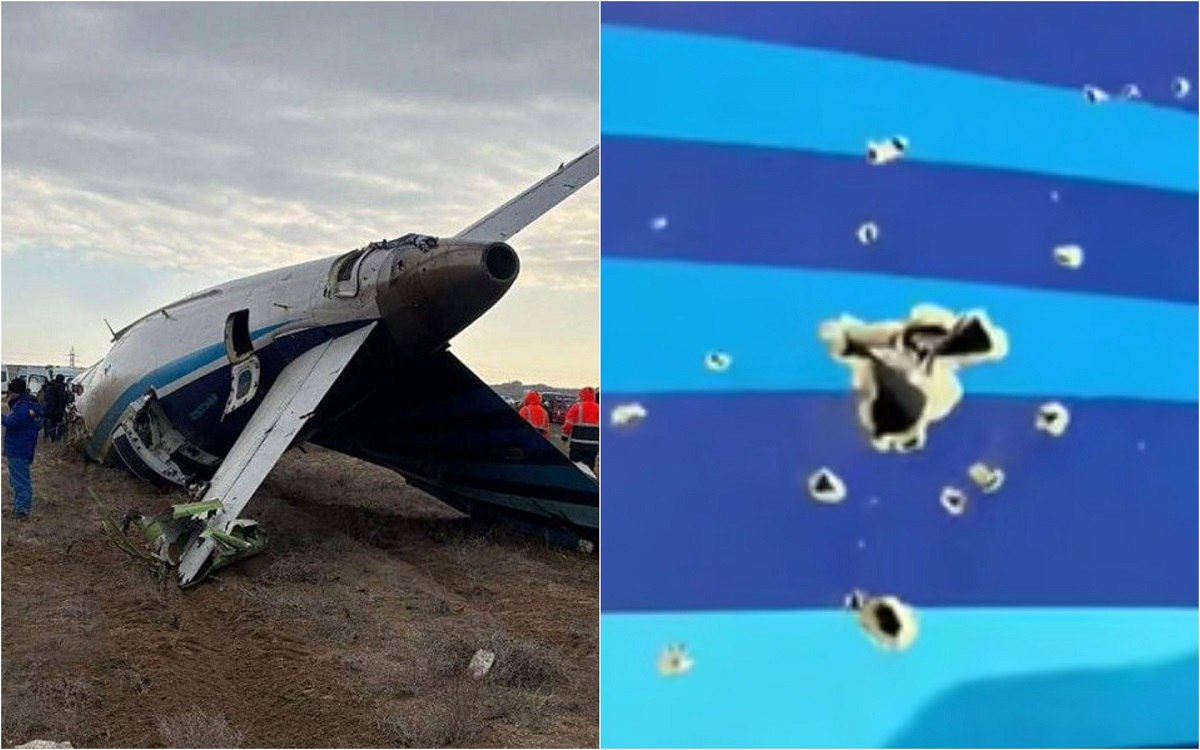
On 25 December 2024, an Embraer E190 operated by AZAL on a Baku–Grozny flight was damaged in Russian airspace near Grozny. There were 67 people on board: 38 were killed and 29 survived. The damage resulted from fire from a Russian Pantsir-S1 air defence system.
The aircraft later crashed during an emergency landing near the city of Aktau in Kazakhstan.
Azerbaijan immediately described the incident as the result of “external interference”. Officials pointed to shrapnel damage on the aircraft’s fuselage and GPS jamming signals recorded over Russian territory as evidence.
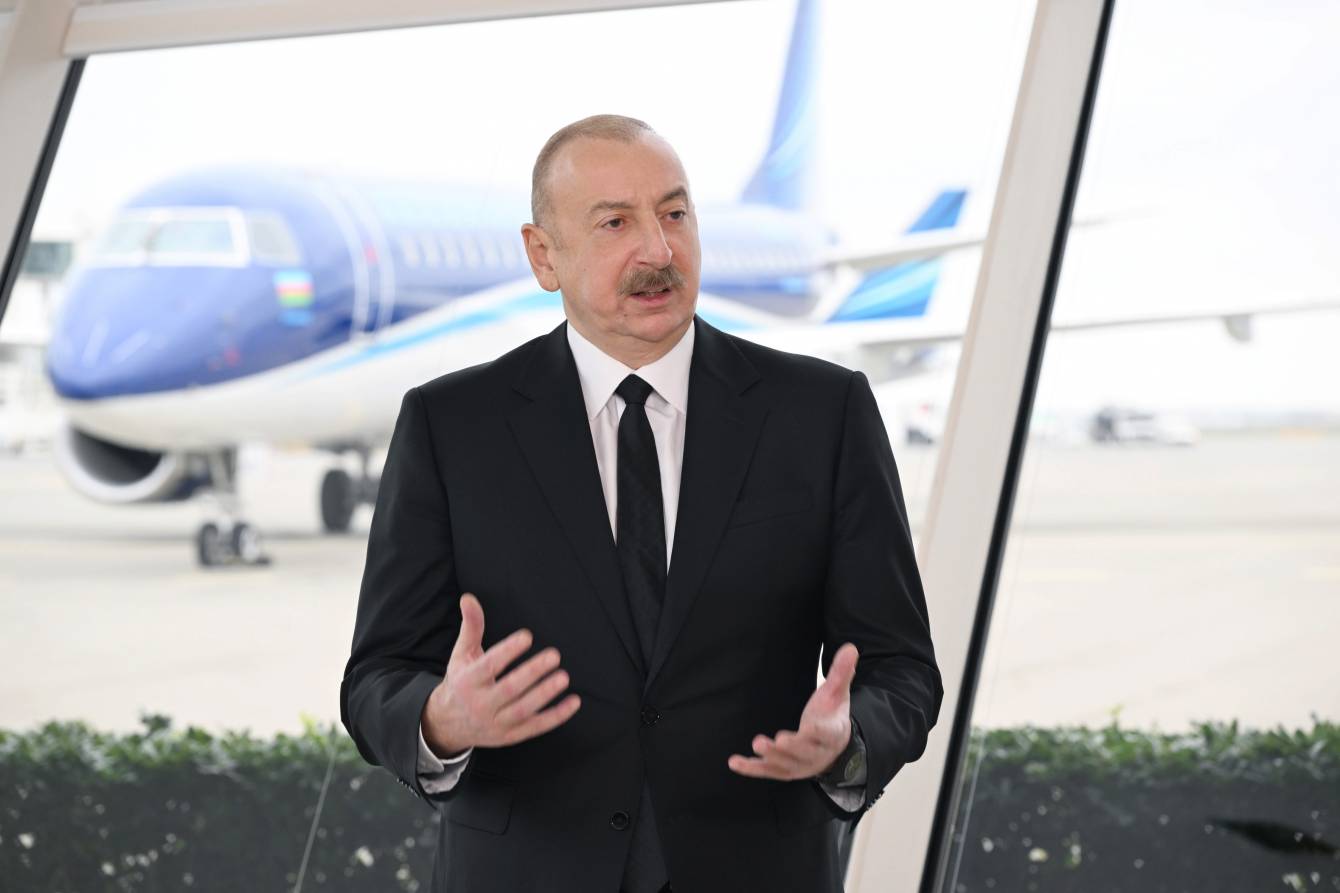
President Ilham Aliyev repeatedly demanded a formal apology from Russia, punishment for those responsible and compensation payments. For a long time, Baku stressed that full normalisation of relations would not be possible without resolving the issue, and sought to maintain a position of setting the terms in negotiations.
Partial recognition and promises in Dushanbe
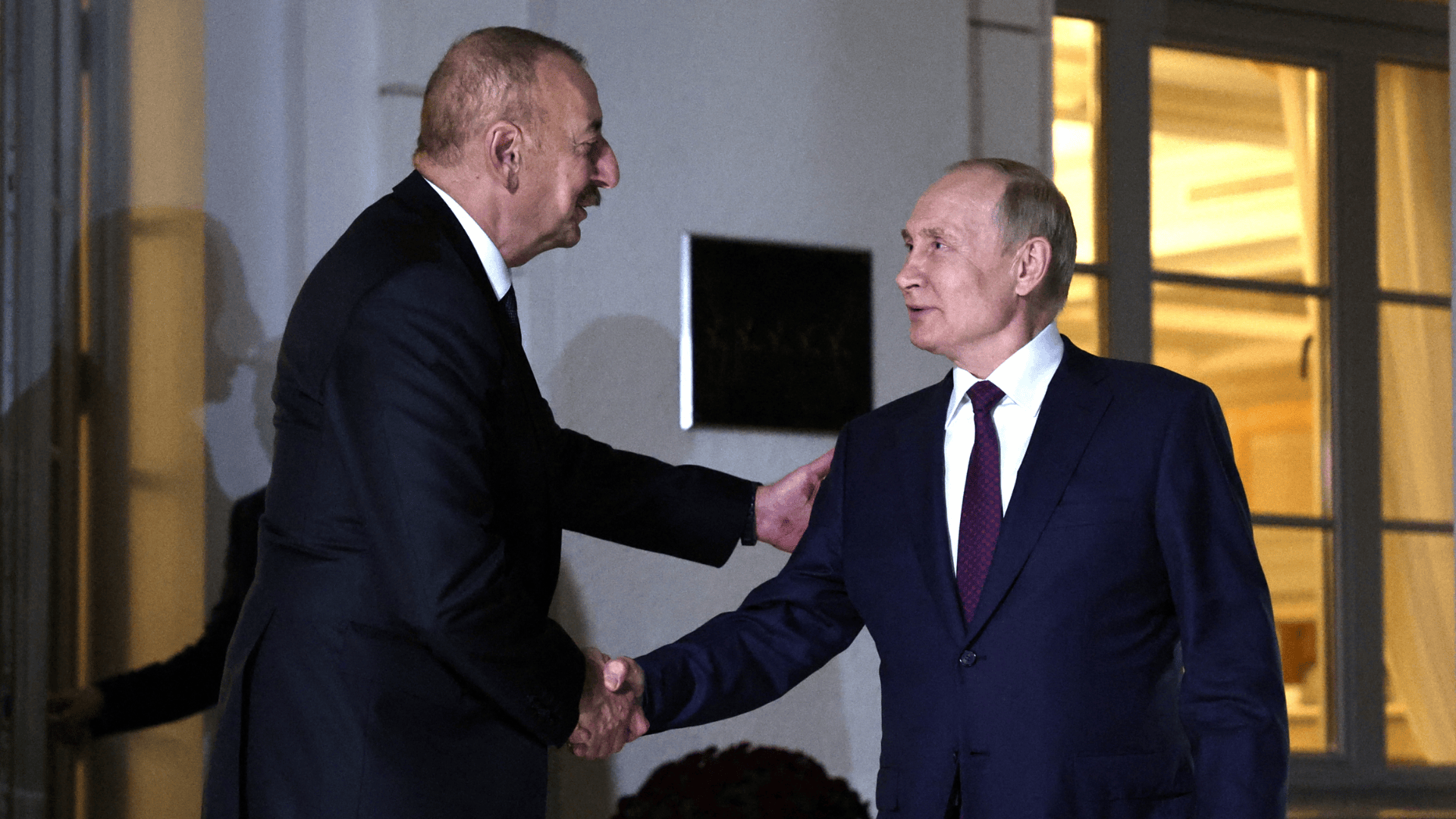
On 9 October 2025, during a meeting between Ilham Aliyev and Vladimir Putin in Dushanbe, the Russian president made his first public acknowledgment of the incident.
Putin said two missiles had been launched at Ukrainian drones and, due to a technical malfunction, exploded about 10 metres from the aircraft. He said the resulting shrapnel caused the damage.
Russia offered an apology and said that “compensation will be paid and those responsible will be punished”. Azerbaijan viewed the meeting as partial diplomatic progress.
Around the same time, Russia’s foreign ministry said the insurer AlfaStrakhovanie had already paid AZAL 1.003bn roubles, covering the insured value of the aircraft. It also said victims and families of those killed had received a total of 358.4m roubles.
Baku immediately objected, stressing that these payments were part of an insurance contract and could not be treated as compensation owed by the Russian state.
On 26 December, Foreign Minister Jeyhun Bayramov said the closure of the criminal case by Russia’s Investigative Committee raised “very serious questions”.
The “compensation agreement” announced in April therefore formalises payments that had already partly been made through insurance, while the demand to punish those responsible has effectively dropped from the agenda.
The Turan agency episode
Some time after the crash, the Turan news agency reported additional details. It said that around the same period, President Ilham Aliyev’s official aircraft also encountered GPS interference and possible targeting in Russian airspace while flying towards St Petersburg.
After receiving an early warning, the crew aborted the flight and returned.
The agency later removed the report, and authorities summoned its head to the state security service. Soon afterwards, the agency announced it would cease operations.
Why did Baku compromise? An expert view
Comment from an expert who requested anonymity
“The key question is why Azerbaijan agreed to a compromise.
The facts show that throughout 2025, Baku maintained a firm position. In April 2026, it accepted a softer formula and effectively closed the issue.
One explanation lies in shifting regional political calculations.
In 2025, officials in Baku and analysts close to the government pointed to major shifts. They spoke about a new phase in US-Azerbaijan relations, closer strategic ties between Israel and Azerbaijan, and a strengthening alliance with Turkey.
At the same time, international analysts suggested that cooperation between Azerbaijan and Israel could evolve into a trilateral format with Washington. Against the backdrop of tensions with Iran, Baku’s strategic importance appeared to be growing.
In March 2025, Ilham Aliyev himself said that the period of Antony Blinken’s tenure had “damaged” US-Azerbaijan relations, while expressing hope for a more positive approach from the new administration.”
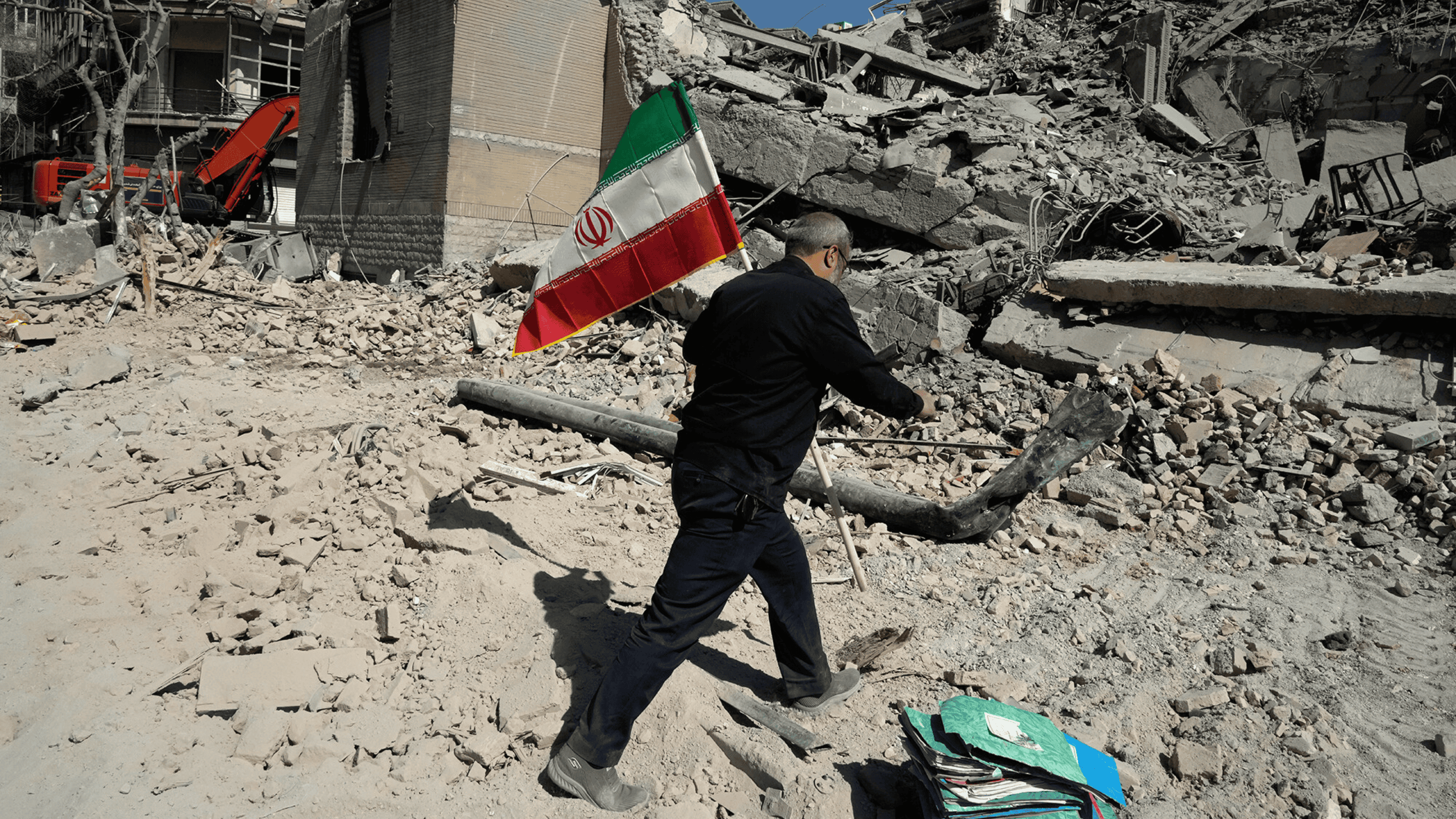
However, the situation now looks different.
Azerbaijan has welcomed the ceasefire reached in the conflict involving the United States, Israel and Iran, where it had hoped to strengthen its position. A few days later, it resumed the work of its embassy in Tehran.
This suggests at least one thing: the scenario in which Iran would weaken and lose its role as a key regional player has not materialised.
In these circumstances, Baku appears to have concluded that maintaining open confrontation with both Tehran and Moscow at the same time would be too risky.
The 2022 declaration on “allied interaction” with Russia remains largely a formal framework. Reports have indicated that some Russian military personnel linked to the incident were later promoted.
The resulting agreement therefore resembles “limited-choice diplomacy”. Ilham Aliyev chose not to press all his key demands and instead to keep relations within controlled limits.
- Poland intercepts aircraft tyres bound for Russia, shipment linked to Azerbaijani firm
- Kremlin’s soft power plan for Azerbaijan: “Hundreds of millions of dollars wasted”
Agreement on the AZAL crash case
The post Deal on Azerbaijani plane downed by Russian air defences: Baku drops demand to punish those responsible first appeared on The South Caucasus News – SouthCaucasusNews.com.