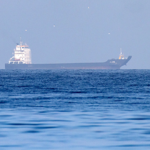
The idea, highlighted in recent reporting, has drawn immediate global attention because it combines three highly sensitive domains at once: energy security, military control of a strategic chokepoint, and the growing role of cryptocurrency in international trade.
***
The proposal emerges against the backdrop of heightened tensions in the Middle East and a fragile pause in hostilities involving Iran, the United States, and Israel.
Below is a comprehensive FAQ explainer that unpacks the mechanics, motivations, and implications of this development.
What is Iran proposing in simple terms
Iran is considering requiring ships, particularly oil tankers, to pay a transit fee in Bitcoin for passing through the Strait of Hormuz. The reported structure is relatively straightforward. Each vessel would be charged based on the volume of oil it carries. A commonly cited benchmark is about one dollar per barrel.
This means that a supertanker carrying millions of barrels could be required to transfer several million dollars worth of Bitcoin for a single passage. The payment would not be made through banks or traditional financial systems but instead transferred directly to a designated digital wallet controlled by Iranian authorities.
The concept transforms what has traditionally been a free transit route into a controlled corridor where access is conditional and monetized.
Why is the Strait of Hormuz so important
The Strait of Hormuz is one of the most critical maritime chokepoints in the global economy. It connects the Persian Gulf to the open ocean and serves as a primary export route for oil producers in the region, including Saudi Arabia, Iraq, Kuwait, the United Arab Emirates, and Iran itself.
Roughly one fifth of the world’s oil supply passes through this narrow waterway. Any disruption to traffic in the strait has immediate ripple effects across global markets. Oil prices can spike sharply, insurance premiums for shipping increase, and supply chains face delays.
Because of its strategic importance, control over Hormuz has long been viewed as a powerful geopolitical lever.
Why would Iran demand payment in Bitcoin instead of dollars
The choice of Bitcoin is not incidental. It reflects Iran’s long standing struggle with international sanctions that restrict its access to global banking systems.
Traditional payments in dollars or euros typically pass through financial institutions that comply with sanctions regimes. This creates the risk that funds could be blocked, frozen, or traced. Bitcoin, by contrast, operates on a decentralized network without a central authority. Transactions can be conducted directly between parties without relying on banks.
From Iran’s perspective, Bitcoin offers several advantages. It reduces dependence on the conventional financial system. It makes it harder for external actors to intercept or freeze funds. It allows rapid transfers across borders.
At the same time, it introduces volatility and technical challenges, since cryptocurrency prices can fluctuate significantly and not all shipping companies are equipped to handle such transactions.
How would the payment system actually work
The proposed system appears to involve a structured but fast moving process.
First, a tanker approaching the strait would submit details about its cargo, ownership, and destination to Iranian authorities. This could be done electronically before arrival.
Second, Iranian authorities would review the information and issue a payment request specifying the required Bitcoin amount.
Third, the ship operator would transfer the funds to a designated digital wallet. Because blockchain transactions can be confirmed within minutes, the process is designed to be quick.
Finally, once payment is verified, the vessel would receive clearance to pass through the strait under Iranian monitoring.
The system effectively creates a checkpoint model in which access is conditional on compliance.
What happens if a ship refuses to pay
Refusal to comply carries significant risks. Iran has demonstrated the capability to monitor and intercept vessels in the region through its naval forces and the Islamic Revolutionary Guard Corps Navy.
Ships that do not follow the rules could face denial of passage, forced diversion, inspection, or even confrontation. During periods of heightened tension, there is also the risk of escalation into military incidents.
For shipping companies, the choice is therefore not purely legal or financial. It is also about safety and risk management.
Is it legal for Iran to charge such fees
This is one of the most contentious aspects of the proposal. Under international maritime law, particularly the United Nations Convention on the Law of the Sea, ships are generally allowed to transit through international straits without paying fees simply for passage.
Charges are typically permitted only for specific services such as pilotage or navigation assistance, not for the act of transit itself.
Critics argue that imposing a mandatory fee for passage violates the principle of free navigation. Supporters or neutral observers might point out that enforcement depends on power realities as much as legal frameworks.
In practice, the legality may be less decisive than the balance of control on the ground or, in this case, on the water.
What triggered this development
The proposal comes after a period of intense military confrontation in the region. Strikes, counter strikes, and escalating rhetoric created a situation in which the Strait of Hormuz became both a strategic asset and a pressure point.
Iran’s actions can be seen as part of a broader strategy to leverage its geographic position. By asserting control over the strait, Tehran can influence global energy flows and gain bargaining power in negotiations.
The introduction of a Bitcoin based toll system adds a financial dimension to that strategy.
How have shipping companies responded
Shipping companies operate under a complex set of constraints that include safety, legal compliance, insurance requirements, and commercial considerations.
Faced with the possibility of paying transit fees in cryptocurrency, companies are weighing several factors.
Some may choose to comply in order to ensure safe passage and avoid delays. Others may seek alternative routes, although options are limited and often more expensive.
Insurance companies also play a critical role. War risk premiums can increase dramatically in conflict zones, and insurers may impose conditions on whether and how ships can operate in such environments.
The result is a cautious and fragmented response, with no single approach dominating.
What are the economic implications for global markets
The economic impact of such a system could be substantial.
First, transit fees would directly increase the cost of transporting oil. These costs would likely be passed on to buyers, contributing to higher energy prices.
Second, uncertainty around the strait could lead to volatility in oil markets. Traders respond quickly to perceived risks, and even the possibility of disruption can drive price swings.
Third, higher energy costs can feed into broader inflation, affecting industries and consumers worldwide.
Finally, the introduction of cryptocurrency into large scale trade transactions raises questions about financial stability and regulation.
How does this affect cryptocurrency adoption
If implemented, the system would represent one of the most high profile uses of cryptocurrency in state level economic policy.
It would demonstrate that digital assets can be used not only for private transactions but also for strategic economic activities involving governments and global trade.
At the same time, it could prompt stronger regulatory responses from other countries concerned about sanctions evasion and financial transparency.
The situation highlights both the potential and the controversy surrounding cryptocurrencies in geopolitics.
How are other countries reacting
Countries that rely heavily on oil imports are watching developments closely. Many are concerned about supply security and price stability.
Some governments emphasize the importance of maintaining freedom of navigation and may oppose any attempt to impose unilateral controls on international waterways.
Others may take a more pragmatic approach, focusing on ensuring continued access to energy supplies even if that means adapting to new conditions.
The response is therefore mixed, reflecting differing priorities and levels of dependence on the region.
Could this become a long term policy
It is not yet clear whether the proposed system will be temporary or evolve into a lasting arrangement.
Much depends on the broader geopolitical context. If tensions ease and diplomatic solutions are reached, the need for such measures may diminish.
However, if the underlying conflicts persist, Iran may see continued value in maintaining control over the strait and monetizing access.
The durability of the policy will depend on both internal calculations in Tehran and external pressures from other الدول and international organizations.
What risks does this pose to global security
The situation introduces several layers of risk.
There is the immediate risk of military escalation if disputes over passage lead to confrontations at sea.
There is also the risk of economic instability, as disruptions in energy supply can have cascading effects across global markets.
In addition, the normalization of such practices could encourage similar actions in other strategic locations, increasing fragmentation in global trade.
These risks make the issue a matter of concern not only for the region but for the international community as a whole.
Is this unprecedented
Charging tolls for passage through man made canals is common, but applying such a system to a natural strait is unusual.
Even more unprecedented is the requirement to pay in cryptocurrency. This combination of physical control and digital payment represents a new model that blends traditional geopolitics with emerging financial technology.
It signals a potential shift in how states might leverage geographic advantages in the future.
What does this mean for the future of global trade
The development points to several possible trends.
Trade routes may become more politicized, with access increasingly tied to strategic considerations.
Alternative payment systems, including cryptocurrencies, could gain a larger role in international transactions, especially for countries facing financial restrictions.
At the same time, major powers may accelerate efforts to diversify supply chains and reduce dependence on vulnerable chokepoints.
These changes could reshape the architecture of global trade over the coming years.
Bottom line
Iran’s reported plan to seek Bitcoin payments from oil tankers passing through the Strait of Hormuz reflects a convergence of geopolitical strategy, economic necessity, and technological innovation.
It underscores how control over a narrow stretch of water can influence global markets and how digital currencies are beginning to intersect with state level decision making.
Whether the proposal is fully implemented or remains a negotiating tool, it highlights a broader reality. The rules governing trade, finance, and security are evolving, and the Strait of Hormuz once again stands at the center of that transformation.
The post How Iran plans to charge Bitcoin for oil ships in Hormuz appeared first on azeritimes.com.