THCa is not permitted under West Virginia law. The state has a limited medical marijuana program but does not cover THCa. Possession may lead to legal action. 49. Wisconsin Status: Gray area Hemp-derived THCa is sold under state law, but legality is questionable. Authorities may prosecute based on use method. Buyers should exercise caution. 50 …
Day: October 14, 2025
“Kill markings” on US A-10s returning from the Middle East suggested they had downed Iranian Shahed-type drones using repurposed laser guided surface-to-air rockets in an air-to-air role.
The post Could A-10 Warthog / APKWS II Combination Solve Ukraine’s Shahed Problem? first appeared on Audio Posts – audio-posts.com.
Categories
Early Edition: October 14, 2025

A curated weekday guide to major news and developments over the last 24 hours. Here’s today’s news:
ISRAEL HAMAS WAR – CEASEFIRE AND HOSTAGES AND PRISONER RELEASE
Israeli forces today killed four Palestinian in Gaza City’s eastern Shejaiya neighbourhood, according to Palestinian news agency Wafa and a medical source. The source said that they were killed “when Israeli drones fired at residents inspecting their homes.” An IDF spokesperson said on social media that “a number of suspects were identified who crossed the Yellow Line and approached IDF forces,” adding that “the forces fired to eliminate the threat” because the suspects did not turn back. A Hamas spokesperson called the gunfire a “violation of the ceasefire agreement.” BBC News reports.
Nearly 1,700 Palestinians who were detained without charge in Israel and 250 Palestinian prisoners were released yesterday and returned to Beitunia in the West Bank and Khan Younis in Gaza. Celebrations in the West Bank went ahead despite Israeli warnings that anyone seen to be supporting “terrorist organizations” risked arrest. Sam Metz and Jalal Bwaitel report for AP News.
Four of the 28 bodies of the dead Israeli hostages were returned to Israel yesterday, according to the Israeli military. Hamas said that the burial sites of the 24 others were unknown and would take time to locate. The ceasefire agreement, published by Israeli media, acknowledged that Hamas may not be able to locate all remains within the timeframe. The Israeli Hostages and Missing Families Forum said that Hamas’s “violation of the deal must be met with a serious response,” urging the Israeli government to suspend the ceasefire. BBC News reports.
Hamas gunmen last night publicly executed eight Palestinians in Gaza, according to reports from Gaza residents today and video authenticated by the BBC. Hamas said that the killings targeted “criminals and collaborators with Israel.” Rushdi Abualouf reports for BBC News.
ISRAEL HAMAS – HUMANITARIAN RESPONSE
“We have had very good indications already,” that countries, including the United States as well as European and Arab states, will contribute to the $70 billion cost of rebuilding Gaza, U.N. Development Programme official Jacob Cilliers said today. Cilliers estimated that the two-year war on Gaza had generated 55 million tons of rubble. Emma Farge reports for Reuters.
The U.N. Under-Secretary General for Humanitarian Affairs and Emergency Relief Coordinator, Tom Fletcher, yesterday announced an additional $11 million for aid in Gaza from the U.N. Central Emergency Response Fund, bringing the total to $20 million. Fletcher added that this is a critical window to get aid in before winter. Doha Madani reports for NBC News.
ISRAEL HAMAS – U.S. POLITICAL RESPONSE
“The first steps to peace are always the hardest,” President Donald Trump said yesterday at the peace summit in Egypt, adding that “rebuilding is maybe going to be the easiest part.” The United States, Egypt, Qatar, and Turkey yesterday signed the “Trump Declaration for Enduring Peace and Prosperity” which commits these nations to “a future of enduring peace,” but provides no specific details on the next stages for ending the war. “A lot of people like the one-state solution. Some people like the two-state solution. We’ll have to see,” Trump said on social media on his return from the summit. Michelle L. Price reports for AP News; Holly Ellyat reports for CNBC News.
During his speech to the Knesset, Trump yesterday urged Israeli President Isaac Herzog to pardon Prime Minister Benjamin Netanyahu, who is standing trial on three corruption charges. “Cigars and champagne, who the hell cares about this?” Trump said in reference to the charges. Barak Ravid reports for Axios.
RUSSIA UKRAINE WAR
Trump and Ukrainian President Volodymyr Zelenskyy plan to meet at the White House on Friday, a senior Ukrainian official told POLITICO. Separately, in a Sunday interview, Zelenskyy signalled that Trump’s success in negotiating a ceasefire in Gaza gave him more confidence that peace could be reached between Russia and Ukraine. Gregory Svirnovskiy reports.
The International Atomic Energy Agency is pushing Ukraine and Russia to agree to local ceasefires so that external power can be restored to the nuclear power plant in Zaporizhzhia, two diplomats told AP News. The IAEA did not comment on the timing of the plans, but has said that Director General Rafael Grossi is engaging “intensively with both sides” to “help prevent a nuclear accident.” Stephanie Liechtenstein reports.
OTHER GLOBAL DEVELOPMENTS
The self-proclaimed Islamic State-backed Allied Democratic Forces yesterday allegedly killed 19 people in an attack in the eastern Democratic Republic of Congo, according to two local officials. The ADF have not currently claimed responsibility for the attack. Reuters reports.
French President Emmanuel Macron yesterday rejected calls to resign despite two no-confidence motions being tabled against his government. Macron indicated that he has no plans to step down before his term ends in 2027 and said that his rivals are to blame for destabilising France. Alessandro Parodi reports for Reuters.
Madagascan President Angry Rajoelina announced yesterday that he is hiding in an undisclosed location following threats on his life after weeks of protests in Madagascar. “A group of military personnel and politicians planned to assassinate me,” Rajoelina told the nation via a Facebook live broadcast yesterday. John Eligon reports for the New York Times
The Venezuelan government yesterday announced that it will close its embassies in Norway and Australia and open new ones in Burkina Faso and Zimbabwe. The closures are part of the “strategic re-assignation of resources,” the government said, adding that the new embassies will be in “two sister nations, strategic allies in the anti-colonial fight and in the resistance of hegemonic pressures.” Vivian Sequera and Deisy Buitrago report for Reuters.
TECH DEVELOPMENTS
California Gov. Gavin Newsom (D) yesterday signed several bills aimed at protecting children using chatbots and AI tools online. One of the bills requires operators to have protocols in place to address content or interactions involving suicide or self-harm. The other bills focused on age verification, social media warning labels, and deepfakes. Maria Curi reports for Axios.
OpenAI and Broadcom yesterday announced a partnership to develop and deploy 10 gigawatts of custom AI chips and computing systems over the next four years. They did not disclose the financial terms of the arrangement. According to sources, the agreement will be worth multiple billions of dollars. Beber Jin and Robbie Whelan report for the Wall Street Journal.
International Monetary Fund Managing Director Kristalina Georgieva said yesterday that “the world is falling shortest […] on [AI] regulation and ethics,” adding that civil society groups need to “ring the alarm bells.” Georgieva added that the IMF was “quite worried” about the gap between advanced economic and low-income countries on AI development and use. Andrea Shalal reports for Reuters.
TRUMP ADMINISTRATION ACTIONS
Several news outlets, including the Washington Post, the New York Times, AP News, and CNN, said yesterday that they would not sign the Defense Department’s new press policy by today’s deadline. “The proposed restrictions undercut First Amendment protections by placing unnecessary constraints on gathering and publishing information,” the Post’s editor Matt Murray said. Defense Secretary Pete Hegseth responded to the statements from news organizations on social media with a hand-waving goodbye emoji. Scott Nover reports for the Washington Post; Ellen Mitchell reports for the Hill.
Hundreds of federal employees working in mental health services and disaster preparedness within the Health and Human Services Department were fired over the weekend in addition to CDC employees, current and laid-off workers said yesterday. An HHS spokesperson said that those who were fired were deemed nonessential, adding the agency is working to “close wasteful and duplicative entities, including those that are at odds with the […] Make America Healthy Again agenda.” Ali Swenson and Jonel Aleccia report for AP News.
Homeland Security Secretary Kristi Noem said yesterday that Coast Guard service members will be paid this week despite the government shutdown. Noem said that the Homeland Security Department had found an “innovative” way to provide the money. A DHS spokesperson did not provide any further information about the details of the “innovative solution.” Racquel Coronell Uribe reports for NBC News.
NASA’s Jet Propulsion Laboratory announced yesterday that it will cut 10% of its workforce, around 550 jobs, as part of a “realignment of its workforce” and not as a result of government shutdown. Employees will be notified today about their positions. NASA has faced uncertainty over its budget since facing major cuts under the Trump administration. Chow reports for NBC News.
U.S. FOREIGN AFFAIRS
Treasury Secretary Scott Bessent said yesterday that “there [have] been substantial communications over the weekend” between Washington and Beijing to de-escalate the trade conflict that was reignited last week.“We have plenty of straight, brute-force countermeasures that we can pull,” Bessent added. Bessent indicated that he expects Trump and Chinese President Xi Jinping will still meet at the end of October. The United States and China today began charging additional port fees on each other’s vessels. Doug Palmer reports for POLITICO; Lisa Baertlein, Liz Lee, and Joe Cash report for Reuters.
Cuban authorities yesterday released a prominent Cuban political dissident,José Daniel Ferrer, from prison, with Ferrer leaving Cuba for exile in the United States with his family. The Cuban foreign ministry said that Ferrer had been freed due to a request from the U.S. government. Secretary of State Marco Rubio welcomed Ferrer’s arrival in Miami yesterday, saying “we are glad that Ferrer is now free from the regime’s oppression.” David C. Adams reports for the New York Times.
U.S. DOMESTIC DEVELOPMENTS
While seeking sponsorship for a conference, the 1789 Capital investment fund marketed an “Inaugural U.S. Treasury A.I Summit” during which Treasury Secretary Scott Bessent would allegedly unveil the Treasury Department’s AI strategy, according to an email to potential donors seen by the Wall Street Journal. Ethics experts say it is unusual for a private conference offering VIP perks to sponsors to be marketed as a government-hosted event designed to unveil U.S. government policy. A Treasury Department spokesperson said the agency had not approved the pitch materials distributed by the fund. An official said yesterday that Bessent may not even attend the event due to the ongoing government shutdown. The 1789 Capital fund is run by prominent Trump supporters. Josh Dawsey reports.
Did you miss this? Stay up-to-date with our Litigation Tracker: Legal Challenges to Trump Administration Actions
If you enjoy listening, Just Security’s analytic articles are also available in audio form on the justsecurity.org website.
ICYMI: yesterday on Just Security
The post Early Edition: October 14, 2025 appeared first on Just Security.
The post Early Edition: October 14, 2025 first appeared on Audio Posts – audio-posts.com.

Winter is not yet here but Russia has already intensified missile and drone strikes on Ukraine’s civilian energy installations. A series of powerful bombardments in the first ten days of October hit gas production in eastern Ukraine and left large parts of Kyiv and neighboring regions without electricity and water.
This is nothing new, of course. Since the start of the full-scale invasion, Russia has unleashed thousands of attacks on power lines, substations, pipelines, storage facilities, and processing plants as the Kremlin attempts to plunge Ukraine into darkness and cow the country into submission.
Russian attacks are now being conducted on an unprecedented scale. Targets are pounded by dozens of drones in one go, overwhelming Ukraine’s anti-missile systems. For example, in the early hours of October 9, Russia launched approximately 450 drones and 30 missiles at energy infrastructure, dwarfing the scale of attacks in previous years.
The coming winter is shaping up to be the harshest of the war for Ukraine’s civilian population. Kyiv Mayor Vitali Klitschko described the recent attack on the city’s electricity infrastructure as one of the most devastating since the start of Russia’s full-scale invasion. Meanwhile, officials at Ukraine’s state-owned energy giant Naftogaz say the latest Russian strikes have disabled 60 percent of the country’s gas production.
Ukraine has repeatedly demonstrated remarkable resilience, including in recent days as emergency crews worked to restore electricity to millions of people within hours of Russian strikes. Nevertheless, with the situation set to become more critical in the weeks and months to come, Ukraine’s allies need to consider decisive action.
Stay updated
As the world watches the Russian invasion of Ukraine unfold, UkraineAlert delivers the best Atlantic Council expert insight and analysis on Ukraine twice a week directly to your inbox.
Russia’s strikes on Ukrainian energy infrastructure are no longer just a Ukrainian problem. Moscow’s bombing campaign will become a wider European issue unless more support is offered to Kyiv. The threat to European energy markets has been increasingly apparent throughout the current year. A number of Russian attacks on Ukrainian gas production assets in February 2025 led to severe imbalances, with a knock-on impact on most central and eastern European countries.
Between February and September, Ukraine bought close to five billion cubic meters of gas from European markets to plug the gap and prepare for winter, lifting regional demand and prices. If Russia continues its attacks this winter, the impact on Ukraine and the wider region promises to be even more dramatic. To prevent a regional deficit, all neighboring countries should therefore consider lifting existing restrictions on exports to Ukraine.
Europe has options to improve the energy outlook for Ukraine, but this will require quick political decisions. Global supplies of liquefied natural gas are set to rise in the coming months thanks to a surge in production, primarily in the US. While most western European countries will benefit from these additional imports because they have access to sea terminals and functional markets, consumers further to the east are less privileged as most are landlocked or have regional transmission capacity that is either congested or too expensive to use.
Eurasia Center events
Restrictions on energy logistics networks are having a direct impact on Ukraine. Despite sharing borders with four EU countries, Kyiv has been relying mostly on Poland and Hungary to secure imports and offset the domestic deficit caused by Russian attacks. Although Slovakia could offer ample transmission capacity, most of which is now idle because the country no longer transits Russian gas, its transmission tariffs are prohibitively expensive, limiting Ukraine’s ability to import gas from western Europe.
To compound matters, tariffs could increase by a further 70 percent in January 2026 if a planned hike is approved before the end of the year. Meanwhile, neighboring Romania has no less than four border interconnectors with Ukraine. However, its gas grid operator, Transgaz, allows gas to be shipped only on one of these at less than full capacity.
Romania has significant gas production but currently bans exports to Ukraine, quoting technical differences in gas quality in the two countries. Transgaz also charges some of the most expensive transmission tariffs in the region, which means that even countries which would like to ship gas to Ukraine via Romania may be discouraged from doing so.
Keeping tariffs high or blocking infrastructure is not only bad news for Ukraine. It also poses risks to the entire region, including consumers in Romania and Slovakia, because any congestion creates artificial deficits which lead to higher prices. EU and US policymakers understand the extent of the problem and privately admit that even their own interests may be impacted. For example, blocked capacity could also limit the ability of US companies to sell LNG to clients across central and eastern Europe.
Discussions are ongoing but the clock is ticking. As winter approaches, it is now more pressing than ever for Brussels and Washington to convince countries such as Slovakia and Romania to cooperate.
In an ideal scenario, Western allies would consider radical measures such as establishing a no-fly zone over parts of Ukraine with NATO aircraft patrolling its skies and protecting its people and civilian infrastructure. However, as NATO members remain deeply reluctant to risk a direct clash with the Kremlin, the next best option is to persuade Ukraine’s neighbors to put narrow national interests aside and take concrete steps to support Kyiv.
Dr. Aura Sabadus is a senior energy journalist who writes about Eastern Europe, Turkey, and Ukraine for Independent Commodity Intelligence Services (ICIS), a London-based global energy and petrochemicals news and market data provider. Her views are her own.
Further reading
UkraineAlert
Oct 9, 2025
Putin the geopolitical gangster is trying to intimidate Europe
By
Peter Dickinson
Putin the geopolitical gangster is trying to intimidate Europe into abandoning Ukraine with an escalating campaign of gray zone aggression designed to highlight the continent’s vulnerability to Russian attack, writes Peter Dickinson.

UkraineAlert
Oct 8, 2025
Ukraine’s defense tech sector must guard against innovation drain
By
Andriy Dovbenko
Without robust intellectual property (IP) protections, Ukraine may lose control of the defense tech innovations that are currently helping to defend the country on the battlefield, writes Andriy Dovbenko.
UkraineAlert
Oct 6, 2025
Putin rejected Trump’s generous deal. Time to try peace through strength.
By
Sergiy Solodkyy
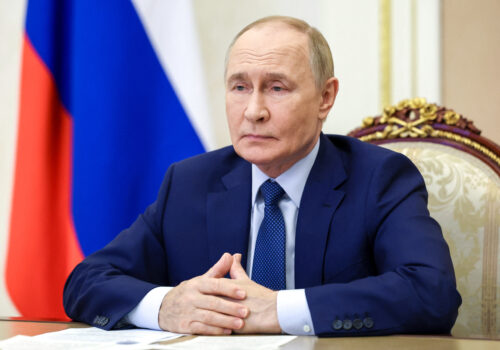
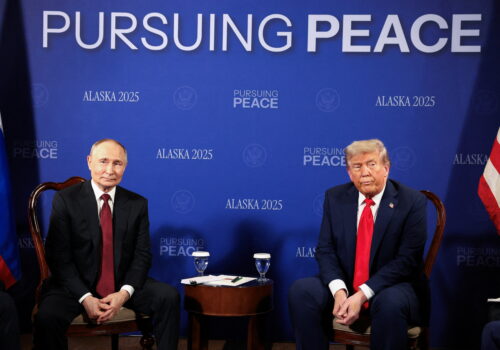
President Trump’s efforts to end the war in Ukraine by offering Putin Kremlin-friendly peace terms have failed to convince the Russian dictator. It is now time to speak to Putin in the language of strength, the only language he truly understands, writes Sergiy Solodkyy.
The views expressed in UkraineAlert are solely those of the authors and do not necessarily reflect the views of the Atlantic Council, its staff, or its supporters.


The Eurasia Center’s mission is to enhance transatlantic cooperation in promoting stability, democratic values, and prosperity in Eurasia, from Eastern Europe and Turkey in the West to the Caucasus, Russia, and Central Asia in the East.
Follow us on social media
and support our work
The post Russian strikes on Ukraine’s energy infrastructure are a European problem appeared first on Atlantic Council.
The post Russian strikes on Ukraine’s energy infrastructure are a European problem first appeared on Audio Posts – audio-posts.com.
Categories
10/14/2025
Gaza peace deal signed. New tariffs kick in on cabinets and furniture. East Coast dries out after powerful Nor’easter. CBS News Correspondent Steve Kathan on the World News Roundup podcast.
To learn more about listener data and our privacy practices visit: https://www.audacyinc.com/privacy-policy
Learn more about your ad choices. Visit https://podcastchoices.com/adchoices
The post 10/14/2025 | World News Roundup first appeared on Audio Posts – audio-posts.com.
Categories
10/14/2025
Gaza peace deal signed. New tariffs kick in on cabinets and furniture. East Coast dries out after powerful Nor’easter. CBS News Correspondent Steve Kathan on the World News Roundup podcast. To learn more about listener data and our privacy practices visit: https://www.audacyinc.com/privacy-policy Learn more about your ad choices. Visit https://podcastchoices.com/adchoices
The post 10/14/2025 first appeared on Audio Posts – audio-posts.com.