Categories
News Review from The World Web Times

EBRD Projects Central Asia Economies 2025 Growth at 6.1%


The European Bank for Reconstruction and Development (EBRD) projects that the economies of Kazakhstan, the Kyrgyz Republic, Mongolia, Tajikistan, Turkmenistan, and Uzbekistan will grow by an average of 6.1% in 2025.

According to the EBRD, the region’s momentum is being driven by strong industrial output, robust domestic demand, higher investment, rising wages, and continued remittance inflows. In 2026, growth is expected to remain positive but moderate to 5.2%. The report warns, however, that volatility in commodity prices, reliance on remittances, and dependence on Russian and Chinese markets pose ongoing risks to stability.

Kazakhstan, Central Asia’s largest economy, is forecast to expand by 5.7% in 2025. Growth has been fueled by increased oil production at the Tengiz field, which boosted industrial activity and wholesale trade. The construction sector grew by 18.4% in the first half of the year, reflecting large infrastructure projects and residential development. Even so, the EBRD cautions that over-reliance on Russian transit routes and global commodity fluctuations could slow growth to 4.5% in 2026.

The Kyrgyz Republic is projected to remain one of the region’s fastest-growing economies, with GDP expected to rise by 9.0% in 2025. The economy expanded by 11.4% in the first half of the year, supported by strong public investment, remittance inflows, and rising wages. Manufacturing, trade, and construction are key drivers, while tourism is growing through new investments. Growth is forecast to ease to 6.0% in 2026 but is expected to remain resilient unless remittance flows decline.

Mongolia’s economy is expected to grow by 5.8% in 2025. A 35.6% rebound in agriculture after two difficult years helped offset slower mining activity and weaker coal prices, while copper production increased.

Tajikistan’s economy grew by 8.1% in the first half of 2025, driven by trade, agriculture, transport, and a doubling of mining output. Remittances rose by 64%, and sharp wage growth boosted household consumption. The EBRD forecasts GDP growth of 7.5% in 2025, moderating to 5.7% in 2026. Continued support from international institutions such as the World Bank and IMF is expected to sustain growth, although reliance on remittances remains a structural vulnerability.

Turkmenistan is projected to grow by 6.3% in both 2025 and 2026, supported by trade, transport, services, and construction. Official data show capital investment up 15.6% year on year.

Uzbekistan’s economy is expected to expand by 6.7% in 2025, backed by strong domestic demand, rising wages, and a 28.7% increase in remittances. Services grew by more than 8%, while industrial output was buoyed by high gold prices and stronger manufacturing in food and metals. Growth is projected to ease slightly to 6.0% in 2026 but will remain supported by diversified manufacturing and stable foreign investment.

The post EBRD Projects Central Asia Economies 2025 Growth at 6.1% first appeared on Trump News – trump-news.org.

Categories
News Review from The World Web Times

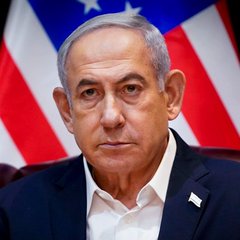
Netanyahu, Israel, and the world – Conversation with the Gemini. TUCKER CARLSON claims that NETANYAHU is telling Middle Eastern leaders “I control the United States. I control Donald Trump.” But does he control himself, that’s the question!


Netanyahu, Israel, and the World: A Nation at a Crossroads Amidst Shifting Global Tides

Jerusalem – Prime Minister Benjamin Netanyahu’s Israel finds itself at a pivotal and increasingly contentious juncture on the world stage.1 A confluence of escalating conflict in Gaza, a surge in international recognition for a Palestinian state, and unprecedented legal challenges against its leadership has thrust the nation into a deepening diplomatic isolation, testing its long-standing alliances and prompting a defiant doubling-down from its veteran leader.2

Netanyahu, Israel’s longest-serving prime minister, is navigating a complex web of domestic and international pressures.3 At home, he faces a society still reeling from the October 7th attacks, significant protests calling for new elections and a deal to release remaining hostages, and the inherent fragility of his right-wing coalition government.4 Abroad, the landscape is arguably more challenging than at any point in Israel’s recent history.

The ongoing war in Gaza, launched in response to the Hamas-led attacks, has led to a catastrophic humanitarian crisis and a mounting death toll, galvanizing widespread international condemnation.5 This has culminated in a significant diplomatic shift, with a wave of countries, including traditional allies like the United Kingdom, France, Canada, and Australia, formally recognizing a state of Palestine.6 This concerted move is largely seen as a rebuke of Netanyahu’s long-standing opposition to a two-state solution and his government’s continued expansion of settlements in the occupied West Bank.7

In a defiant stance, Netanyahu has vehemently rejected this trend, labeling the recognitions a “reward for terrorism” and vowing that a Palestinian state will not be established on his watch.8 He is expected to use his upcoming address to the United Nations General Assembly as a platform to vigorously defend Israel’s actions and condemn the international pressure.9

Adding to the diplomatic strain are significant legal challenges.10 The International Criminal Court (ICC) has issued an arrest warrant for Netanyahu and his Defense Minister Yoav Gallant for alleged war crimes and crimes against humanity in Gaza.11 Simultaneously, the International Court of Justice (ICJ) is hearing a case brought by South Africa accusing Israel of genocide, a charge Israel strenuously denies.12 These legal proceedings have further isolated Israel and placed its leaders in a precarious international position.13

The relationship with its most crucial ally, the United States, has also shown signs of friction.14 While the Biden administration has maintained its fundamental support for Israel’s security, there have been public disagreements over the conduct of the war and the vision for a post-conflict Gaza. In a notable development, President Donald Trump recently stated he would not permit Israel to annex the West Bank, a move long championed by the right-wing elements of Netanyahu’s coalition.15 This public divergence highlights the evolving dynamics and potential limits of American backing.

Netanyahu’s foreign policy, often described as a doctrine of “hawkish neoliberalism,” has prioritized economic independence to enable a more assertive and independent foreign policy.16 This approach has seen Israel forge new relationships, notably through the Abraham Accords, which normalized ties with several Arab nations.17 However, the current conflict and the hardline stance of his government are now straining these nascent partnerships.

As Israel navigates this turbulent period, the world watches with a mixture of concern and condemnation. The nation’s future trajectory on the global stage appears intrinsically linked to the outcome of the war in Gaza, the resolution of the Palestinian question, and the political future of its defiant leader, Benjamin Netanyahu. The coming months will be critical in determining whether Israel can mend its fractured relationships and find a new equilibrium in a rapidly changing world, or if it will continue on a path of increasing isolation.

–
Links
Israel’s Global Crossroads and Netanyahu


https://g.co/gemini/share/44d4be907c6c
Opens in a new window

October 7 Attack: Conspiracy vs. Consensus


https://g.co/gemini/share/cfe723ba57d6
Opens in a new window

Netanyahu’s Political Survival Strategy


https://g.co/gemini/share/e46998534b49
Opens in a new window

Abraham’s Rejection of Human Sacrifice


https://g.co/gemini/share/9efb8a47c2ac
Opens in a new window

Abraham: Unifying Patriarch of Faiths


https://g.co/gemini/share/8e2537ada6a4
Opens in a new window

Abraham: Unifying Patriarch of Faiths


https://g.co/gemini/share/9c06e44fd335
Opens in a new window

–
–

The post Netanyahu, Israel, and the world – Conversation with the Gemini. TUCKER CARLSON claims that NETANYAHU is telling Middle Eastern leaders “I control the United States. I control Donald Trump.” But does he control himself, that’s the question! first appeared on Trump News – trump-news.org.


Categories
Blog and Tweets

Netanyahu, Israel, and the world – Conversation with the Gemini. TUCKER CARLSON claims that NETANYAHU is telling Middle Eastern leaders “I control the United States. I control Donald Trump.” But does he control himself, that’s it the question!


Netanyahu, Israel, and the World: A Nation at a Crossroads Amidst Shifting Global Tides

Jerusalem – Prime Minister Benjamin Netanyahu’s Israel finds itself at a pivotal and increasingly contentious juncture on the world stage.1 A confluence of escalating conflict in Gaza, a surge in international recognition for a Palestinian state, and unprecedented legal challenges against its leadership has thrust the nation into a deepening diplomatic isolation, testing its long-standing alliances and prompting a defiant doubling-down from its veteran leader.2

Netanyahu, Israel’s longest-serving prime minister, is navigating a complex web of domestic and international pressures.3 At home, he faces a society still reeling from the October 7th attacks, significant protests calling for new elections and a deal to release remaining hostages, and the inherent fragility of his right-wing coalition government.4 Abroad, the landscape is arguably more challenging than at any point in Israel’s recent history.

The ongoing war in Gaza, launched in response to the Hamas-led attacks, has led to a catastrophic humanitarian crisis and a mounting death toll, galvanizing widespread international condemnation.5 This has culminated in a significant diplomatic shift, with a wave of countries, including traditional allies like the United Kingdom, France, Canada, and Australia, formally recognizing a state of Palestine.6 This concerted move is largely seen as a rebuke of Netanyahu’s long-standing opposition to a two-state solution and his government’s continued expansion of settlements in the occupied West Bank.7

In a defiant stance, Netanyahu has vehemently rejected this trend, labeling the recognitions a “reward for terrorism” and vowing that a Palestinian state will not be established on his watch.8 He is expected to use his upcoming address to the United Nations General Assembly as a platform to vigorously defend Israel’s actions and condemn the international pressure.9

Adding to the diplomatic strain are significant legal challenges.10 The International Criminal Court (ICC) has issued an arrest warrant for Netanyahu and his Defense Minister Yoav Gallant for alleged war crimes and crimes against humanity in Gaza.11 Simultaneously, the International Court of Justice (ICJ) is hearing a case brought by South Africa accusing Israel of genocide, a charge Israel strenuously denies.12 These legal proceedings have further isolated Israel and placed its leaders in a precarious international position.13

The relationship with its most crucial ally, the United States, has also shown signs of friction.14 While the Biden administration has maintained its fundamental support for Israel’s security, there have been public disagreements over the conduct of the war and the vision for a post-conflict Gaza. In a notable development, President Donald Trump recently stated he would not permit Israel to annex the West Bank, a move long championed by the right-wing elements of Netanyahu’s coalition.15 This public divergence highlights the evolving dynamics and potential limits of American backing.

Netanyahu’s foreign policy, often described as a doctrine of “hawkish neoliberalism,” has prioritized economic independence to enable a more assertive and independent foreign policy.16 This approach has seen Israel forge new relationships, notably through the Abraham Accords, which normalized ties with several Arab nations.17 However, the current conflict and the hardline stance of his government are now straining these nascent partnerships.

As Israel navigates this turbulent period, the world watches with a mixture of concern and condemnation. The nation’s future trajectory on the global stage appears intrinsically linked to the outcome of the war in Gaza, the resolution of the Palestinian question, and the political future of its defiant leader, Benjamin Netanyahu. The coming months will be critical in determining whether Israel can mend its fractured relationships and find a new equilibrium in a rapidly changing world, or if it will continue on a path of increasing isolation.

–
–

Categories
Syrian civil war

12 Best Home Gyms, Picked by Experts (2025) | Garage Gym Reviews


It’s easy to get overwhelmed with so many full-body machines available, so our experts put together a list of the best home gym machines to help you decide.

Categories
Blog and Tweets

Israel’s Global Crossroads and Netanyahu https://g.co/gemini/share/44d4be907c6c Netanyahu, Israel, and the World: A Nation at a Crossroads Amidst Shifting Global Tides Jerusalem – Prime Minister Benjamin Netanyahu’s Israel finds itself at a pivotal and increasingly contentious juncture on the world stage.1 A confluence of escalating conflict in Gaza, a surge in international recognition for a Palestinian state, and unprecedented legal challenges against its leadership has thrust the nation into a deepening diplomatic isolation, testing its long-standing alliances and prompting a defiant doubling-down from its veteran leader.2 Netanyahu, Israel’s longest-serving prime minister, is navigating


Categories
Sites

Left-wing terror attacks reach record highs in 2025 — fueled by unhinged opposition to Trump admin, disturbing study finds


Left-wing terror attacks are on track to reach record highs this year — as Democrats have been accused of ramping up their harmful rhetoric in their opposition to the Trump administration, a disturbing new study has found. Violent plots planned or perpetrated by the far-left in the US, as a percentage of all terrorist attacks…

The post Left-wing terror attacks reach record highs in 2025 — fueled by unhinged opposition to Trump admin, disturbing study finds first appeared on Trump News – trump-news.org.


Categories
Sites

Millions in Texas Told to Share Rides, Take Lunch to Work


Air quality alerts were in effect for two major Texas metro areas on Friday.

The post Millions in Texas Told to Share Rides, Take Lunch to Work first appeared on Trump News – trump-news.org.


Categories
Sites

European automakers express concerns over EU’s electric vehicle transition plans


Carbon Dioxide Reduction Targets Challenged by European Automotive Associations

European automakers are increasingly at odds over the EU’s transition to electric vehicles (EV), with industry leaders warning that strict policy timelines risk undermining Europe’s competitiveness in internal combustion engines, reports 24brussels.

At the recent 2025 International Motor Show Germany (IAA Mobility) in Munich, which concluded earlier this month, several executives backed calls to postpone the EU’s planned 2035 ban on new petrol and diesel cars while simultaneously promoting their latest electric models. Analysts suggest that as competition heightens, automakers must delicately balance legislative climate targets with prevailing market realities.

The European Automobile Manufacturers Association and the European Association of Automotive Suppliers highlighted that the EU’s ambitious carbon dioxide reduction goals are now unfeasible. In a joint letter to European Commission President Ursula von der Leyen in August, they advocated for a more pragmatic approach that reflects both industrial and geopolitical constraints.

This issue took center stage at IAA Mobility, where German Chancellor Friedrich Merz expressed support for the automotive sector’s electrification initiatives but emphasized the necessity of regulatory flexibility. He cautioned against rigidly enforcing a single technological path and urged manufacturers to remain open to various technologies to maintain both competitiveness and environmental objectives.

Executives from major firms, including Mercedes-Benz, BMW, and Stellantis, criticized the EU’s planned 2035 ban, labeling it “unrealistic.” They called for ongoing investment in hybrid vehicles, range-extended EVs, and smaller combustion engines as part of their strategy moving forward.

The market’s performance has indicated challenges ahead. First-generation EVs, such as the Volkswagen ID series, Audi e-tron, and Mercedes EQ, have faced obstacles in consumer adoption due to limitations in driving range, lengthy charging times, design issues, and higher costs compared to traditional vehicles. As a consequence, numerous manufacturers are reassessing their strategic goals. Mercedes-Benz has postponed its target of achieving 50 percent EV sales by 2025 while committing to continue developing internal combustion engines over the next decade. Audi has delayed its goal of full electrification by 2032. Volkswagen Group Chairman Oliver Blume has voiced concerns over declining EV sales and advocated for adjustments to carbon dioxide targets, while former Renault CEO Luca de Meo has emphasized the need for more adaptable, market-driven timelines.

Europe is grappling with multiple challenges in its automotive transition. A significant setback occurred in late 2024 when Swedish startup Northvolt, previously backed by BMW and Volkswagen, declared bankruptcy, revealing critical gaps in Europe’s battery technology and domestic manufacturing capabilities. Additionally, the cessation of EV purchase subsidies in Germany in 2023 has weakened the continent’s largest automotive market.

The industry has reported declining profits, with approximately 51,500 jobs lost last year, or nearly 7 percent of the overall workforce. Structural issues further complicate the situation, including uneven charging infrastructure among EU member states, high electricity costs, rising production expenses, and U.S. tariffs impacting exports. Collectively, these factors have made a rapid shift to electrification increasingly challenging for European automakers.

Political pressures are escalating, with Italian Prime Minister Giorgia Meloni condemning the ban as “self-destructive” and warning of potential social and economic repercussions. Similar concerns have been raised by Poland and other nations. Experts suggest that the EU auto industry’s measured response reflects the difficult realities posed by competitive pressures, technological deficiencies, and employment worries.

Some manufacturers are advocating for a multi-technology approach. The European Automobile Manufacturers Association has proposed incentives, including subsidies, tax breaks, and reduced electricity rates, to enhance EV adoption. While EVs are anticipated to dominate in the long term, they stress the necessity of low-carbon alternatives during the transition phase.

Conversely, other companies, including Volvo and certain industrial manufacturers, support the EU’s 2035 ban, viewing it as vital for bolstering Europe’s global competitiveness. Kia Europe CEO Marc Hedrich cautioned against any policy reversals, highlighting that production of the EV4 has already commenced in Slovakia, with full compliance anticipated by 2035.

German automotive expert Ferdinand Dudenhoeffer has described the opposition to the ban as largely unwarranted, arguing that as EV prices align with those of combustion vehicles and carbon taxes come into play, the appeal of gasoline and diesel cars will decline. He predicts that price parity will be achieved by 2030, potentially alleviating much of the controversy surrounding the ban.

During a strategy dialogue on September 12, chaired by von der Leyen, manufacturers emphasized the need for greater flexibility regarding carbon dioxide targets, although the EU reaffirmed the timeline for the 2035 ban. In March, assessments for carbon emissions from new cars were postponed from 2025 to 2027, intended to provide a transitional buffer. Critics contend this extension may favor underperforming companies and compromise overall competitiveness.

Experts assert that the EU’s 2035 ban on the sale of new petrol and diesel cars serves not just as an industrial benchmark but also as a measure of the bloc’s climate leadership. Adhering to this goal could foster innovation, whereas compromises might alleviate immediate pressures while risking long-term objectives.

The post European automakers express concerns over EU’s electric vehicle transition plans first appeared on Trump News – trump-news.org.


Categories
News Review from The World Web Times

HLAE中文交流社区


HLAE中文交流社区说明 为了提高中文站的讨论质量,注册用户需要确认已经阅读本贴并承诺遵守此须知内容,在该帖下回复 我已经认真阅读本贴并承诺遵守此须知内容,由管理员审核修改为正式用户后方可正常发帖和回复,否则发帖和回复会进入审核状态并直接删除。 此外,用户应遵守以下几点 …

Categories
Syrian civil war

Iraq says it will resume oil exports from the Kurdish region after a halt of more than 2 years – MSN


Iraq says it will resume oil exports from the Kurdish region after a halt of more than 2 years  MSN