Categories
Sites

Trump redistricting push threatens minority representation. Black voters worry about its impact


Trump redistricting push threatens minority representation. Black voters worry about its impact [deltaMinutes] mins ago Now

The post Trump redistricting push threatens minority representation. Black voters worry about its impact first appeared on The News And Times – thenewsandtimes.com.


Categories
News Review from The World Web Times

Kazakhstan’s Cultural Reawakening: Almaty Opens Its New Museum of Arts


First, a young Kazakh schoolgirl in a black dress with a starched collar, her hair tousled by the wind of the Aral Sea, clutches a large Russian book tightly to her chest as she stands before a lonely school building in the middle of nowhere.

Then, a camel speaks: “Give me back the sea!”

“No!” cries a woman, her face hidden beneath a military hat. She stands before an abandoned edifice, her head wrapped in fur, her body strangely adorned with eggs.

Image: Almagul Menlibayeva

This series of surreal images is from the video Transoxiana Dream, by one of Central Asia’s pioneering contemporary artists, Almagul Menlibayeva. The Times of Central Asia attended her major solo show, I Understand Everything, curated by Thai curator Gritiya Gaweewong, a powerful exploration of memory, trauma, and identity, which provides the “treble clef” for the opening of the Almaty Museum of Arts.

The show brings together works spanning decades, from Menlibayeva’s early paintings and collages in the 1980s, to her recent internationally recognized video and photography works. Through a variety of mediums, she charts the collapse of the Soviet Union, the ecological devastation of Kazakhstan, and suppressed cultural memory.
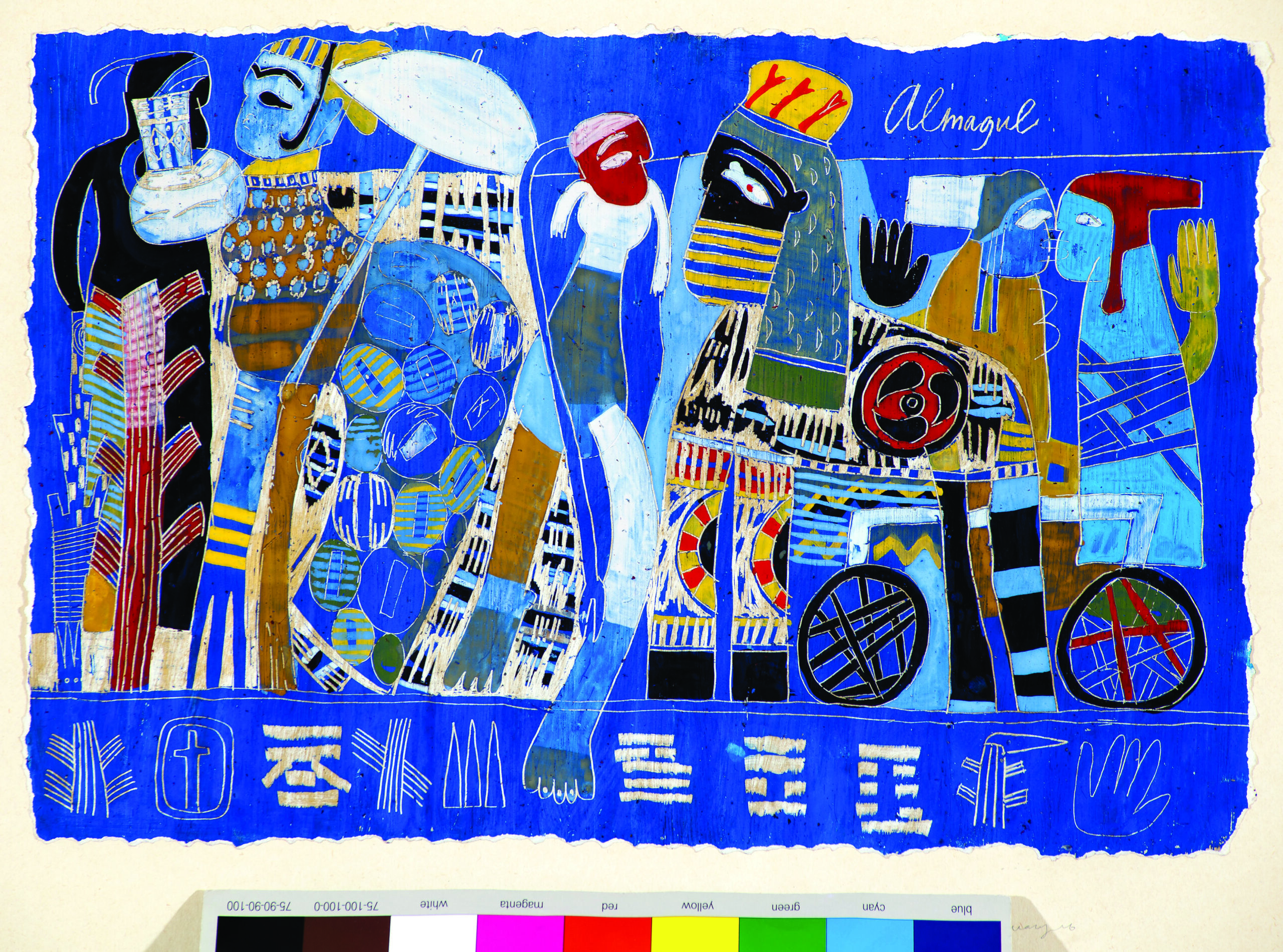
Almagul Menlibayeva, People Talking against a Blue Background, 1988; image: Almaty Museum of Arts

As always in her practice, the feminine and feminist narratives are at the forefront. Menlibayeva’s women are at times bound with nature or with military rule, alternately merciful or merciless. Her works tackle ecological concerns, tying them directly to the destruction of patriarchy.

“For us, opening our program with Menlibayeva’s show was highly significant,” says Meruyert Kaliyeva, the museum’s artistic director. “She is a pioneering Central Asian artist who is known internationally but at the same time has always dealt with topics and themes that are important locally.”

A New Museum in Almaty

The inauguration of the Almaty Museum of Arts represents a decisive step in shaping Kazakhstan’s creative future. As the country’s first large-scale contemporary art museum, it houses over 700 works collected across three decades, offering a panoramic view of modern Kazakh art while opening pathways to Central Asian and international dialogues.

Almaty Museum of Arts; image: Alexey Poptsov

Its mission extends beyond exhibitions: the institution positions itself as a center for education, research, and collaboration, aiming to nurture local artists and connect them to global networks. For Kazakhstan, long without a dedicated contemporary art museum, this moment signals a new era, one in which cultural identity is asserted with confidence, and the arts are recognized as a vital force for national memory as well as international visibility.

Kaliyeva emphasizes how essential it is that Kazakh artists now have a platform where voices once peripheral to national culture can take center stage. She also stresses the urgency of the moment: in a world reshaped by geopolitical fractures, climate crises, and cultural decolonization, this opening is necessary: “It’s a moment for Kazakhstan to assert its own narratives, to host memory and imagination on its own terms.”

Meruyert Kaliyeva; image: Anvar Rakishev

Kaliyeva situates the institution in Kazakhstan’s broader cultural history, highlighting how the country has long been a “laboratory of friendship,” forged through waves of migration and displacement, from deported Koreans to Soviet dissidents. In her view, the museum must serve as a decolonial institution, allowing Kazakhs to reclaim identity apart from Soviet ideology. “This sentiment began a long time ago when Kazakh people started to look for their own identity, but it became especially important after the war in Ukraine,” she observes.

Nurlan Smagulov, the museum’s founder, frames his role as one of stewardship as much as ownership: “It’s a lot of responsibility because Kazakhstan never had a contemporary art museum of this kind.”

Smagulov’s love affair with art began in his youth, amidst the halls of Moscow’s Pushkin Museum. At just 17 years old, he found solace and inspiration in the works of the Impressionists, igniting a passion that would shape his life’s journey.

Nurlan Smagulov; image: Almaty Museum of Arts

“Growing up in what used to be the Soviet Union, everything was prohibited,” he recounts. “Going abroad was impossible. Nobody was buying art. All the exhibitions I saw, I saw on TV. The artists could only paint in the style of Socialist Realism. There was a very strict censorship. There was no freedom in art.”

Smagulov began building his collection in the early 1990s, focusing on local artists whose works resonated with his own experiences and memories. These acquisitions now form the basis of the museum’s permanent holdings. Today, his collection spans several generations of artists, from the pioneering figures of the 1960s and 70s to the contemporary visionaries of today. In the absence of a proper contemporary art museum, the focus on Kazakh and Central Asian art is particularly significant.
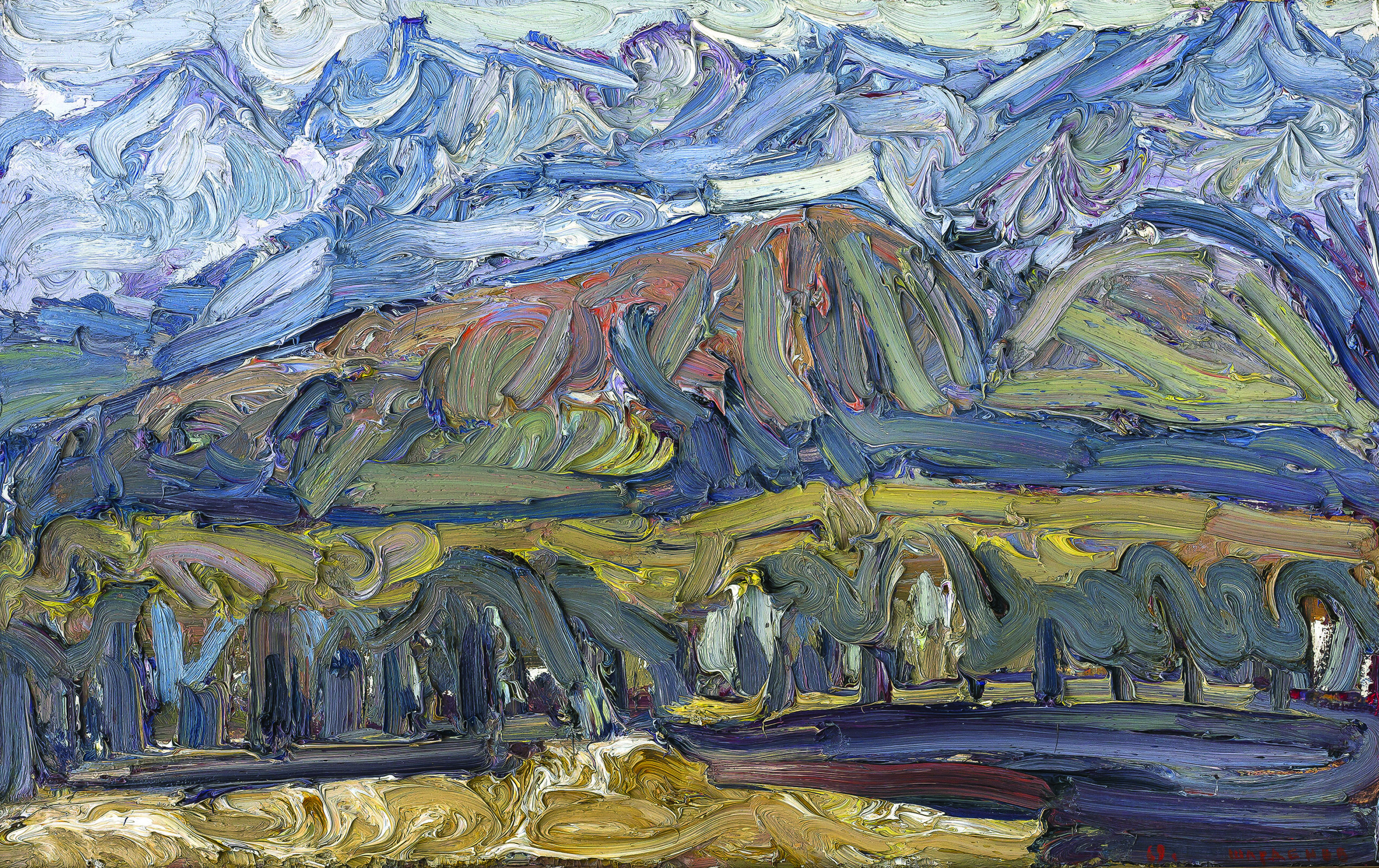
Zhanatai Sharden, Aksai Mountains; image: Almaty Museum of Arts

The permanent collection also includes works by international artists such as Richard Serra, Anselm Kiefer, Bill Viola, and Yayoi Kusama. These pieces serve as a bridge between Kazakhstan and the global contemporary art scene, fostering a dialogue between cultures and artistic traditions.

“I feel that I’ve written a new story,” says Smagulov. “I feel joy that many people will come here and they will be proud of their country.”

The Permanent Collection

The museum’s inaugural exhibition, curated by Latvian curator Inga Lace, is titled Konakhtar (“guests”), emphasizing the theme of hospitality that has shaped Kazakh culture for centuries. “A thing about hospitality is that in nomadic times, guests would also bring with them interesting stories,” says Lace. “So, hospitality was seen as a way of survival, but also a way of communicating.”

The works she places in the foreground open with festive gatherings, such as Aisha Galibaeva’s Shepherd’s Feast, where traditions of Kazakh conviviality are refracted through the Soviet lens. Yet hospitality, Lace reminds us, is not always voluntary. Soviet-era forced displacements – Koreans, dissidents, or those sent during the Virgin Lands campaign – reshaped communities. “Hospitality emerges as a very political act,” she notes.

The exhibition traces how these histories live on in artistic visions, whether through music, as in Dina Pilsava’s dombra performances appropriated by Soviet officials, or in avant-garde reinterpretations of nomadic forms by the generation of the 1960s.

“This collection and this museum is built as this kind of dialogue,” says Lace. “So, we have Kazakh art and the collection of the founder as the nucleus, and then international art to have this bridge with the global contemporary scene.”
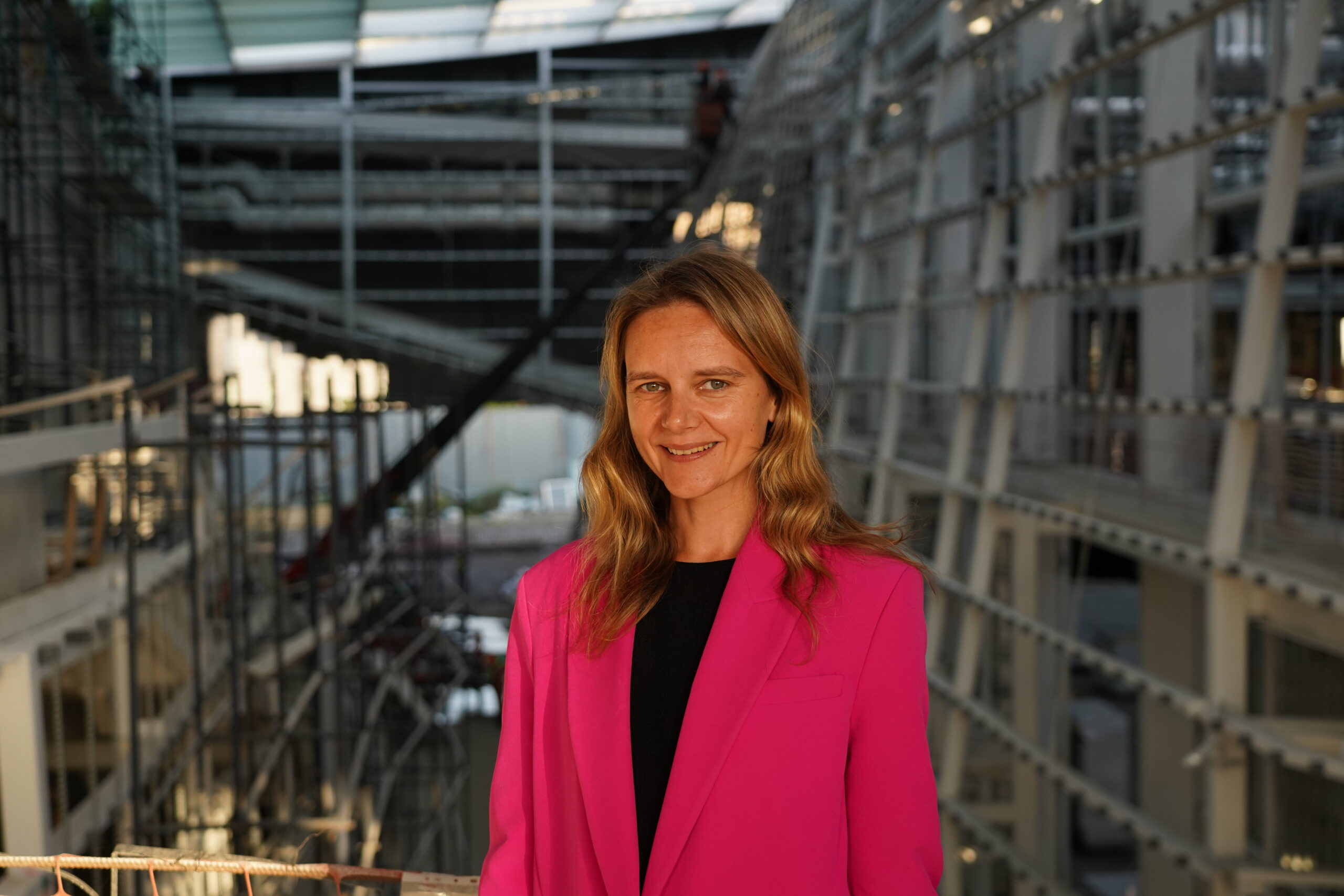
Inga Lace; image: Almaty Museum of Arts

Lace’s presentation concludes with a meditation on migration and cosmopolitanism, embodied in artists like Yevgeny Sidorkin, who illustrated Kazakh folk tales, or Sergey Kalmykov, who adopted Kazakhstan as the site of his cosmic experiments. For Lace, these works collectively express the desire to “see the past and also imagine different futures through the art of the region and the country.”

Both founders see the museum as a catalyst for change, hoping that international audiences will be more and more encouraged to come to Almaty. Presenting artists insisting on sharing voices across regions and histories, the Almaty Museum of Arts gathers fragments of memory, trauma, and resilience, weaving them into a cultural space that allows Kazakhstan to see itself anew, and to be seen by the world.

Almagul Menlibayeva, People and Animals, 1997; image: Almaty Museum of Arts

Almagul Menlibayeva perhaps put it best: “When we look at Kazakhstan, we see a strong connection with a number of countries and regions, from Europe, Siberia, Japan, Korea, but also China, and, of course, the Middle East,” she says. “I found that for me it was easy to understand, even if some places don’t understand each other. I feel like I’m a satellite, moving between regions and attempting to understand everything.”

The post Kazakhstan’s Cultural Reawakening: Almaty Opens Its New Museum of Arts first appeared on Trump News – trump-news.org.


Categories
News Review from The World Web Times

Tyler Robinson Should Face Public Firing Squad, Republican Says—’Fire Away’


Robinson, 22, has been charged with aggravated murder in the fatal shooting of conservative activist Charlie Kirk.

The post Tyler Robinson Should Face Public Firing Squad, Republican Says—’Fire Away’ first appeared on Trump News – trump-news.org.


Categories
News Review from The World Web Times

Israel Responds to Eurovision Boycott Threats


Five countries, including one which provides significant financial contributions to Eurovision, have threatened to boycott the contest.

The post Israel Responds to Eurovision Boycott Threats first appeared on Trump News – trump-news.org.


Categories
News Review from The World Web Times

DRAGON BLOCK C MOD *PLEASE HELP* – Minecraft Forum


The Dragon Block C mod for Minecraft versions 1.5.2, 1.6.2, and 1.6.4 crashes the Minecraft Launcher/server jar file with every attempt of initialization. Every single crash report is the same.

Categories
News Review from The World Web Times

Israeli troops press forward into Gaza City as Palestinians flee


Categories
News Review from The World Web Times

怎样填写Initial name? – 知乎


如果名字是王如燕,Wang ruyan ,Initial name应该怎样写?

Categories
News Review from The World Web Times

Artificial Intelligence Professional Program – Stanford Online


What You’ll Earn You’ll earn a Stanford Professional Certificate in Artificial Intelligence when you successfully complete either: Three courses in the AI professional education program, OR Two courses in the AI professional education program AND one course in the AI Graduate Program This Stanford Professional Certificate represents a minimum of 150 or more hours of Stanford coursework …

Categories
Blog and Tweets

A Symbol of Public Fury Ramming cars into the #FBI (or #CIA) gates: the emotions of the Vox Populi


Ramming cars into the #FBI (or #CIA) gates: symbolism and emotions of the voice populi – Google Search google.com/search?q=Rammi
AI Overview
The emotion from those who support or are drawn to such attacks is typically anger, driven by a perception of injustice, rather than fear. Ramming a vehicle into the gates of the FBI or CIA is a symbolically powerful act intended to express intense anti-government sentiment.
Symbolism of the attack:
Attacking the state’s authority: These attacks target federal law enforcement and intelligence agencies, which represent the power, security, and integrity of the United States government. Breaching their physical defenses, such as a security gate, symbolizes an assault on the government’s authority and a rejection of its legitimacy.
Emblematic target: An attack against the FBI or CIA is symbolic precisely because of the agencies’ powerful public image. For those who view the government as an overreaching and corrupt entity, these agencies are seen as prime instruments of state oppression. Striking at them is a direct assault on the perceived source of that power.
Act of defiance: A car ramming can be an act of defiant resistance for an individual who feels powerless against a monolithic government system. It is a way to make a bold, public statement with an easily acquired, everyday object turned into a weapon.
Targeting an “out-group”: For extremists, the act is a form of political violence against what they perceive as an “out-group” of corrupt officials, elites, or an unjust system.
Voice of the people (vox populi) emotionsFor those who may empathize with the motive of such an attack, the underlying emotion is often outrage, not terror. The symbolism is not meant to instill fear in a general audience but to express anger and contempt for the targeted institutions.Rage against injustice: For those driven by a “rage narrative,” these attacks are viewed as retaliation for perceived government overreach or abuses of power. This is in contrast to the “fear narrative” that typically follows attacks on civilian targets.
Perceived persecution: In many cases, the attacker or their sympathizers feel that they have been personally wronged or persecuted by the government or its agents. The act is seen as justified retribution for a perceived injustice.
Polarized anger: Responses to such attacks are often filtered through strong political biases. An individual’s emotional reaction may be driven by partisan anger, with views shaped by a deep-seated distrust of government institutions. Some recent research has shown that anger, rather than fear, has become a more prominent response among certain groups following political violence.
Motivated by repression: Studies show that political repression, or the perception of it, can motivate anti-government violence. For individuals who feel their voice is being repressed, a violent act may seem like the only option left for expressing their grievance.
The lone actor as a symbolHistorically, attacks on FBI and CIA gates are often carried out by “lone wolf” or “stray dog” perpetrators who are ideologically motivated but not part of a larger, coordinated group. This makes the individual attacker a symbolic figure representing the frustration of marginalized or disillusioned citizens who feel they have no other recourse. Their actions are often influenced and amplified by online extremist propaganda.
–
AI Mode
Ramming cars into the FBI (or CIA) gates: symbolism and emotions of the voice populi
. While the specific emotions of the general public (vox populi) can vary greatly, the act is often interpreted by supporters as a powerful, anti-authoritarian statement.When an individual rams a car into the gates of a federal agency like the FBI or CIA, the act carries significant symbolic weight related to anti-government sentiment, distrust of authority, and perceived violations of individual rights
Symbolism of the act
Targeting authority: The FBI and CIA are iconic symbols of U.S. federal law enforcement and intelligence. They represent the might and authority of the government, including surveillance and control. A physical assault on these institutions’ gates is a direct, tangible expression of defiance against that authority.
A “poor man’s” weapon: The use of a car as a weapon is symbolic of the perpetrator’s perspective. It requires minimal resources or specialized training, allowing a “marginal actor” to use a mundane, everyday object to inflict damage and sow fear. This method is especially appealing to lone actors who feel powerless against a perceived tyrannical state.
“Come and take it”: In some cases, the act echoes historical anti-authoritarian symbols. For example, the Gadsden flag, with its “Don’t Tread on Me” slogan, has been co-opted by some anti-government advocates as a sign of resistance to perceived tyranny. Some perpetrators may view their actions as a contemporary version of this defiance.
Messaging and provocation: Many attacks on government buildings and personnel are not spontaneous. They are performed to “demonstrate an ideological goal” or communicate a message. The perpetrator’s actions, and any accompanying items like notes or flags, are specifically chosen to provoke a response and garner attention for their cause. In the recent Pittsburgh FBI case, the suspect wrote vulgarities on the car and left an American flag, explicitly framing it as an attack.
Emotions of the vox populi
While there is no single public response, and emotions range across the political spectrum, the general reactions often include:
For supporters of the attacker: For those who share the anti-government ideology, the act may elicit feelings of validation, empowerment, or even inspiration. The perpetrator is viewed not as a criminal, but as a righteous revolutionary fighting against oppression.
For concerned citizens: Many in the general public may feel fear, anger, and anxiety. The attack on a high-profile target is designed to create a sense of insecurity and demonstrate that even powerful institutions are vulnerable. It may lead to increased calls for stronger security measures.
For opponents of the attacker’s ideology: Those on the other side of the political spectrum may express outrage, condemnation, and disgust. They may dismiss the attacker as mentally ill or a “lone wolf” to avoid validating the political message behind the violence. There may also be concern about the rise of political violence and domestic terrorism.
For law enforcement: Law enforcement and federal officials will feel that the act is a targeted threat against their personnel and institutions, requiring an immediate and decisive response. This can result in increased vigilance and security protocols.
–

Gemini
The Act of Defiance: Ramming Cars into FBI and CIA Gates as a Symbol of Public Fury

Washington D.C. – The act of an individual ramming a vehicle into the fortified gates of the Federal Bureau of Investigation (FBI) or the Central Intelligence Agency (CIA) is a potent and visceral display of defiance that transcends a simple criminal act. It is a symbolic clash between the individual and the immense, often opaque, power of the state, resonating with a segment of the public that harbors deep-seated distrust and anger towards these institutions. While overwhelmingly condemned, these desperate acts tap into a complex well of emotions and symbolism within the American psyche, reflecting a potent undercurrent of anti-government sentiment.

Recent incidents, such as the ramming of vehicles into the gates of FBI field offices in Pittsburgh and Atlanta, highlight the raw and often desperate nature of these acts.1 Investigations into the motives frequently point to individuals grappling with significant mental health challenges, yet their choice of target is rarely arbitrary. The FBI and CIA, for many, are not merely federal buildings but potent symbols of a government perceived as overreaching, secretive, and at times, oppressive.

For some, these agencies represent the “deep state,” an unaccountable shadow government pulling the strings of power. This narrative, fueled by political rhetoric and online conspiracy theories, paints the FBI and CIA as antagonists in a struggle for American freedom. From this perspective, an attack on their physical infrastructure is seen as a blow against tyranny, a desperate attempt to strike at an otherwise untouchable entity. The vehicle, in this context, becomes a makeshift battering ram against the fortress of perceived injustice.

The emotional response from the vox populi to such events is deeply fractured. A significant majority of the public unequivocally condemns these acts as senseless violence and domestic terrorism. They view the perpetrators as criminals who endanger lives and undermine the rule of law. For this segment, the FBI and CIA are essential institutions staffed by dedicated public servants working to protect national security. The attack is seen as an assault on the very fabric of American society and the dedicated individuals who serve within these agencies.

However, a vocal and often digitally amplified minority expresses a different sentiment. In online forums and social media echo chambers, these acts can be met with a degree of tacit approval or even outright celebration. The perpetrators are sometimes lauded as “patriots” or “martyrs” who dared to confront a corrupt system. The emotions expressed in these corners of the internet range from righteous anger and frustration to a sense of vicarious empowerment. The act of ramming the gate, in their eyes, is a physical manifestation of their own feelings of helplessness and rage against a system they believe has abandoned them.

The symbolism of the act is multifaceted. The gate itself represents a barrier, both literal and metaphorical, between the citizen and the inner workings of power. To breach that gate, even partially and ineffectually, is to symbolically penetrate the veil of secrecy and challenge the authority of the state. It is a desperate, public performance of dissent, intended to shock and draw attention to a grievance, however incoherent or misguided it may be.

Historically, attacks on federal buildings have served as potent symbols of anti-government sentiment.2 The choice of the FBI and CIA as targets is particularly significant given their complex and often controversial portrayal in popular culture. From heroic “G-Men” fighting organized crime to rogue agencies engaging in covert and morally ambiguous operations, their public image is a tapestry of conflicting narratives. This ambiguity allows individuals to project their own fears and frustrations onto these institutions, making them convenient and powerful symbols of a government that is either a protector or a persecutor, depending on one’s worldview.

In conclusion, while the act of ramming a car into the gates of the FBI or CIA is a criminal act with potentially tragic consequences, its significance extends beyond the immediate legal ramifications. It is a potent symbol of a deep and growing chasm in American society, a physical manifestation of the anger, distrust, and alienation felt by a segment of the population. The varied and often polarized emotional responses to these events serve as a stark reminder of the contested nature of truth, authority, and patriotism in the contemporary United States.
–


Articles and Tweets

Categories
News Review from The World Web Times

OCS Hall of Fame – OCS Alumni


OCS Hall of Fame The United States Army Officer Candidate Schools Alumni AssociationQuoted from a passage in a letter he received from Sergeant Mike Ranney, “I cherish the memories of a question …