Categories
Sites

Yale University report says Moscow is forcing thousands of Russian children into arms production and re-education


Ukrainian children training with gas masks in Russia. (Source – OTR channel)

By Sean Rayment

Kidnapped children have been taken to at least 210 facilities in Russia and areas of Ukraine under Moscow’s control, as part of a Kremlin effort to secure their loyalty to President Putin, a report has said.

The facilities span 3,500 miles, from the Black Sea to Siberia and the Pacific coast, according to research by Yale University’s Humanitarian Research Lab (HRL).

Researchers accused Moscow of operating a “potentially unprecedented” system of “re-education” and forced military training for Ukrainian children. The report also said that children are being made to produce drones and other military equipment for Russia’s army. Ukraine estimates that Russia has abducted around 20,000 children since the start of the full-scale invasion in 2022.

The facilities include military cadet schools, a military base, medical facilities, a religious site, secondary schools and universities, a hotel, family support centres and orphanages. Most frequently, they are camps and sanatoria, HRL said, citing open-source information and satellite imagery. More than half of the facilities are directly managed by the Russian government, according to the report.

HRL said the network formed part of Moscow’s broader attempt to “Russify” the population in occupied Ukrainian territories.

“[Russia] explicitly targets children, especially those in vulnerable categories such as orphans and those living close to the front line,” it said. Russia’s treatment of Ukrainian children was “likely to leave generational scars”, the report warned.

Re-education programmes involving “cultural, patriotic or military programming that aligns with pro-Russia narratives” have taken place at 130 sites. Almost 40 facilities, including specially built “Warrior” training camps, have been used to “militarise” Ukrainian children, according to HRL.

Children are reported to have taken part in shooting and grenade-throwing competitions, and to have received firearms, drone and tactics training. The report could not confirm whether any children who underwent Russian military training had been deployed to fight against Ukrainian forces.

The children arrived in Russia or Russian-occupied territory through a variety of routes, HRL said. Some were forcibly removed from their parents by Kremlin-loyal officials or troops during the early months of the war, while others were taken from Ukrainian state care homes.

Some parents sent their children to Russian-run summer camps that were meant to last only a few weeks. Certain children have since been returned to Ukraine, but only “after undergoing re-education”.

President Putin and Maria Lvova-Belova, the Kremlin’s top official for children’s rights, have been charged by the International Criminal Court with the mass abduction of Ukrainian children. Kyiv says Moscow is attempting to erase the children’s Ukrainian identity and insists their return will be a condition in any future ceasefire or peace deal. Moscow denies kidnapping children, claiming instead that they were “rescued” from war zones by Russian troops after the invasion began.

The post Yale University report says Moscow is forcing thousands of Russian children into arms production and re-education first appeared on JOSSICA – jossica.com.


Categories
Sites

The problem with Democrats is that they have no leader, no message, and no unity, but definitely no fight or strategy to do so! Biden screwed DEMS by running for a 2nd term, leaving Afghanistan as he did, not giving Ukraine long-range weapons & jets very early on! CHANGE!


The problem with Democrats is that they have no leader, no message, and no unity, but definitely no fight or strategy to do so! Biden screwed DEMS by running for a 2nd term, leaving Afghanistan as he did, not giving Ukraine long-range weapons & jets very early on! CHANGE!

The post The problem with Democrats is that they have no leader, no message, and no unity, but definitely no fight or strategy to do so! Biden screwed DEMS by running for a 2nd term, leaving Afghanistan as he did, not giving Ukraine long-range weapons & jets very early on! CHANGE! first appeared on The Russian World – russianworld.net.


Categories
Sites

@visegrad24 Until Zelensky accept he lost and drops his unhinged demands things aren’t going to get better. The west needs to stop facilitating weapons for Ukraine or they will never stop killing people


@visegrad24 Until Zelensky accept he lost and drops his unhinged demands things aren’t going to get better. The west needs to stop facilitating weapons for Ukraine or they will never stop killing people

The post @visegrad24 Until Zelensky accept he lost and drops his unhinged demands things aren’t going to get better. The west needs to stop facilitating weapons for Ukraine or they will never stop killing people first appeared on The Russian World – russianworld.net.


Categories
Sites

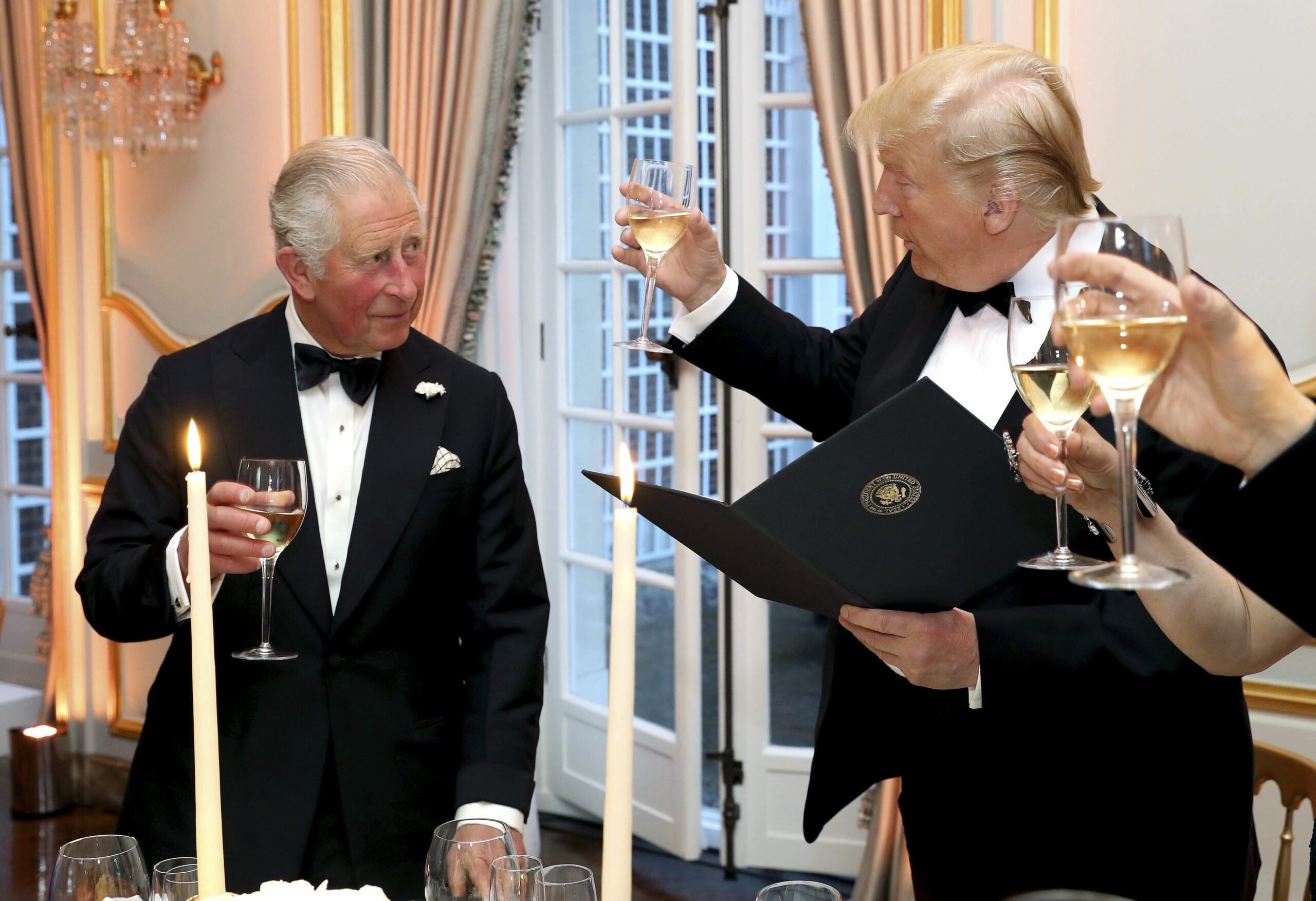
Trump Goes to Windsor


The 47th president will walk grounds first cultivated by William the Conqueror — and meet a prime minister in crisis.

The post Trump Goes to Windsor first appeared on The Ocean Avenue News – oceanavenuenews.com.


Categories
News Review from The World Web Times

How to Calculate Your Body Mass Index (BMI) – wikiHow


To calculate your body mass index (BMI), start by measuring your height in meters and then squaring it. Then, divide your weight in kilograms by your height in meters squared to find your BMI.

Categories
News Review from The World Web Times

live: Trump administration


Categories
News Review from The World Web Times

100 DIY Home Projects for Under $100 – This Old House


We’ve rounded up our favorite budget ideas to inspire your next DIY home improvement project.

Categories
News Review from The World Web Times

Inflation in Kazakhstan “Eating Away” at Incomes: Authorities Struggle for Answers


Inflation in Kazakhstan is continuing to erode household incomes, driven by the country’s dependence on imports, rising utility tariffs, and increasing tax burdens. While living costs soar, wages remain sluggish, forcing many families to allocate most of their earnings to essentials such as food, medicine, and utilities.

Rising Prices, Stagnant Wages

As of August, annual inflation had reached 12.2%, and experts warn it could climb even higher by year’s end. The National Bank’s original 2025 inflation target of 5% has proven to be overly optimistic. “This is a negative, sad trend. It shows that not enough measures have been taken. That it was necessary to tighten monetary policy earlier. It was necessary to contain inflation risks,” said Ramazan Dosov, chief analyst at the Association of Financiers of Kazakhstan.

The National Bank’s base rate, its primary instrument for controlling inflation, currently stands at 16.5%. Financier Rasul Rysmambetov notes that the rate is unlikely to be lowered in the near future. However, high interest rates also reduce access to loans for businesses, curbing investment. Despite frequent government statements about inflation-control measures, experts argue that artificial price regulation offers only temporary relief.

In his September 8 address to the nation, President Kassym-Jomart Tokayev acknowledged the severity of the issue, stating, “Today, the main problem is high inflation, which is eating away at economic indicators and household incomes. There is no ready-made solution to this problem.” Tokayev called for coordinated efforts across government agencies.

At the beginning of 2025, Kazakhstan’s average monthly salary was reported at 424,200 KZT (about $800), reflecting a 24% increase over the previous year. However, this figure obscures wide regional disparities. In many areas, typical monthly salaries range between 180,000 and 230,000 KZT ($330-430). Per capita income reached 194,000 KZT ($362), up 17% from early 2023, but not enough to keep pace with inflation. According to kazkredit.kz, average families now spend up to 95% of their income on day-to-day expenses. In 2023, 52% of income went toward food; that figure has risen to more than 54% in 2025.

Halyk Finance, cited by inbusiness.kz, reports that more than half of Kazakhstan’s workers earn below the national average. Salary data reveals stark income inequalities across sectors, with higher wages in mining, finance, and telecommunications, and significantly lower wages in agriculture, healthcare, and public administration. Analyst Arslan Aronov notes that although nominal wages increased by 11.3% in the second quarter of 2025 compared to the same period in 2024, real wage growth was effectively zero due to inflation.

Public sentiment reflects the strain. Economists at KZTnomika reported a slight easing of inflation expectations in August 2025, but overall confidence in price stability remains low. Eighty-two percent of survey respondents reported rising food costs, with meat and dairy products leading the list. Among non-food items, medicines, clothing, and cleaning products were most frequently cited. For paid services, rising costs for housing, internet, mobile communication, and healthcare were prominent concerns.

Background and Analysis

Kazakhstan’s struggle with inflation is rooted in both external shocks and structural weaknesses in its economy. The country remains heavily dependent on imports for everyday goods, making local prices highly sensitive to global markets and exchange rates. This dependence has been magnified by its trade with Russia, where sanctions and supply disruptions have spilled over into Kazakhstan. The tenge’s depreciation – more than 13% against the US dollar in 2024 – has made imports more expensive, feeding directly into consumer price inflation. The International Monetary Fund has noted that inflation in Kazakhstan is “primarily imported,” with foreign price movements quickly transmitted onto households.

Domestic policy has compounded these pressures. In recent years, government social spending and wage hikes helped offset public discontent, but they also fueled demand without boosting supply. Economists argue that subsidies and benefits, while politically popular, tend to be inflationary in an import-reliant economy: more money in consumers’ hands often means higher spending on imported goods, which in turn weakens the tenge further. Credit expansion has also played a role, with consumer lending growing rapidly and pushing demand for food, housing, and services beyond domestic capacity.

The National Bank of Kazakhstan has responded with one of the highest base rates in the region. While this helps to cool demand, it also threatens investment and growth. Analysts warn of a policy dilemma: rates must remain tight to curb inflation, yet high borrowing costs risk slowing the economy. The government’s frequent resort to price controls, such as capping utilities or subsidizing essentials, offers only short-term relief. When these controls are lifted, prices often spike sharply.

Regional comparisons underline the scale of the problem. Kyrgyzstan and Uzbekistan have also battled double-digit inflation, but Kazakhstan’s rate remains among the highest in the CIS. Institutions like the OECD argue that sustained relief will require structural reforms: diversifying production, modernizing agriculture, and strengthening logistics to reduce reliance on imports.

The broader consequence is a steady erosion of real incomes. Even as wages rise on paper, inflation cancels out most gains, leaving families with little disposable income and risking a cycle of high inflation and weak purchasing power.

The Politics of Inflation

Political analyst Daniyar Ashimbayev has warned that ballooning social spending has made the national budget increasingly unsustainable. “Social spending, which has increased significantly over the past six years, partly to ensure political loyalty and partly to offset inflation, is now consuming the lion’s share of the budget,” he stated.

Although tax hikes were introduced in 2025, inflation continued to rise, which Ashimbayev attributes to the government’s economic policies. Ashimbayev predicts that in 2026, the effects of a new Tax Code, combined with further tariff increases and expanded budgetary obligations, will slow economic growth and diminish real incomes.

Rysmambetov, meanwhile, has called Tokayev’s directive to reduce inflation “unrealistic,” especially given the current approach to price controls. Kazakhstan imports many consumer goods from Russia, which remains under international sanctions, further complicating supply chains and pricing. The country’s dependence on raw material exports also limits its economic flexibility. Rysmambetov has proposed a more structural response, including the creation of an electronic goods catalog to track pricing and eliminate intermediaries in food and fuel markets. Long-term stability, he argues, will require a shift toward domestic production and broader economic diversification.

What Comes Next?

Despite these concerns, the Ministry of National Economy has pledged to hold inflation and utility rates in check through the end of 2025, with a new targeted inflation rate of 10-11%. For now, Kazakhstan’s battle with inflation underscores the delicate balance between short-term fixes and long-term reforms. Whether the government’s latest pledges will be enough to stabilize prices remains uncertain, leaving households and businesses braced for continued volatility through 2025.

The post Inflation in Kazakhstan “Eating Away” at Incomes: Authorities Struggle for Answers first appeared on Trump News – trump-news.org.


Categories
News Review from The World Web Times

@MarkVarner2024 Not to mention the $150 million stock scam with Russian mafia boss Semion Mogilevich that was run LITERALLY under Trump’s nose in the flat directly under Donald’s apartment, by Russian émigré David Bogatin who bought 5 apartments in Trump Tower (in cash).


@MarkVarner2024 Not to mention the $150 million stock scam with Russian mafia boss Semion Mogilevich that was run LITERALLY under Trump’s nose in the flat directly under Donald’s apartment, by Russian émigré David Bogatin who bought 5 apartments in Trump Tower (in cash).

The post @MarkVarner2024 Not to mention the $150 million stock scam with Russian mafia boss Semion Mogilevich that was run LITERALLY under Trump’s nose in the flat directly under Donald’s apartment, by Russian émigré David Bogatin who bought 5 apartments in Trump Tower (in cash). first appeared on Trump News – trump-news.org.