
Pesquisar imagens no Google Para encontrar uma página ou uma resposta a uma pergunta, você pode pesquisar uma imagem relacionada no Imagens do Google. Encontrar imagens Importante: as imagens podem estar sujeitas a direitos autorais. Se você quiser reutilizar uma imagem, restrinja os resultados por direitos de uso.
Day: July 14, 2025

During a recent trip to Ukraine, I visited a command center located hundreds of kilometers from the frontlines. Inside, young men and women dressed in hoodies skillfully guided drones toward Russian tanks, personnel carriers, and bunkers. Each hit earned points, with teams competing against one another. War gamification ensures maximum impact, with every euro invested in drones destroying Russian assets worth hundreds of times more.
Ukraine’s experience since 2022 demonstrates that modern warfare is a fusion of manpower-intensive trench combat and drone-driven technological innovation. By focusing heavily on the latter, Ukraine has been able to offset Russia’s often overwhelming advantages in terms of conventional military strength. Today, Ukrainian drones account for around 70 percent of confirmed Russian losses, according to the Royal United Services Institute.
In the air, first person view (FPV) Ukrainian drones pound Russian armor, artillery, and trench networks along the front lines. Meanwhile, Ukraine’s interceptor drones are shooting down Shahed bomber drones, while long-range drones strike refineries, airfields, and arms factories deep inside Russia. Ukraine’s Operation Cobweb in June 2025 was a vivid demonstration of these rapidly evolving drone capabilities, with around twenty Russian military aircraft damaged in simultaneous drone attacks on multiple airbases across the Russian Federation.
Aerial drones are only part of Ukraine’s expanding unmanned arsenal. The Ukrainian military uses ground drones to storm enemy trenches, deliver supplies to the front lines, and evacuate wounded soldiers from hot spots. At sea, Ukrainian marine drones have forced the Russian Black Sea Fleet to abandon its home base in Russian-occupied Crimea. Remarkably, Ukrainian marine drones armed with missiles have also reportedly managed to destroy Russian helicopters and fighter jets. Together, these air, land, and sea drones are able to threaten every part of Putin’s war machine.
Stay updated
As the world watches the Russian invasion of Ukraine unfold, UkraineAlert delivers the best Atlantic Council expert insight and analysis on Ukraine twice a week directly to your inbox.
So far, drones have helped Ukraine to hold the line against Russia’s invasion. But holding is not winning. Meanwhile, the Kremlin is catching up. Indeed, rapidly growing domestic production of Shaheds and unjammable fiber optic drones have recently allowed Russia to seize the initiative from Ukraine in the drone war. In order to reverse this trend and open up a pathway toward ending Russia’s invasion, Kyiv’s Western partners must help Ukraine dramatically scale up drone production.
This year, Ukraine aims to produce around four million drones of all types, more than double last year’s total. Partner countries also plan to expand deliveries. A twenty-nation Drone Coalition co-chaired by Latvia and the UK has pledged €2.75 billion to supply an additional one million drones in 2025. However, progress has been slow as members rely on their own limited drone production capabilities.
The so-called Danish model of military aid offers a faster and more cost-effective alternative. Under this approach, Copenhagen pools donor funds, including windfall interest from frozen Russian assets, to procure drones and other military equipment directly from Ukrainian manufacturers. Total disbursements via this streamlined pipeline are expected to reach €1.5 billion in 2025.
Even if Kyiv and Western partners meet their current targets, overall output of around five million drones is only half the annual total necessary to shift the battlefield balance in Ukraine’s favor. With ten million drones per year, Ukraine could maximize the power of drone swarms to overwhelm Russia’s air defenses and knock out supply lines faster than Moscow could patch them up. This could realistically alter the course of the war and force Putin to retreat.
Eurasia Center events
Ukraine’s drone industry has already demonstrated that it can scale up production quickly and cheaply. What started as garage tinkering using mostly Chinese-imported parts has evolved into a robust industry relying primarily on domestic and Western components. For several years, Ukraine has been mass-producing drones that rival Western models in effectiveness at a fraction of the cost.
Innovation cycles are equally impressive. Thanks to rapid battlefield feedback and streamlined procurement, Ukraine’s agile approach to innovation easily surpasses the far slower development cycles in the West. New drone variants roll off production lines in weeks rather than months. Airframes produced by industrial-grade 3D printers enable rapid prototyping and redesign without costly retooling.
Ukrainian officials have repeatedly stressed that the country has the spare capacity to produce drones in far greater numbers. They estimate that scaling up drone production from current levels to ten million units per year is realistic but would require an additional €10 billion over two years. To meet that goal, Ukraine’s allies should launch a dedicated drone initiative.
This initiative would draw on the Danish model, with funding for Ukrainian drone production coming from a variety of sources including bilateral grants, windfall interest from frozen Russian assets, and low-interest loans from the EU’s SAFE instrument, which aims to bolster Europe’s defense-related industrial capacity. Most orders would flow directly to Ukraine’s drone manufacturers, significantly reducing costs, cutting delivery times, and minimizing logistical risks.
In parallel, the EU should rapidly establish a unified defense market that includes Ukraine. This means integrating Kyiv into the European innovation ecosystem and fostering collaboration between Western industry and Ukraine’s vibrant defense tech ecosystem. Ukrainian drone producers would gain from European orders and investments, while the EU would benefit from Ukraine’s battle-tested technologies, production capacity, and agile innovation mindset. Strengthening Ukraine as an allied drone superpower is clearly a strategic investment in the continent’s long-term security.
History shows that transformative technologies define entire eras of warfare. Artillery was the decisive weapon during World War I, while tanks, combined with air power, ruled the battlefield a generation later in World War II. The 1991 Gulf War marked the next leap: The ascendancy of precision-guided air power.
Today, the dominance of drones is rewriting military doctrine and looks set to shape conflicts for years to come. Ukraine has the technology, talent, and industrial potential to prevail in the war with Russia, but currently lacks the funding to scale drone production to the necessary levels.
Failure to act now will prolong the war in Ukraine, erode Western security, and embolden autocrats worldwide. The stakes have never been higher; the solution has rarely been clearer. The young Ukrainian drone operators in that dimly lit command room understand this very well. Ukraine’s Western partners must now also grasp the new military realities. By funding a massive Ukrainian drone surge, they can thwart Russia’s invasion and safeguard Europe.
Mark Boris Andrijanič is a senior fellow at the Atlantic Council, a member of the Governing Board of the European Institute of Innovation and Technology, and a former Minister for Digital Transformation of Slovenia.
Further reading
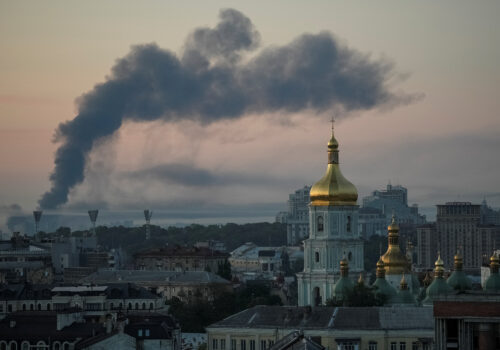
UkraineAlert
Jul 8, 2025
Putin is winning the drone war as Russia overwhelms Ukraine’s defenses
By
Maksym Beznosiuk
Russia is now winning the drone war against Ukraine thanks to a massive increase in domestic drone production and a series of technological upgrades, writes Maksym Beznosiuk. This is enabling Putin to dramatically escalate the bombardment of Ukrainian cities.
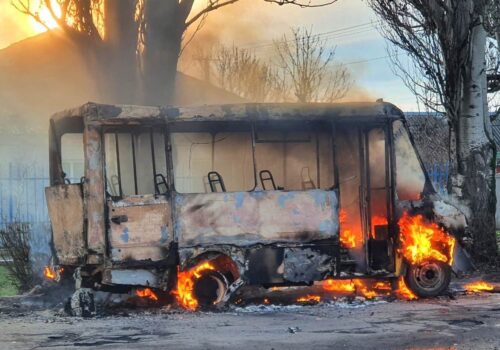
UkraineAlert
May 29, 2025
UN probe: Russia’s ‘human safari’ in Ukraine is a crime against humanity
By
Peter Dickinson
UN investigators have concluded that a coordinated Russian campaign of deadly drone strikes targeting civilians in southern Ukraine’s Kherson region is a crime against humanity, writes Peter Dickinson.
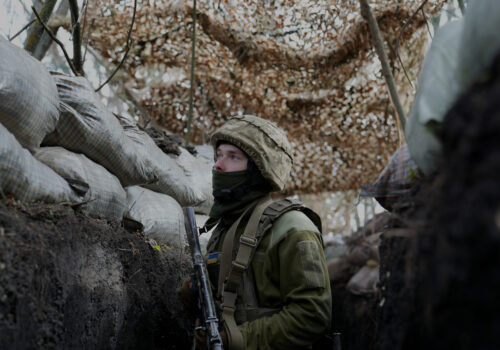
UkraineAlert
Jul 10, 2025
Russia accused of escalating chemical weapons attacks against Ukraine
By
Katherine Spencer
Ukraine has called for an international investigation into what officials in Kyiv claim is Russia’s escalating use of chemical weapons on the battlefield, writes Katherine Spencer.
The post A Western-funded drone surge could end Russia’s invasion of Ukraine appeared first on Atlantic Council.
The post A Western-funded drone surge could end Russia’s invasion of Ukraine first appeared on Audio Posts – audio-posts.com.
Our latest Contrarian episode, with Norm Eisen, Michael Podhorzer, and Jennifer Rubin — each from the all-star cast of the dynamic new media venture. Republicans felt buyer’s remorse as Americans learned the contents of their “Big Beautiful Bill.” ICE, soon to be the country’s biggest law enforcement agency, kept up its aggressive raids. And the DOJ sprinted toward the cliff’s edge in its totalitarian activities. Plus Emil Bove, Justice Jackson, and a lot more.
Learn more about your ad choices. Visit megaphone.fm/adchoices
The post ICE Age first appeared on Audio Posts – audio-posts.com.
Categories
Remaining Question A Year After Butler
Over one week has passed since President Trump signed the “big, beautiful bill” into law, and he is now urging Republican Senators to support a package that would codify his proposed cuts via the Department of Government Efficiency. Meanwhile, House Republicans have already approved the package. This week, the House will take up several measures seeking to make the U.S. the leader in financial technology, cryptocurrency, and digital assets innovation. House Majority Whip Congressman Tom Emmer (MN-6) joins the Rundown to discuss the passage of the President’s “big” bill and the upcoming “crypto week.” On July 13, 2024, an attempted assassination of President Trump
took place at a rally in Butler, Pennsylvania. One year later, the country
continues to wrestle with the question: how could such a breach have occurred? Veteran journalist Salena Zito witnessed the event firsthand, which she recounts in her new book, Butler: The Untold Story of the Near
Assassination of Donald Trump and the Fight for America’s Heartland. She
joins the podcast to examine how the Butler incident marked a turning point for America, igniting an “awakening” in Middle America and a pushback against the political status quo.
Learn more about your ad choices. Visit podcastchoices.com/adchoices
The post Remaining Question A Year After Butler first appeared on Audio Posts – audio-posts.com.
Online video poker apps make playing the popular game simple—you can do it right on your mobile device. With online gambling’s soaring popularity, these platforms shine by providing easy access to this classic game, promising both fun and opportunities for real money payouts.
The post Best Video Poker Apps (2025) – Play Real Video Poker Online first appeared on The World Web Times – wwtimes.com.
