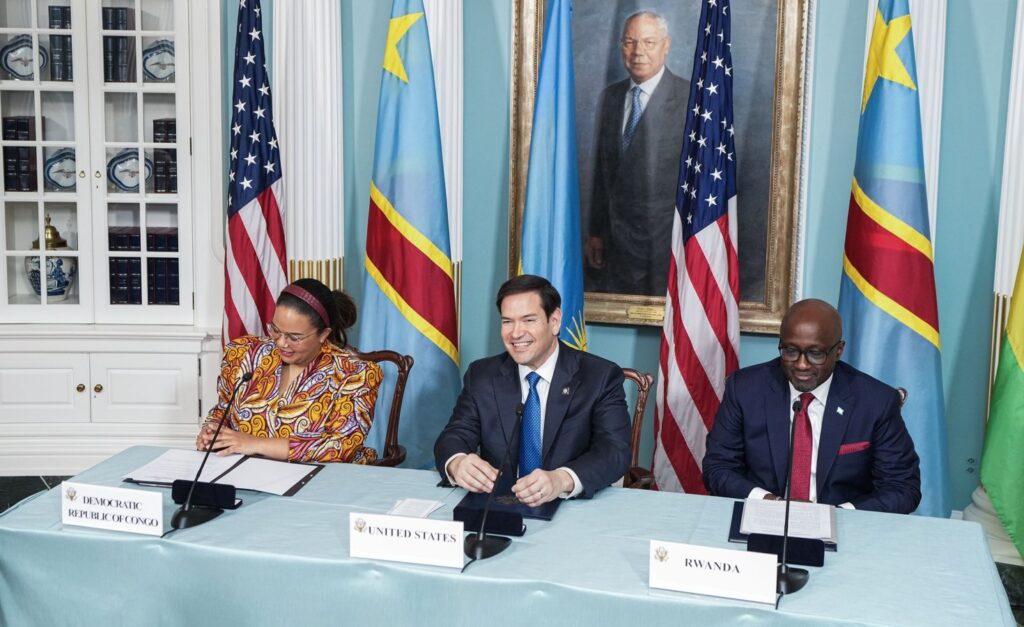
Secretary of State Marco Rubio with Foreign Ministers Therese Kayikwamba Wagner of DR Congo and Olivier Nduhngirehe at the signing of a Declaration of Principles at the Department of State in April 2025. (Source – @SecRubio / X)
Rwanda and the Democratic Republic of Congo (DRC) have signed a deal brokered by the United States to resolve the ongoing conflict in eastern DRC. While the agreement is being hailed as a diplomatic breakthrough, scepticism remains regarding its ability to establish lasting peace, particularly given the repeated collapse of previous ceasefires since late 2021.
Observers have also expressed concern that a focus on strategic minerals could attract additional stakeholders and complicate negotiations.
The Memorandum of Understanding (MoU) was signed in Washington by DRC Foreign Minister Thérèse Kayikwamba Wagner and Rwandan Foreign Minister Olivier Nduhungirehe, with US Secretary of State Marco Rubio in attendance. The Trump administration has prioritised ending the conflict as part of broader efforts to promote economic development in the Great Lakes region, particularly focusing on the DRC’s critical mineral deposits.
Bram Verelst, a Great Lakes security analyst and senior researcher at the Institute for Security Studies, characterised the signing of the MoU as a step forward but cautioned that much work remains to be done.
“The diplomatic situation is fragile, and the negotiation process remains opaque, with no clarity on whether economic or resource-related issues will be included,” he noted.
Verelst emphasised that while resources play a role in the conflict, political dynamics are equally critical. He warned that the emphasis on securing strategic minerals could introduce additional actors and interests, further complicating negotiations. He also highlighted the weakened domestic position of DRC President Félix Tshisekedi, which could further hinder the peace process.
Bram Verelst, a Great Lakes security analyst and senior researcher at the Institute for Security Studies.
Withdrawal of South African troops taking place “by road”
The Southern African Development Community (SADC) has begun withdrawing its troops from eastern DRC as part of broader regional security developments. The SADC mission, launched in 2022 in response to escalating violence, deployed forces from South Africa, Malawi, and Tanzania under the SADC Mission in the DRC (SAMIDRC). Despite efforts to bolster security, the mission faced logistical challenges, hostile engagements, and accusations of exacerbating tensions rather than stabilising the region.
By early 2025, following intense clashes and the fall of Goma—a city of significant strategic importance to rebel forces—SADC leaders opted to withdraw troops, marking the end of the mission. The withdrawal has been hindered by logistical issues, including the closure of Goma International Airport, forcing troops to evacuate by road to Tanzania.
An official from the South African National Defence Force (SANDF) confirmed the evacuation process, stating: “Soldiers are moving by road to Tanzania.”
SADC mission a failure
Verelst argued that the SADC mission in eastern DRC ultimately failed, citing Rwanda’s perception of the force as hostile, which prevented it from playing a stabilising role similar to the East African Community Regional Force (EACRF).
Despite the mission’s shortcomings, he stressed that SADC still has an important role to play in regional peace negotiations, given that stability in the DRC directly affects neighbouring countries, including those in SADC.
“There needs to be an effort to harmonise regional efforts into a coherent process, but I’m sure SADC will continue to have a role to play,” Verelst remarked.
Ramaphosa’s withdrawal strategy criticised
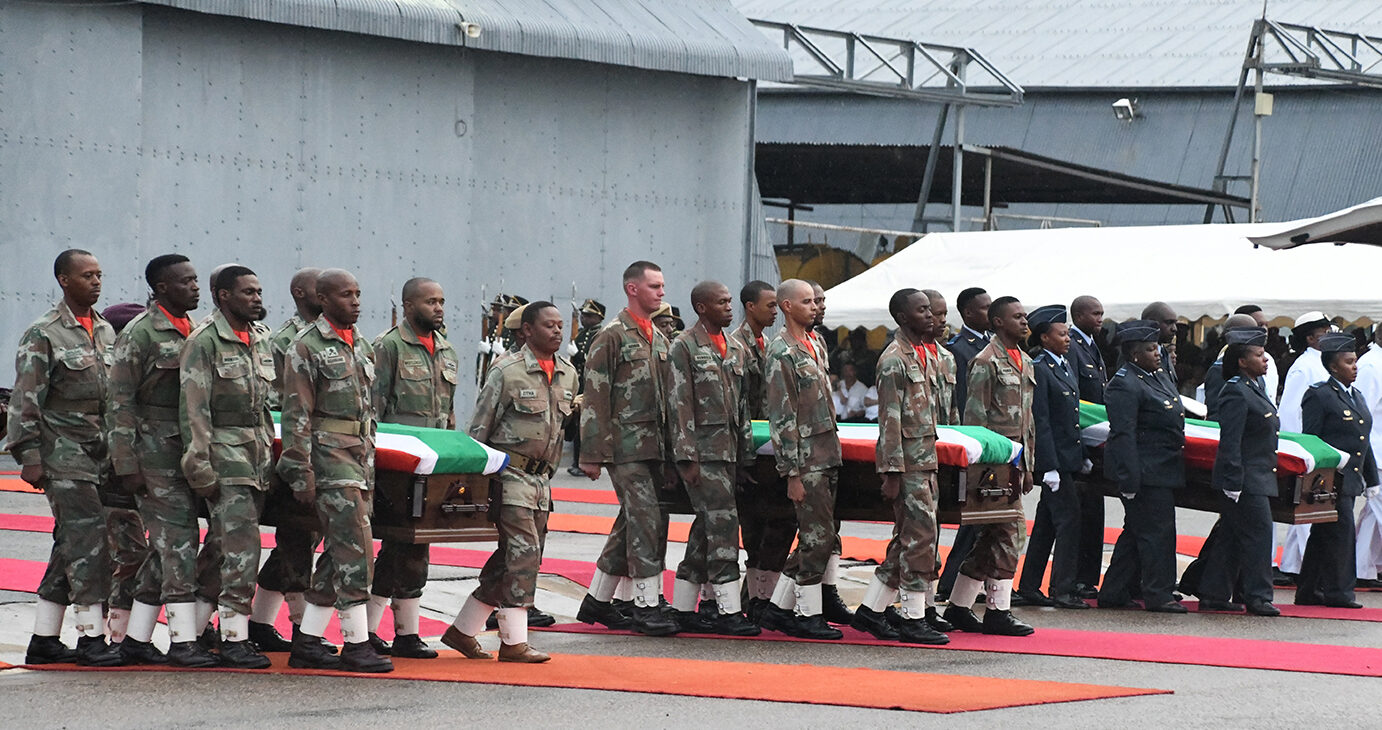
14 South African soldiers were killed where they fought as part of a SADC peace mission. (Source – @GovernmentZA)
The South African withdrawal has drawn sharp criticism, described as “chaotic and poorly coordinated” by former Shadow Defence Minister Kobus Marais.
While Marais welcomed the start of the repatriation process, saying, “It is clearly very good news that the repatriation of our SAMIDRC soldiers and equipment has commenced from Goma and Sake in eastern DRC,” he lamented the inability to return equipment via Goma Airport.
Marais described it as a missed opportunity for a safer and faster withdrawal and urged the Commander-in-Chief, the Ministry of Defence, and SADC to ensure the immediate and safe return of all South African soldiers and military equipment.
He also said that SANDF members in Sake have received no communication on their evacuation and have reported shortages in containers.
Questioning the initial deployment decision, Marais argued that South Africa should never have engaged in the mission, saying: “It was never our war. It boggles my mind why President Ramaphosa was so persistent in authorising this unjust, unaffordable, and unsustainable foreign deployment, especially given the dire state of SANDF’s defence capabilities.”
He further emphasised the need for a realistic defence policy, calling for the replacement of South Africa’s illogical 2025 Defence Review with a more strategic plan.
Conflict escalation and humanitarian toll
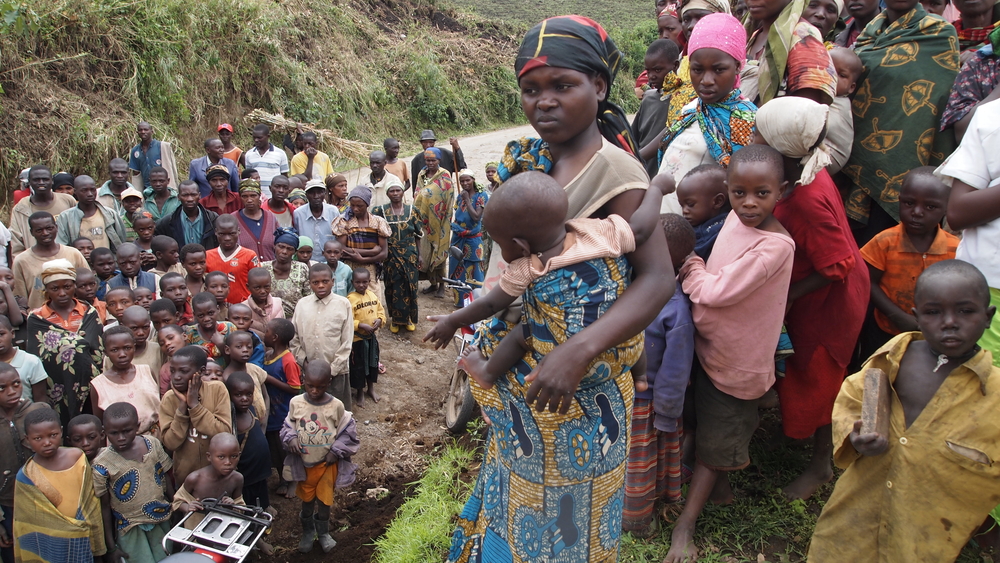
Thousands fled the conflict in the Eastern DRC. (Source – newhumanitarian.org)
The conflict in eastern DRC has worsened significantly in recent years, particularly with the resurgence of M23 rebels, widely believed to be backed by Rwanda.
In January 2025, M23 forces seized control of Goma, displacing over 400,000 people and raising grave humanitarian concerns. Heavy fighting between M23 and SADC forces resulted in the deaths of 14 South African soldiers earlier this year.
The deteriorating situation has deepened tensions between Kinshasa and Kigali, with the Congolese government accusing Rwanda of direct military involvement in the conflict.
With reports of widespread human rights violations, including sexual violence used as a weapon of war, humanitarian organisations are calling for greater intervention and protection measures.
While the US-brokered peace agreement signals diplomatic progress, concerns remain about its implementation and long-term effectiveness. The withdrawal of SADC forces, political fragility, and ongoing violence suggest that achieving sustainable peace will require comprehensive negotiations beyond mineral interests.
The claim that Russia has entered a Third Chechen War and that Kadyrov has serious disagreements with Putin is a complex and unsubstantiated one. While the Chechen–Russian conflict has a history of conflict, including two previous wars, there is no credible evidence to suggest a third war has begun. Furthermore, while Kadyrov and Putin have had disagreements, the extent of any current conflict remains unclear. [1, 1, 2, 3, 4]
The Chechen–Russian Conflict: The Chechen–Russian conflict has a history of armed conflict and political tension, with two major wars occurring between 1994 and 1996, and 1999 and 2000. These conflicts were primarily due to Chechnya’s desire for independence from Russia and the ensuing Russian intervention.
Current Status: Currently, Chechnya is a republic within the Russian Federation, led by Ramzan Kadyrov. While tensions and disagreements may exist, there is no evidence of a full-blown third war.
Kadyrov and Putin: Kadyrov has a long and complicated relationship with Putin. While Kadyrov is a staunch ally and loyal supporter of Putin, there have been reports of disagreements and power struggles between them. However, these disagreements do not necessarily indicate a “third war”.
Need for More Evidence: To substantiate the claim of a third war and serious disagreements, more credible evidence and verified information would be needed. The current situation is complex, and it’s important to avoid spreading unverified rumors. [1, 1, 2, 2, 3, 3, 5, 6, 7, 8, 9, 10, 11, 12, 13, 14]
It’s important to clarify the historical context of the Chechen conflicts and the current situation. Here’s a breakdown:
The Chechen Wars:
Russia has engaged in two major military conflicts in Chechnya:
The First Chechen War (1994-1996)
The Second Chechen War (1999-2009)
These wars were primarily about Russia’s attempt to maintain control over the Chechen Republic, which sought independence.
Current Situation and Ramzan Kadyrov:
Currently, Chechnya is a republic within the Russian Federation, and Ramzan Kadyrov is the head of the Chechen Republic.
Kadyrov has a complex relationship with Russian President Vladimir Putin.He has been a strong supporter of Putin, and Chechen forces have played a role in the war in Ukraine.
It is true that from time to time, there are reports of friction, and disagreements.Kadyrov is known for very strong opinions, and expressing them publically.
Therefore, while there may be disagreements between Kadyrov and Putin, it would be inaccurate to state that Russia has entered a “Third Chechen War” in the traditional sense of a large scale military conflict between Russia and Chechnya.
It is more accurate to say that the relationship between the Chechen republic, and the Russian federal government remains complex, and at times tense.
Key Points:
The Chechen conflicts of the 1990s and early 2000s were distinct periods of intense warfare.
The current situation involves a complex political relationship.
Information regarding the relationships of political figures in the region, should be viewed with a degree of caution, as information can be manipulated for political gain.
There are rumors circulating about serious disagreements between Chechen leader Ramzan Kadyrov and Vladimir Putin. Kadyrov has reportedly declared a “blood feud” against Russian legislators, which suggests growing tensions between him and the Kremlin. However, there is no confirmed evidence that Russia has entered a Third Chechen War at this time.
If you’re interested in the historical context, Chechnya has experienced two brutal wars with Russia in the past—one in 1994-1996 and another in 1999-2000—as part of its struggle for independence. Some experts believe that Russia’s imperialist ambitions in Chechnya were a precursor to its aggression in Ukraine.
There is no credible evidence or official confirmation of a “Third Chechen War” as of May 1, 2025. The claim appears to stem from unverified posts on X, which mention tensions between Chechen leader Ramzan Kadyrov and Russian President Vladimir Putin. These posts, including references to YouTube videos, lack substantiation from reputable sources and should be treated as inconclusive.
Recent reports do indicate strains in the Putin-Kadyrov relationship. In March 2025, IStories reported that ties soured after the Kremlin learned of Kadyrov’s alleged secret meetings with Middle Eastern officials, though specific countries were not named. Kadyrov’s ties to Muslim monarchies, particularly in the UAE, have been noted, but no direct link to a new conflict in Chechnya is established. Additionally, Kadyrov’s October 2024 declaration of a “blood feud” against Russian lawmakers over a corporate dispute involving Wildberries and an alleged assassination plot raised tensions, but this was unrelated to a broader war.
Chechnya remains under Kadyrov’s tight control, with significant autonomy granted by Putin in exchange for stability following the First (1994–1996) and Second (1999–2009) Chechen Wars. Kadyrov has bolstered his power, nearly tripling loyal military units during the Ukraine conflict, with claims of 70,000 troops, though many are deployed in Ukraine rather than Chechnya. His son, Adam Kadyrov, aged 17, was appointed to high-ranking security roles in April 2025, signaling dynastic consolidation rather than instability.
While Kadyrov’s actions—such as his response to a drone attack on a Chechen military academy in October 2024—show his assertive stance, they align with his role as a Kremlin loyalist supporting Russia’s war in Ukraine, not a rebellion. Putin’s visit to Chechnya in August 2024, his first in 13 years, further underscored their public alliance, with Putin praising Chechen fighters.
The notion of a “Third Chechen War” seems to be speculative or exaggerated, possibly fueled by Kadyrov’s controversial rhetoric and regional influence. Without verified evidence, such claims should be approached with skepticism. Always cross-check social media narratives against primary sources, as they can amplify unconfirmed rumors. If you have specific details or sources prompting this question, I can dig deeper!
By Mazahir Afandiyev I AzerNEWS At a time when the global political architecture is being reshaped—particularly against the backdrop of the new challenges brought by the Fourth Industrial Revolution—every country seeks to secure its national interests by participating in global processes and managi