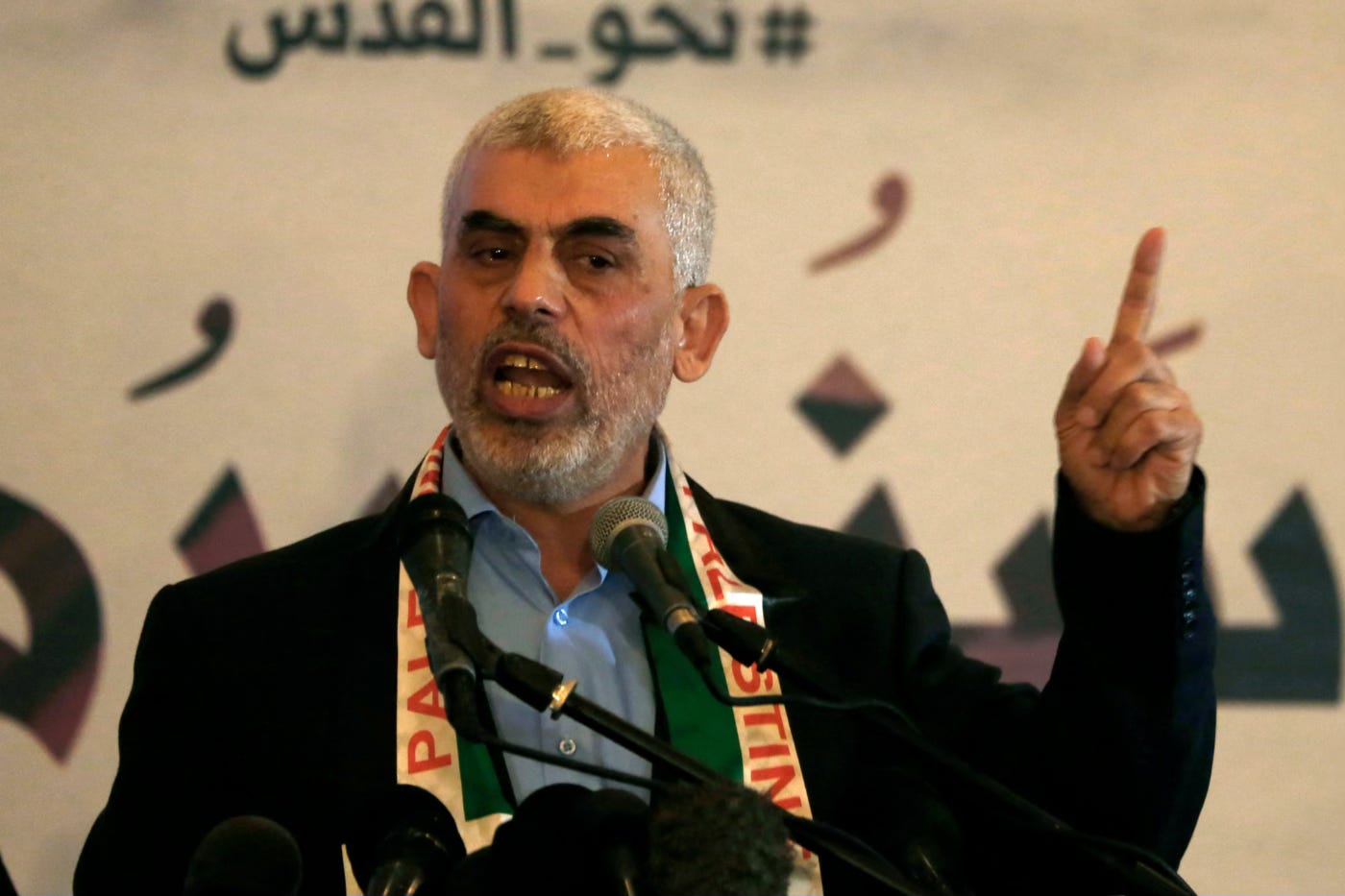
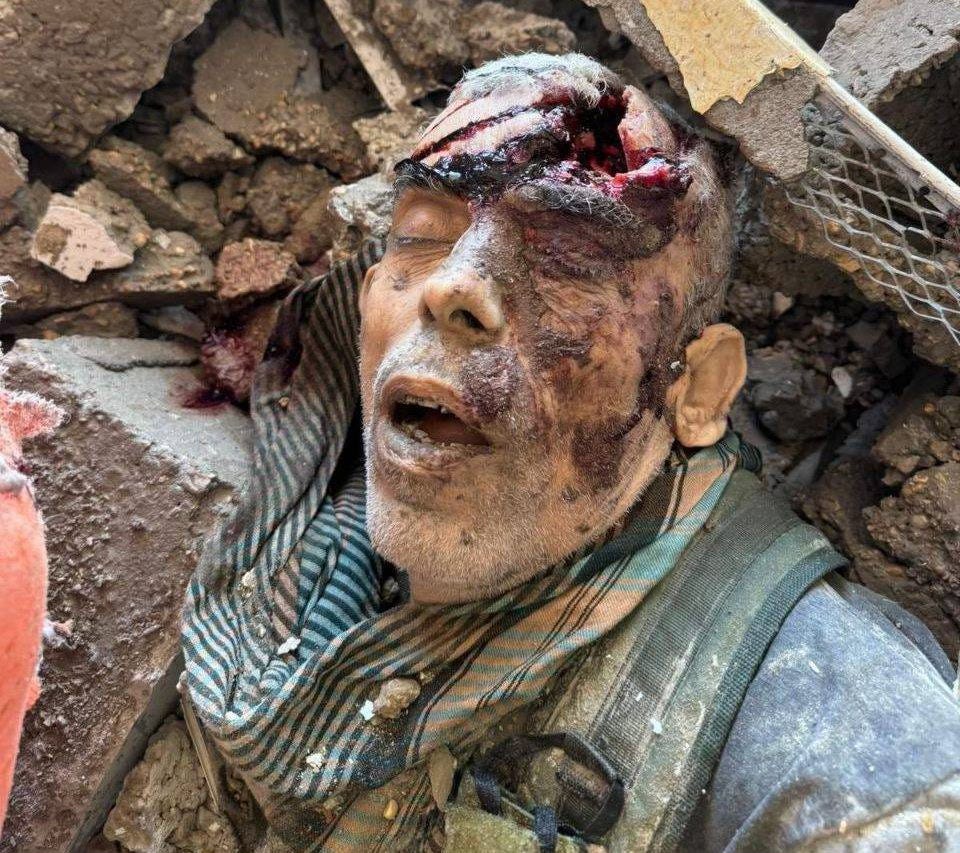
VENEGANCE CAME FAR MORE SWIFTLY FOR YAHYA SINWAR than it did for Osama bin Laden—by a factor of 10—but the result is likely to be much the same, counterterrorism and Middle East experts said Thursday in the wake of the Hamas leader’s death Thursday at the hands of Israeli troops in southern Gaza.
Unlike the joyous American response to Bin Laden’s demise at the hands of U.S. Navy SEALs on May 2, 2011—nearly ten years after his minions drove hijacked planes into the World Trade Center Towers and Pentagon—the reaction in Jerusalem over Sinwar’s death a year after Hamas raiders murdered some 1,200 Israeli civilians was triumphant but weighted down by the unknown fate of over 100 hostages the Palestinians may well still hold. Many are thought to have perished in Gaza tunnels.
Netanyahu stated Thursday that “the mission ahead of us has not been completed.” Benny Gantz, a former centrist member of Netanyahu’s war cabinet, called Sinwar’s death “a vital goal” that would not mean the end of the war in Gaza. The IDF “will continue to operate in the Gaza Strip for years to come,” he said, and Israel must leverage recent achievements, including the death of Sinwar, “to bring about the return of the hostages and the replacement of Hamas’ rule.”
“Our most urgent mission remains to bring the 101 hostages being held in Gaza home,” opposition leader Yair Lapid said on the social media platform X. “To end their suffering and the suffering of their families. It is a mission the entire world must support.”
But experts inside and outside Israel also cautioned that the death of Sinwar, a fiery and uncompromising radical who had commanded Hamas’ military wing since 2017 but also took over its political portfolio after the Israelis assassinated the group’s top political leader Ismail Haniyeh in Tehran on July 31, would not end the conflict absent a broad diplomatic solution between Israel and the Palestinians—nor spell the end of Hamas.
Subscribe now
“His death will likely give Israelis some closure,” Alon Pinkas, a veteran Israeli diplomat and former senior-level adviser told The Washington Post. “For Israelis he represents evil incarnate, but there should be no doubt: Getting him will not ‘eradicate,’ ‘annihilate’ or ‘topple’ Hamas. Nor would it represent a victory.”
Likewise, former CIA operations officer Douglas London told SpyTalk, “Sinwar’s death is likely to have less impact on Hamas decision-making than Israel’s, given Netanyahu now can claim to have vanquished all those who plotted October 7th, should he be ready to accept a ceasefire. But I suspect it comes too late, in as much as Netanyahu feels the wind at his back and sees little reason to stop pressing militarily.”
As for Hamas, London said Sinwar’s demise will open the doors for younger, perhaps even more radical Palestinians to succeed him.
“Sinwar’s successors are likely young, ultra radicalized subordinates who studied at his knee with little to lose and more to gain in keeping up the fight, albeit probably more asymmetrically,” said London, who spent years in the region as part of the agency’s post-9/11 counterterrorism mission.
Body Blow
Nathan Sales, the former top U.S. coordinator for counterterrorism, called Sinwar’s elimination “a catastrophic blow against the Hamas organization.”
“Any time you are able to eliminate the head of a terrorist organization, whether it’s Bin Laden or [Abu Bakr] Baghdadi”—the ISIS leader who died in a U.S. military mission in Syria five years ago this month— “that immensely disrupts the capability and planning of the group,” Sales told Politico. “With Sinwar its effect will be particularly pronounced because of the way he ran the group, as he centralized all Hamas planning and decision making with himself.”
In the wake of Baghdadi’s death, ISIS, which once held huge swaths of Iraqi territory, largely collapsed as a mortal threat to the U.S.-backed regime there —but was in little time succeeded by ISIS-Khorasan, an Afghanistan-based group which American officials say presents a violent threat to the U.S.
“Among foreign terrorist organizations, ISIS-K now poses the greatest credible threat to the homeland,” Brett Holmgren, acting director of the National Counterterrorism Center, told SpyTalk in a Sept. 25 interview.
Subscribe now
Al Qaeda was never the same after Bin Laden was gone, but its tentacles continued to spread outside its base in Pakistan and Afghanistan, particularly in East and Sub-Saharan Africa. Bin Laden’s deputy and successor, Ayman al-Zawahiri, was killed in a 2022 U.S. drone strike in Kabul.
Like many others, the venerable and highly respected terrorism analyst Bruce Riedel expressed optimism that Israel’s leaders would use Sinwar’s death as an opportunity to halt the military campaigns that have inflicted tens of thousands of deaths on civilian men, women and children in Gaza and Lebanon.
“It is an opportunity for Israel to declare victory and accept a cease fire,” the senior Brookings Institute expert told SpyTalk. “A cease fire in Gaza could lead to a reduction in regional tensions. The Houthis would stop attacking shipping in the Red Sea, which would help the global economy and Hezbollah could stand down, too.”
As for Netanyahu, “It’s a test of Israeli leadership,” said Riedel, a former longtime CIA analyst who became a senior adviser on terrorism in the Middle East and South Asia to four U.S. presidents and NATO. And it’s a test for American leadership as well, he added.
“It’s also an opportunity for Washington to stop the escalating violence in the region. Biden should move quickly to seize it. It harkens back to Abbottabad and the death of bin Laden, which led to the long term demise of Al Qaeda.”
Vice President Kamala Harris, meanwhile, locked in a tight election battle with Donald Trump, said U.S. intelligence aided the Israelis’ hunt for Sinwar.
“In the past year, American special operations and intelligence personnel have worked closely with their Israeli counterparts to locate and track Sinwar and other Hamas leaders,” Harris said in a statement from Wisconsin on Thursday, “and I commend their work.” She added, “Israel has a right to defend itself, and the threat Hamas poses to Israel must be eliminated.”
For his part, President Biden hoped both sides would use the Hamas leader’s demise as an opening.
With Sinwar’s death, he said, “there is now the opportunity for a ‘day after’ in Gaza without Hamas in power, and for a political settlement that provides a better future for Israelis and Palestinians alike.”
Qatar Back Channel
Aaron Zelin, a terrorism expert at the Washington Institute for Near East Policy, told SpyTalk that immediately after learning of Sinwar’s death from the Israelis, CIA Director William Burns and Brett McGurk, White House coordinator for the Middle East, renewed contact with Hamas’ political leadership in Qatar in a fresh attempt to negotiate the release of the remaining 101 hostages.
Those negotiations broke down in August largely because of Sinwar’s refusal to make a deal but also because Hamas officials in Qatar were unable to contact him.
Zelin said he learned of the renewed hostage release effort from “sources close to the administration” but would not elaborate. He said Egyptian intelligence officials also were involved in the outreach. The White House did not respond to a request for confirmation.
But Zelin cautioned that the death of Sinwar, as well as Hamas’ other senior military commanders in Gaza over the course of the war, had left the militants in disarray, raising questions about whom the group’s political leaders would be dealing with in response to any proposals put forward by Burns.
In addition, Zelin expressed concern that without leadership, some Hamas gunmen might kill the hostages in revenge for Sinwar’s death. He noted that in late August, a Hamas guard executed six hostages, including an American citizen, without orders from his superiors.
“Right now, there are a lot more questions than answers,” Zelin said.