Categories
Sites

After mass killings, complex question follows: Demolish, or press on?


PITTSBURGH — Last week in Parkland, Florida, wrecking equipment began demolishing the building at Marjory Stoneman Douglas High School where a gunman’s rampage in 2018 ended with 17 people dead. As the rumble of destruction echoed, people in the community set to explaining exactly why ripping the building down was so meaningful — and so crucial.

From former student Bryan Lequerique: “It’s something that we all need. It’s time to bring an end to this very hurtful chapter in everyone’s lives.” And Eric Garner, a broadcasting and film teacher, said: “For 6½ years we have been looking at this monument to mass murder that has been on campus every day. … So coming down, that’s the monumental event.”

Parkland. Uvalde. Columbine. Sandy Hook. A supermarket in Buffalo. A church in South Carolina. A synagogue in Pittsburgh. A nightclub in Orlando, Florida. When violence comes to a public place, as it does all too often in our era, a delicate question lingers in the quiet afterward: What should be done with the buildings where blood was shed, where lives were upended, where loved ones were lost forever?

Which is the appropriate choice — the defiance of keeping them standing, or the deep comfort that can come with wiping them off the map? Is it best to keep pain right in front of us, or at a distance?

How different communities have approached the problem

This question has been answered differently over the years.

The most obvious example in recent history is the decision to preserve the concentration camps run by Nazi Germany during World War II where millions of Jews and others died — an approach consistent with the post-Holocaust mantras of “never forget” and “never again.” But that was an event of global significance, with meaning for both the descendants of survivors and the public at large.

For individual American communities, approaches have varied. Parkland and others chose demolition. In Pittsburgh, the Tree of Life synagogue, site of a 2018 shooting, was torn down to make way for a new sanctuary and memorial.

But the Tops Friendly Markets in Buffalo, New York, and the Emanuel African Methodist Episcopal Church in Charleston, South Carolina, where racist mass shootings happened, both reopened. And Columbine High School still stands, though its library, where so much bloodshed occurred, was replaced after much impassioned debate. “Finding a balance between its function as a high school and the need for memorialization has been a long process,” former student Riley Burkhart wrote earlier this year in an essay.

What goes into these decisions? Not only emotion and heartbreak. Sometimes it’s simply a question of resources; not all school districts can afford to demolish and rebuild. Sometimes it’s about not wanting to give those who might support the shooter a place to focus their attention.

“Denying such opportunities for those who celebrate the persecution and deaths of those different from themselves is a perfectly sound reason to tear down buildings where mass killings occurred,” Daniel Fountain, a professor of history at Meredith College in North Carolina, said in a email.

Perhaps the most significant driving force, though, is the increasing discussion in recent years about the role of mental health.

“There are changing norms about things like trauma and closure that are at play that today encourage the notion of demolishing these spaces,” said Timothy Recuber, a sociologist at Smith College in Massachusetts and author of “Consuming Catastrophe: Mass Culture in America’s Decade of Disaster.”

For many years, he said, “the prevailing idea of how to get past a tragedy was to put your head down and push past it. Today, people are more likely to believe that having to return to the scene of the crime, so to speak, is liable to re-inflict harm.”

In Pittsburgh’s Squirrel Hill neighborhood, a fence masks the site where the Tree of Life synagogue stood until it was razed earlier this year, more than five years after a gunman killed 11 people in the deadliest antisemitic attack in U.S. history.

David Michael Slater grew up across the street from the synagogue. He understands the ambivalence that can come with choosing whether to knock down.

“It’s easy to see why decision-makers might have chosen one path or the other. And to me, it seems presumptuous for anyone not part of, or directly affected by, the choice to quibble with it,” said Slater, who retired this month after 30 years of teaching middle and high school English. “That said, the decision to demolish such sites, when seen in the context of our escalating culture of erasure, should raise concern.”

The power of memory cuts both ways

From World War II to 9/11, the politics of American memory are powerful — and nowhere more intricate than in the case of mass shootings. The loss of loved ones, societal disagreements over gun laws and differing approaches to protecting children create a landscape where the smallest of issues can give rise to dozens of passionate and angry opinions.

To some, keeping a building standing is the ultimate defiance: You are not bowing to horror nor capitulating to those who caused it. You are choosing to continue in the face of unimaginable circumstances — a robust thread in the American narrative.

To others, the possibility of being retraumatized is central. Why, the thinking goes, should a building where people met violent ends continue to be a looming — literally — force in the lives of those who must go on?

It stands to reason, then, that a key factor in deciding the fates of such buildings coalesces around one question: Who is the audience?

“It’s not a simple choice of should we knock it down or renovate or let it be,” said Jennifer Talarico, a psychology professor at Lafayette College in Pennsylvania who studies how people form personal memories of public events.

“If we’re interested in the memories of the people who directly experienced the event, that physical space will serve as a specific and powerful reminder. But if we’re talking about remembering or commemorating an event for other people, those who did not experience it, that’s a slightly different calculus,” Talarico said. “Remembering and forgetting are both powerful forces.”

Ultimately, of course, there is a middle ground: eliminating the building itself but erecting a lasting memorial to those who were lost, as Uvalde and other communities have chosen. In that way, the virtues of mental health and memory can both be honored. Life can go on — not obliviously, but not impeded by a daily, visceral reminder of the heartbreak that once visited.

That approach sits well with Slater, who has contemplated such tragedies both from the standpoint of his hometown synagogue and the classrooms where he spent decades teaching and keeping kids safe.

“Like every problem in life that matters, simple answers are hard to come by,” Slater said. “If what replaces the Tree of Life, or Parkland, or the next defiled place of worship or learning or commerce, can be made to serve both as proof of our indomitable spirit and as memorialized evidence of what we strive to overcome, perhaps we can have the best of both worst worlds.”

The post After mass killings, complex question follows: Demolish, or press on? first appeared on The News And Times.

Categories
Sites

Some Olympic teams will bring their own AC units to Paris, undercutting environmental plan


EUGENE, Oregon — The U.S. Olympic team is one of a handful that will supply air conditioners for their athletes at the Paris Games in a move that undercuts organizers’ plans to cut carbon emissions. 

U.S. Olympic and Paralympic CEO Sarah Hirshland said Friday that while the U.S. team appreciates efforts aimed at sustainability, the federation would be supplying AC units for what is typically the largest contingent of athletes at the Summer Games. 

“As you can imagine, this is a period of time in which consistency and predictability is critical for Team USA’s performance,” Hirshland said. “In our conversations with athletes, this was a very high priority and something that the athletes felt was a critical component in their performance capability.” 

The Washington Post reported earlier this month that Germany, Australia, Italy, Canada and Britain were among the other countries with plans to bring air conditioners to France. 

Olympic organizers have touted plans to cool rooms in the Athletes Village, which will house more than 15,000 Olympians and sports officials over the course of the games, using a system of cooling pipes underneath the floors. 

The average high in Paris on August 1 is 26 degrees Celsius. The objective is to keep the rooms between 23-26 degrees. The rooms will also be equipped with fans. 

“I want the Paris Games to be exemplary from an environmental point of view,” Paris mayor Anne Hidalgo has said about the plans for the Olympics. 

According to the International Energy Agency, fewer than 1 in 10 households in Europe has air conditioning, and the numbers in Paris are lower than that. The study said that of the 1.6 billion AC units in use across the globe in 2016, more than half were in China (570 million) and the United States (375 million). The entire European Union had around 100 million. 

The Olympics mark the most important stop on the athletic careers of the 10,500-plus athletes who will descend on Paris, which has led some high-profile countries to undercut environmental efforts for the sake of comfort. 

“It’s a high-performance environment,” Australian Olympic Committee spokesman Strath Gordon explained to the Post. 


The post Some Olympic teams will bring their own AC units to Paris, undercutting environmental plan first appeared on The News And Times.


Categories
Sites

TikTok legal filing details case against potential US ban


Categories
Sites

Another COVID vaccine? Yes, and here’s why – The Mercury News


The post Another COVID vaccine? Yes, and here’s why – The Mercury News first appeared on The CoronaVirus Alerts – The News And Times.


Categories
Sites

2 crop dusting airplanes collided in southern Idaho, killing 1 pilot, severely injuring the other – The Tribune India


2 crop dusting airplanes collided in southern Idaho, killing 1 pilot, severely injuring the other  The Tribune India

The post 2 crop dusting airplanes collided in southern Idaho, killing 1 pilot, severely injuring the other – The Tribune India first appeared on Idaho Murders – The News And Times.


Categories
Sites

Why ‘nuclear’ ship was anchored off Anglesey – Yahoo News UK


Why ‘nuclear’ ship was anchored off Anglesey  Yahoo News UK

The post Why ‘nuclear’ ship was anchored off Anglesey – Yahoo News UK first appeared on The Puerto Rico Times – The News And Times.


Categories
Sites

Weak mag. 2.3 earthquake – Lajas, 16 km southwest of Yauco, Yauco, Puerto Rico, on Saturday, Jun 22, 2024, at 12:39 … – VolcanoDiscovery


Weak mag. 2.3 earthquake – Lajas, 16 km southwest of Yauco, Yauco, Puerto Rico, on Saturday, Jun 22, 2024, at 12:39 …  VolcanoDiscovery

The post Weak mag. 2.3 earthquake – Lajas, 16 km southwest of Yauco, Yauco, Puerto Rico, on Saturday, Jun 22, 2024, at 12:39 … – VolcanoDiscovery first appeared on The Puerto Rico Times – The News And Times.


Categories
Sites

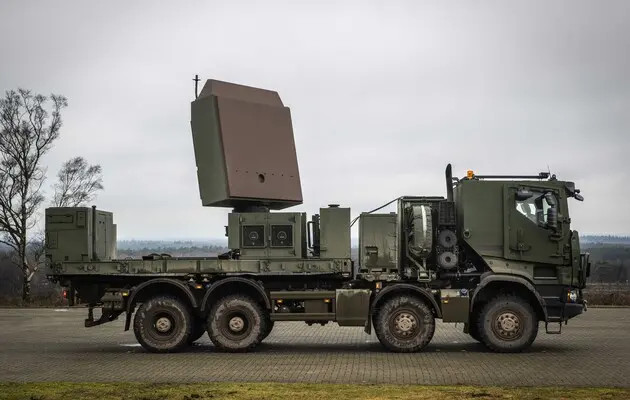
Ukraine’s Air Shield Gets French Flair: Control Master 200 Radar System


b7b2839ecf96d295bf80326533e664b9.webp?w=

French-Made Control Master 200 Radar System organically complements the latest architecture of Ukraine’s air defense system being built in response to Russian missile and drone attacks.


Categories
Sites

Kyrgyzstan insists construction of controversial mega project go on


Categories
Sites

Xi signals further military purges to eradicate corruption


Washington — Speaking at China’s first military political work conference in a decade this week, Chinese President Xi Jinping reiterated the need for the military to eliminate corruption and strengthen its loyalty to the Chinese Communist Party. He also warned of “deep-seated issues” in the military’s politics, ideology, work style and discipline.

“The gun barrels should always be in the hands of those who are loyal and reliable to the party and there must be no place for corrupt elements to hide in the military,” Xi said in his remarks, according to China’s state broadcaster CCTV.

In a lengthy overview, Xi urged the military to enhance the thoroughness of its ideological transformation by following the Communist Party’s theories, improving the leadership of party organizations, and eradicating conditions that may allow corruption to thrive.

Chieh Chung, a military researcher at the National Policy Foundation in Taiwan, said the remarks show that “Xi wants to emphasize the importance for the military to be loyal to the party and his leadership while signaling his concerns about how corruption affects the military” and its capabilities.

Xi “hopes the warnings can help accelerate the development of advanced technologies and equipment,” Chieh told VOA by phone.

Since last July, China has ousted more than a dozen top military commanders, including former defense minister Li Shangfu, and leaders of the People’s Liberation Army’s Rocket Force.

While the Chinese government hasn’t publicly linked their removals to corruption, some foreign media outlets and experts see their removal as part of the extended anti-corruption campaign Xi initiated since he came to power in 2012.

Reuters reported last September that Li was facing an investigation related to the procurement of military equipment.

The removal of top military leaders not only highlights the prevalence of corruption; it also raises other questions.

“Since corruption has hampered Russia’s ability to supply its military in the Ukraine war, it raises the question of whether the Chinese military’s capabilities have been compromised by corruption or not,” Lin Ying-yu, a military expert at Tamkang University in Taiwan, told VOA by phone.

There is also a concern about the impact Xi’s persistent attempts to eradicate corruption will have on the military internally.

“When a former defense minister can be abruptly removed from his position without any clear explanation, it will create a deep sense of fear within the military because no one knows when they might be the next one to be purged,” said Su Tzu-yun, a military expert at the Taipei-based Institute for National Defense and Security Research.

Su said this is part of the Communist Party’s strategy of “ruling with terror,” which allows Xi to concentrate decision-making power on the top leadership within the party.

“While tackling corruption in the military is important to Xi, the anti-corruption campaign has become a political tool for him to consolidate his control over the military,” Su told VOA by phone.

In January, the state-run People’s Liberation Army Daily published an opinion piece that emphasized the importance of implementing Xi’s instructions for the military and extending the party’s governance to the grassroots level.

“By strengthening the supervision of military personnel, it builds a firm first line of defense for soldiers to comply with the rules and refuse to be corrupted,” said the opinion piece run by the PLA Daily.

While Xi looks to consolidate control and build loyalty, both Chieh and Su see other potential side-effects such as the promotion of unqualified leaders and the impact that could have on the military’s capabilities and readiness.

“When Beijing puts so much emphasis on loyalty to the party, it could reduce the military’s combat capabilities and make the military huge but weak,” Su said.

Xi’s expressed desire to continue cracking down on corruption also means the Chinese military may need to go through a period of adjustment, Chieh said.

“Normally, the military’s combat capabilities will decrease following several rounds of purges, so I expect the Chinese military to go through a tough period of adjustment and reorganization over the next few years,” he told VOA.

And while top officials in the U.S. have repeatedly highlighted 2027 as the year that the Chinese military aims to possess the capabilities to invade Taiwan, Chieh thinks the  purges and Xi’s remarks at the political work conference suggest the PLA may be hard pressed to achieve that goal.

“Since the Chinese military’s command system and the rocket force’s capabilities may not have reached the goal set by the top leadership due to rampant corruption, I think this makes it even less likely for the Chinese military to have the capabilities required to invade Taiwan by 2027,” he said.