Day: June 15, 2024
International legal team for Armenian political prisoner Ruben Vardanyan files urgent appeal with Un Special … Armenian Weekly
The post International legal team for Armenian political prisoner Ruben Vardanyan files urgent appeal with Un Special … – Armenian Weekly first appeared on The South Caucasus News.
The post Bob Menendez Used Prosecutor’s Job Interview to Lobby for Friend – Yahoo! Voices first appeared on The South Caucasus News.
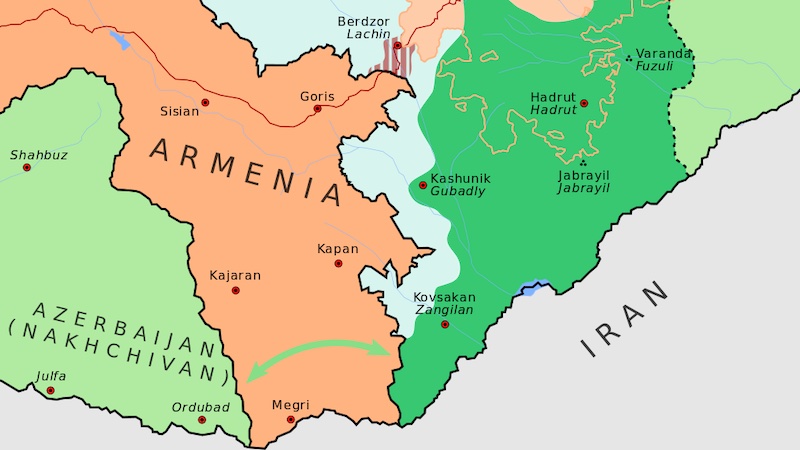
Baku opens the Zangazur Corridor
The collective West considers the possibility of the economic and commercial route connecting Europe and Asia passing through Iran as a geostrategic threat. In response, Western political circles have begun emphasizing the importance of opening the Zangazur Corridor to avoid this threat. This development is part of the new geopolitical order in the South Caucasus, where Azerbaijan has emerged as a dominant regional power.
Azerbaijan’s emergence as a geopolitical power
The geopolitical dynamics in the South Caucasus have undergone significant changes. Azerbaijan has positioned itself as a central player, with Baku being the epicenter of political will in the region. Consequently, major global powers must now align their strategies with Azerbaijan’s interests to engage in the region. Neither the USA, the West, Russia, nor Iran can effectively implement plans that counter Azerbaijan’s interests without facing significant obstacles.
France, for instance, failed to recognize Azerbaijan’s geopolitical leadership in the South Caucasus for an extended period. Persistently taking a pro-Armenian stance, Paris hoped to establish a hegemonic position in the region through its support for Armenia. However, this strategy backfired, resulting in France’s exclusion from regional processes. Official Baku blocked France from participating in geopolitical, geoeconomic, or geostrategic activities in the South Caucasus, reducing France’s influence in the area.
The United States and the European Union are now experiencing similar consequences due to their pro-Armenian behaviors. Official Baku remains firm in defending its interests and does not make concessions to external powers. A few months ago, the USA and the EU issued joint messages advocating for the opening of the Zangazur Corridor under Armenia’s conditions. However, this approach conflicted with the tripartite agreements between Azerbaijan, Armenia, and Russia, which define the conditions for the corridor’s opening.
The Zangazur Corridor & western strategy
Official Baku did not succumb to the pressure from the USA and the EU, emphasizing its right to determine transport and communication routes independently. As a result, Western political circles have had to acknowledge Azerbaijan’s principled stance. There is now a noticeable shift in the position of the USA and the West regarding the Zangazur Corridor. They recognize the necessity of establishing a major economic-commercial transport route connecting Europe and Asia, as this aligns with the demands of the global economy. However, they oppose this route passing through Iran.
To prevent the route from passing through Iran, Western political circles have recently started pressuring Armenia to open the Zangazur Corridor. Reports indicate that the Pashinyan government has been informed about the inadmissibility of blocking the corridor and has received serious recommendations to enable the project’s implementation.
Azerbaijan’s strategic advantage
Azerbaijan is on the verge of achieving its goal, as the USA and the West have begun pressuring Armenia to open the Zangazur Corridor. This also aligns with Armenia’s interests, as the corridor’s opening would allow Armenia to participate in a significant geo-economic project and secure substantial transit income. The official Yerevan now recognizes the need for the Zangazur Corridor to break its blockade and generate new revenue sources.
This situation underscores Azerbaijan’s growing influence in the region. By gaining the support of international stakeholders, Azerbaijan can dictate the conditions for opening and operating the Zangazur Corridor according to its interests. This development marks another geopolitical victory for Baku, reinforcing its leadership in the South Caucasus.
France’s exclusion from the South Caucasus serves as a cautionary tale for other global powers. Official Baku has demonstrated its ability to exclude countries that do not align with its interests. The USA and the EU must now consider Azerbaijan’s position when formulating their policies for the region. The shift in Western political circles regarding the Zangazur Corridor illustrates Azerbaijan’s strategic advantage and its ability to shape regional dynamics.
Iran’s strategic position within BRICS & regional transit
The first meeting of BRICS ministers of transport was held in St. Petersburg, Russia, on June 6, 2024, with Iran’s Minister of Roads and Urban Development Mehrdad Bazrpash attending via video conference. Iran officially joined BRICS along with Egypt, Ethiopia, and the United Arab Emirates on January 1, 2024. Bazrpash viewed Iran’s BRICS membership as a historic success of Iran’s foreign policy, enhancing its communication in transport, trade, and economy with BRICS members.
Bazrpash highlighted Iran’s strategic geographical location and transit capabilities, positioning it as a crucial connector for regional and international trade networks. Transit through Iran increased by over 60% in the last 12 months, showcasing the reliability and cost-effectiveness of its routes. Iran proposed forming an international organization for the International North-South Transport Corridor (INSTC) to improve coordination and integration, promoting trade and transit among BRICS members.
The Aras Corridor & Iran-Azerbaijan cooperation
Iran has initiated a transit strategy with Azerbaijan, aiming to develop joint transport projects and resolve tensions in the South Caucasus. The Aras Corridor, a new transport link connecting the Eastern Zangazur economic region of Azerbaijan and the Nakhchivan Autonomous Republic through Iran, exemplifies this strategy. The project includes road and rail transit projects and is expected to be completed in 36 months. The Aghband road bridge over the Aras River, a significant component of the corridor, was inaugurated in October 2023.
Iran and Azerbaijan have also collaborated on other infrastructure projects, such as the Xudafarin Dam and the Astarachay border bridge, enhancing connectivity and facilitating trade. These projects highlight the importance of the INSTC and the role of Iran-Azerbaijan cooperation in regional transit development.
Conclusion: Azerbaijan’s geopolitical victory
Azerbaijan’s determination to open the Zangazur Corridor on its terms has reshaped the geopolitical landscape of the South Caucasus. By effectively excluding France and compelling the USA and the EU to consider its position, Baku has solidified its role as a key regional power.
The ongoing efforts to open the Zangazur Corridor reflect Azerbaijan’s strategic vision and its ability to influence regional and global economic dynamics. As the geopolitical order in the South Caucasus continues to evolve, Azerbaijan’s leadership and strategic decisions will play a crucial role in shaping the region’s future.
The integration of Iran into BRICS and the development of the Aras Corridor further underscore the importance of regional cooperation and strategic alliances. These developments enhance connectivity and trade, benefiting all involved parties. Azerbaijan’s ability to navigate these complex geopolitical dynamics highlights its growing influence and strategic acumen, positioning it as a central player in the South Caucasus and beyond.
The post Azerbaijan Sets Terms For USA, EU, And Armenia In South Caucasus Geopolitics – OpEd first appeared on The South Caucasus News.
Don’t be fooled by the myth that people are paid what they’re “worth” — that the rich;deserve;their ever-increasing incomes and wealth because they’re worth far more to the economy;now;than years ago (when the incomes and wealth of those at the top were more modest relative to everyone else’s).;
The distribution of income and wealth increasingly depend on who has the power to set the rules of the game.
Those at the top are raking in record income and wealth compared to everyone else because:
1. CEOs have linked their pay to the stock market through stock options.;They then use corporate stock buybacks to increase stock prices and time the sale of their options to those increases.
2. They get inside information about corporate profits and losses before the rest of the public and trade on that insider information.;This is especially true of hedge fund managers, who specialize in getting insider information before other investors.;
3. They create or work for companies that have monopolized their markets.;This enables them to charge consumers higher prices than if they had to compete for those consumers. And it lets them keep wages low, because workers have fewer options of whom to work for.;
4. They use their political influence to get changes in laws, regulations, and taxes that benefit themselves and their corporations,;while harming those without this kind of influence — especially smaller competitors, consumers, and workers.
5. They were born into (or married into) wealth.;These days, the most important predictor of someone’s future income and wealth in America is the income and wealth of their parents.;Sixty;percent;of all wealth is inherited. And we’re on the cusp of the biggest intergenerational transfer of wealth in history, from rich boomers to their children.
None of these reasons for the explosion of incomes and wealth at the top has anything to do with;worth;or;merit.;They have to do with power — or the power of one’s parents.
Meanwhile, the pay of average workers has stagnated because they have lost economic power and the political influence that goes with it. Corporations have kept a lid on wages by outsourcing work abroad, replacing workers with software, and preventing workers from unionizing.;
Bottom line: Wealth doesn’t measure how hard someone has worked or what they deserve. It measures how well our economic system has worked for them.
- This article was published at Robert Reich’s Substack
The post Robert Reich: Debunking Myth #3: ‘The Rich Deserve To Be Rich’ – OpEd first appeared on The South Caucasus News.