
The post On board the Russian warship visiting Cuba – CNN first appeared on The Russian World.
Day: June 14, 2024
Categories
Houthis – The Associated Press
Houthis The Associated Press
The post Houthis – The Associated Press first appeared on The South Caucasus News.
By Luke Coffey
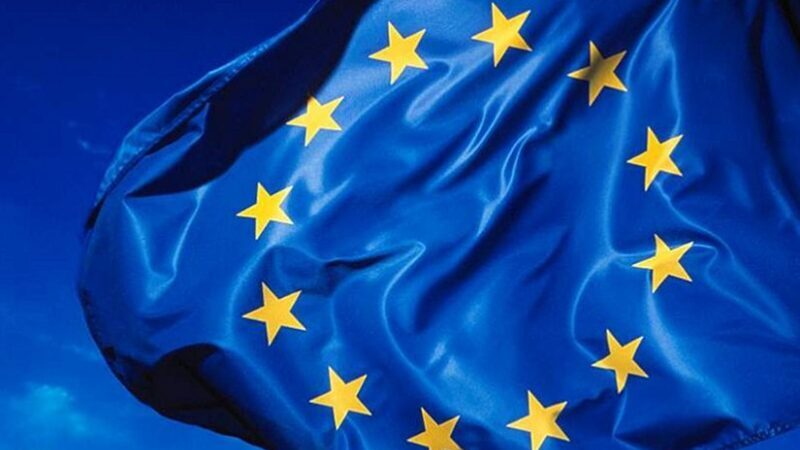
Tens of millions of Europeans went to the polls last week to vote in the European Parliament elections. In all, 720 seats divided between the 27 EU members were up for grabs. Although the European Parliament is the only directly elected EU institution, it also happens to be the one with the least amount of power when compared to the European Commission and the European Council. Even so, European Parliament elections matter because they often set the political tone for the bloc.
Last week’s elections were no different. While the mainstream center-right political grouping in the European Parliament, the European People’s Party, continues to hold the most seats, there was a significant increase in seats for far-right political parties, mostly at the expense of left-wing parties.
The outcome of these elections sent political shock waves across some countries in the EU. Meanwhile, the UK, while no longer in the EU, is also experiencing a period of political turmoil.
Perhaps the biggest shock wave resulting from the European elections was the one that hit France. The far-right National Rally party led by Marine Le Pen won the largest number of seats. This rattled French President Emmanuel Macron, who has led a center-left minority government for the last two years. When Macron subsequently called snap elections, which will take place on June 30 and July 7, many were shocked.
The thinking behind Macron’s decision is not clear. He wants to force the French public to make a binary choice between the far right and more mainstream political parties, and he believes an immediate election is the best way to do this. It is one thing to vote for a far-right party in European elections, but voters tend to moderate their preferences in national elections.
Macron is hoping that National Rally’s recent success was a result of protest voting by the French public and not a fundamental realignment of French politics. It is likely that the president believes that a swift defeat of National Rally so soon after its victorious European election results would prevent Le Pen from becoming a serious contender in the 2027 presidential election.
However, this strategy could backfire. The National Rally now has incredible momentum across France at a time when Macron’s popularity remains at an all-time low. Furthermore, the leader of France’s mainstream center-right party, The Republicans, announced that he would join forces with the National Rally if it meant taking power away from Macron. He has since been removed by party officials.
If Macron’s plan does backfire, it could have major implications for France’s role in Europe and NATO, especially as it pertains to important issues like Ukraine.
The second place to watch this summer is Germany. Chancellor Olaf Scholz’s Social Democratic Party came third in the country’s European elections, behind the mainstream center-right Christian Democratic Union and the far-right Alternative for Germany. This was the worst showing for the Social Democrats in a national election in decades.
Unlike Macron, Scholz has said that an early election is not on the table. Ultimately, however, the final decision on this matter may not be his to make. As with France, the European elections were seen as a vote of no-confidence for national governments across Europe, and Germany was no exception. With a coalition government that faced problems even before the vote, the political pressure may build from all sides of German politics to force Scholz into calling an early election.
In the coming weeks, the ruling coalition will try working together to formulate a common budget. This will no doubt place considerable political strain on the coalition and could make snap elections more likely. Germany is Europe’s largest economy and is the primary motor behind EU politics. When Germany goes to the polls, it matters for the whole continent.
There is one more important election that will take place this summer in Europe, but not in the EU: the UK. Even though British Prime Minister Rishi Sunak called an early election well before the European elections took place, many of the same factors that impact politics on the continent also impact the UK.
After 14 years in power, it is likely that the Conservative Party will be on its way out when voters go to the polls next month. How big the Labour Party’s majority will be is really the main question at this point. One important factor to watch will be the emergence of the populist Reform UK party in British politics and what role it will play in the election outcome. Due to the country’s electoral system, it will be very difficult for any Reform candidate to win a seat in the House of Commons. However, Conservative Party voters who are disillusioned with the recent direction of the party could be tempted to vote for it as a form of protest. This will likely lead to an even larger Labour Party majority than would have otherwise been the case.
Whether inside or outside the EU, the politics across Europe will remain contentious this summer. With Europe’s three biggest economies either holding elections or possibly doing so, the next few months could set the future direction of the continent for years to come. The uncertainty of the US presidential election this November complicates matters even further.
Europe is facing ongoing economic challenges and energy security issues. At the same time, the largest war on the continent since the 1940s is taking place in Ukraine. As Europeans head to the polls this summer, the stakes will be high. Not just for Europe, but the rest of the world too.
- Luke Coffey is a senior fellow at the Hudson Institute. X: @LukeDCoffey
The post Far Right First To Shine In Europe’s Summer Of Elections – Analysis first appeared on The South Caucasus News.
The amount of infectious H5N1 influenza viruses in raw milk rapidly declined with heat treatment in laboratory research conducted by scientists at the National Institute of Allergy and Infectious Diseases (NIAID), part of the National Institutes of Health.
However, small, detectable amounts of infectious virus remained in raw milk samples with high virus levels when treated at 72 degrees Celsius (161.6 degrees Fahrenheit) for 15 seconds—one of the standard pasteurization methods used by the dairy industry. The authors of the study stress, however, that their findings reflect experimental conditions in a laboratory setting and are not identical to large-scale industrial pasteurization processes for raw milk. The findings were published today in the New England Journal of Medicine.
In late March 2024, United States officials reported an outbreak of highly pathogenic avian influenza virus called HPAI H5N1 among dairy cows in Texas. To date, 95 cattle herds across 12 states have been affected, with three human infections detected in farm workers with conjunctivitis. Although the virus so far has shown no genetic evidence of acquiring the ability to spread from person to person, public health officials are closely monitoring the dairy cow situation as part of overarching pandemic preparedness efforts.
Given the limited data on the susceptibility of avian influenza viruses to pasteurization methods used by the dairy industry, scientists at NIAID’s Rocky Mountain Laboratories sought to quantify the stability of H5N1 virus in raw milk when tested at different time intervals at 63℃ (145.4 degrees Fahrenheit) and 72℃, the temperatures most common in commercial dairy pasteurization processes. The scientists isolated HPAI;H5N1 from the lungs of a dead mountain lion in Montana. Then they mixed these viral isolates with raw, unpasteurized cow milk samples and heat-treated the milk at 63℃ and 72℃ for different periods of time. The samples were then cell-cultured and tested to determine if live virus remained and if so, how much.;
They found that 63℃ caused a marked decrease (1010-fold) in infectious H5N1 virus levels within 2.5 minutes and note that standard bulk pasteurization of 30 minutes would eliminate infectious virus. At 72℃, they observed a decrease (104-fold) in infectious virus within five seconds, however, very small amounts of infectious virus were detected after up to 20 seconds of heat treatment in one out of three samples. “This finding indicates the potential for a relatively small but detectable quantity of H5N1 virus to remain infectious in milk after 15 seconds at 72℃ if the initial virus levels were sufficiently high,” the authors note.;
The scientists stress that their measurements reflect experimental conditions, should be replicated with direct measurement of infected milk in commercial pasteurization equipment and should not be used to draw any conclusions about the safety of the U.S. milk supply. Additionally, a limitation of their study was the use of raw milk samples spiked with H5N1 virus, whereas raw milk from cows infected with H5N1 influenza may have a different composition or contain cell-associated virus that may impact heat effects. The authors conclude that although gastrointestinal infections with HPAI H5N1 virus have occurred in several species of mammals, it remains unknown whether ingesting live H5N1 in raw milk could cause illness in people.;
To date, the U.S. Food and Drug Administration concludes that the totality of evidence continues to indicate that the commercial milk supply is safe. While laboratory benchtop studies provide important, useful information, there are limitations that challenge inferences to real world commercial processing and pasteurization. The FDA conducted an initial survey of 297 retail dairy products collected at retail locations in 17 states and represented products produced at 132 processing locations in 38 states. All of the samples were found to be negative for viable virus. These results underscore the opportunity to conduct additional studies that closely replicate real-world conditions. FDA, in partnership with USDA, is conducting pasteurization validation studies – including the use of a homogenizer and continuous flow pasteurizer. Additional results will be made available as soon as they are available.;
The post Infectious H5N1 Influenza Virus In Raw Milk Rapidly Declines With Heat Treatment first appeared on The South Caucasus News.
In the U.S., as farmers wrestle with extreme heat and drought, heavy rainfall and flooding, and erosion—all factors of climate change which can take a toll on crops—there’s been a lot of buzz over regenerative agriculture over the past few years, as big agriculture companies promise opportunities to make money from “carbon farming” while also improving soil health.
Regenerative farming strives to improve soil health through various methods, including reduced or no tillage, keeping the soil covered year-round through the use of cover crops, integrating livestock into crop farming, and rotating crops to encourage both above and below ground biodiversity.
Such practices can also be used to create carbon credits for carbon offset programs, which enable polluters to mitigate their greenhouse gas emissions through the purchase of credits.
Farmers have often been told all they need to do is adopt certain practices, such as no-till or cover cropping. But few adopting these practices have signed up for carbon market programs.
While farmer surveys suggest that carbon prices are still too low relative to the paperwork these programs demand, a new study published in Agriculture and Human Values finds that money alone does not explain either farmers’ doubts about carbon markets or their interest in regenerative agriculture. Instead, many farmers view improving soil health as a way to improve their quality of life by reducing their dependence on agrochemical companies’ products and advice.
“Farmers are really looking to get off that treadmill of high-input, high yield commodity agriculture,” says the study’s co-lead author Susanne Freidberg, a professor of geography at Dartmouth.
The study is based on interviews conducted with more than 80 farmers in Kansas and Nebraska in 2022-23. Most were growing commodity crops and/or raising livestock on farms that were a few hundred to a few thousand acres in size. Farmers’ experience using regenerative practices ranged from recent adopters to more than 20 years while others were still considering such methods.
Recent adopters reported high input costs, concerns about soil erosion, and other farmers’ success stories as some of the reasons why they first sought to learn more about soil health, often by attending a field day or conference. But with new practices came new mindsets and new relationships. “Farmers who had implemented regenerative practices talked a lot about how they paid attention to interactions between the different kinds of life in their fields—cover crops, earthworms, and especially soil microbes,” said Freidberg.
Below-ground microbial activity not only builds soil fertility, which enables farmers to use less fertilizer, but also helps reduce erosion, conserve water, and sequester carbon. But field practices that are good for soil;microbes are not always good for relations with neighbors and landlords.
“Farmers mentioned that when they stopped tilling and started planting multi-species cover crops, they started getting strange looks at their local coffee shop because now their fields looked messy,” said Freidberg.
These tensions made regenerative farmers’ relationships with each other all the more important with some indicating that they joined informal “support groups” to share experiences or farm equipment. “Farmers who viewed regenerative agriculture as a way to gain more personal freedom also saw that this freedom depended on the support of other farmers,” said Freidberg.
Some farmers also mentioned how they liked seeing birds and other wildlife returning to their fields, and how farming regeneratively had made their day-to-day work more enjoyable and interesting.
The handful of farmers in the study who had signed up for carbon programs emphasized that they looked for programs that did not demand long-term commitments or major changes in their farming practices. One farmer described it as a way to earn “beer money.”
The opportunities for farmers to earn extra income from carbon farming multiplied with the rollout of USDA-funded “climate smart” commodities projects in 2023, around the time the Dartmouth study concluded. Many of these projects, some of the largest of which are run by large food and agribusiness companies, now offer farmers financial incentives to adopt regenerative practices.
But whether many farmers enroll in them, said Freidberg, will depend at least partly on how well the projects take account of what farmers value about such practices. “When farmers talk about the return on investment on regenerative agriculture, they’re talking about more than just money,” said Freidberg.
The post Improving Soil Health Yields Unexpected Benefits For Farmers first appeared on The South Caucasus News.
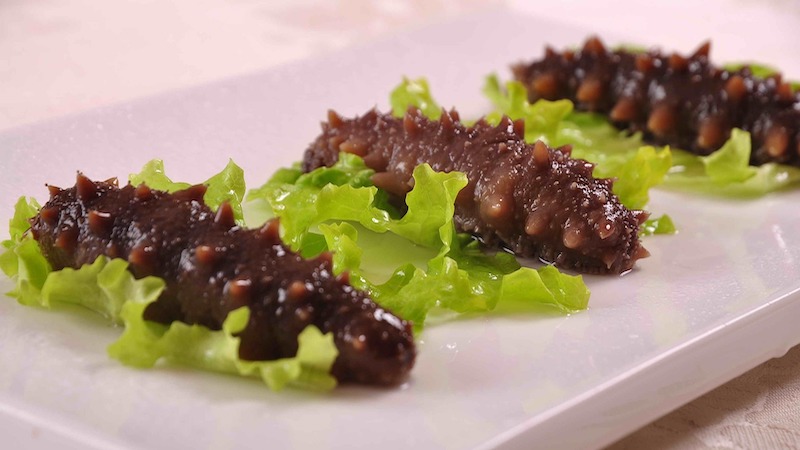
After surveying food market retailers in three New York City Chinatown districts, Cornell University researchers have found genetic evidence that some endangered species of sea cucumbers – considered a pricey but nutritious dried delicacy – are being sold to consumers.
The researchers collected 103 samples of dried sea cucumbers from retail food shops. By using mitochondrial DNA testing, they successfully identified 74 examples of sea cucumbers. Eight were classified as brown sea cucumbers– which are threatened and found on the International Union for the Conservation of Nature (IUCN) Red List due to overharvesting.
“We were able to genetically identify that the endangered species of brown sea cucumbers – around 10% of the sampled retail market – was being sold,” said lead author Jesse Rodenbiker, a former postdoctoral researcher at Cornell, and now an assistant teaching professor;in geography at Rutgers University. “It suggests that the kind of level at which sea cucumbers are available on the market may pose a threat for biodiversity loss.”
The research is published in the journal Sustainability.
Rodenbiker purchased dried sea cucumbers, usually labeled by originating geographic region – Japan, Mexico and South America from merchants in Chinese neighborhoods in Manhattan, Brooklyn and Queens. In interviews with student researchers, the retailers acknowledged limited understanding of where the sea cucumbers originated. During the survey period, the price for sea cucumber was between $169 and $229 per pound.
Nina Overgaard Therkildsen, co-author of the report, recognized that even brown sea cucumbers can be harvested legally in certain parts of the world, but there are no genetic tools yet to trace species origination and see if they are from those legal areas. “To conduct any enforcement at merchant food shops, we need tools that can assign a specimen back to a region from where they are protected and we are currently working on developing such tools,” she said.
Rodenbiker indicated a need for more robust point-of-origination training for the retailers, improved labeling in the markets and public outreach to advance the concept of One Health – an idea that humans, animals and the environment are all connected – in urban seafood markets.
The post Endangered Sea Cucumbers For Sale In NYC Food Markets first appeared on The South Caucasus News.
Putin demands more Ukrainian land to end war; Kyiv rejects ‘ultimatum’ | Reuters https://t.co/J6eDuqX4XB
— Michael Novakhov (@mikenov) June 14, 2024
The post @mikenov: Putin demands more Ukrainian land to end war; Kyiv rejects ‘ultimatum’ first appeared on The News And Times.
The post @mikenov: Putin demands more Ukrainian land to end war; Kyiv rejects ‘ultimatum’ first appeared on Trump And The FBI – The News And Times.
Top Iranian and Russian officials express their countries firm determination to strengthen mutual relations and implement bilateral agreements in various fields. https://t.co/XTXeVy50Co
— Michael Novakhov (@mikenov) June 14, 2024
The post @mikenov: Top Iranian and Russian officials express their countries firm determination to strengthen mutual relations and implement bilateral agreements in various fields. first appeared on The News And Times.
The post @mikenov: Top Iranian and Russian officials express their countries firm determination to strengthen mutual relations and implement bilateral agreements in various fields. first appeared on Trump And The FBI – The News And Times.
https://t.co/oBpmYjWpdX
Putin The Fox morphs into Putin the Clown. #NewsAndTimes #NT #TNT #News #Times#World #USA #POTUS #DOJ #FBI #CIA #DIA #ODNI#Israel #Mossad #Netanyahu#Ukraine #NewAbwehr #OSINT#Putin #Russia #GRU #Путин, #Россия #SouthCaucasus #Bloggers… pic.twitter.com/SozrmZIbTc— Michael Novakhov (@mikenov) June 14, 2024
The post @mikenov: https://t.co/oBpmYjWpdX Putin The Fox morphs into Putin the Clown. #NewsAndTimes #NT #TNT #News #Times#World #USA #POTUS #DOJ #FBI #CIA #DIA #ODNI#Israel #Mossad #Netanyahu#Ukraine #NewAbwehr #OSINT#Putin #Russia #GRU #Путин, #Россия #SouthCaucasus #Bloggers… pic.twitter.com/SozrmZIbTc first appeared on The News And Times.
The post @mikenov: https://t.co/oBpmYjWpdX Putin The Fox morphs into Putin the Clown. #NewsAndTimes #NT #TNT #News #Times#World #USA #POTUS #DOJ #FBI #CIA #DIA #ODNI#Israel #Mossad #Netanyahu#Ukraine #NewAbwehr #OSINT#Putin #Russia #GRU #Путин, #Россия #SouthCaucasus #Bloggers… pic.twitter.com/SozrmZIbTc first appeared on Trump And The FBI – The News And Times.
Ранее мощный ураган с ливнями обрушился на Махачкалу.
The post В Севастополе коммунальные службы перевели в режим повышенной готовности first appeared on The News And Times.
The post В Севастополе коммунальные службы перевели в режим повышенной готовности first appeared on Trump And The FBI – The News And Times.
