Categories
Sites

Site Infection Event (SSI) Case Studies | Covid-19 | news-journal.com – Longview News-Journal


The post Site Infection Event (SSI) Case Studies | Covid-19 | news-journal.com – Longview News-Journal first appeared on The CoronaVirus Alerts – The News And Times.


Categories
Sites

Identifying the Effects of mRNA-1273 COVID-19 Vaccine in SOTRs – Physician’s Weekly


The post Identifying the Effects of mRNA-1273 COVID-19 Vaccine in SOTRs – Physician’s Weekly first appeared on The CoronaVirus Alerts – The News And Times.


Categories
News Review from The World Web Times

Color IQ Numbers Meaning at Sephora : r/MakeupAddiction – Reddit


I work at Sephora, and while Color IQ is a really cool jumping off point, I haven’t found it to be 100% accurate all the time. It’s normal to be different at multiple readings.

Categories
Sites

The History—and Money—Behind Country Music’s Embrace of the U.S. Military


2021 iHeartCountry Festival Presented By Capital One – Show

CMA Fest, the Country Music Association’s (CMA) lucrative annual takeover of downtown Nashville — which produced $75 million in revenue in 2023 — kicks off on Thursday with special events including a live interview with Dolly Parton followed by a program billed as “Enlisted: Where Music Meets Military with Craig Morgan and Gary Sinise.” Morgan, a country singer and U.S. Army veteran, has long made his service a prominent aspect of his public personae, while Sinise has built a reputation in acting and music as a vocal supporter of U.S. troops.

[time-brightcove not-tgx=”true”]

This combination of musical profits and military promotion is nothing new for the CMA. In fact, it has driven the organization’s business and political aspirations since its founding in 1958. Established as a “chamber of commerce” for country music, the CMA sought to boost the genre’s commercial and political power in the U.S. and around the world, adopting the founding slogan “Best Liked World-Wide.” The organization used its connections to politicians and the U.S. Defense Department to turn that slogan into reality. Together, these forces promoted country music as “America’s music” and cemented a relationship between the genre and the U.S. Armed Forces that continues to shape the country industry’s politics in 2024.  

The effort to rebrand country music and tie it to the U.S.’s Cold War mission began in the early 1950s. In 1951, country music impresario Connie B. Gay booked artist Grandpa Jones on a tour of Japan and South Korea, where he played for an estimated 38,000 U.S. and U.N. troops. Gay, who owned multiple radio and television stations around Washington, D.C., also joined with the U.S. Army and Air Force Recruiting Service to create country music-themed recruitment radio shows. 

The Army found a spokesperson for those efforts in Faron Young, an up-and-coming country artist who was drafted in 1952 just before his break-out single hit the Billboard charts. Taking advantage of this new star in olive drab, Young’s commanding officers excused him from basic training and sent him on the road as the voice of recruitment and entertainment for the Third U.S. Army until he received his discharge in 1954. Country music recruitment campaigns proliferated throughout the late 1950s and early 1960s, eventually accounting for more than one-third of all musical recruitment on television.

Read More: The Story Behind Toby Keith’s Controversial 9/11 Anthem “Courtesy of the Red, White and Blue”

In the mid-1950s, the push from the country industry received a boost from Tennessee’s moderate Democratic Governor Frank G. Clement. At the time, Nashville was gaining prominence as the Music City thanks to its combination of studios, song publishers, and the Grand Ole Opry. Recognizing the commercial impact of country music on his state, Clement launched a public relations campaign to shake off the genre’s previous reputation as hillbilly music and pitch it as a respectable style for modern mid-century consumers. By making the genre seem quintessentially American, he hoped to maximize that sales potential.

In 1956, Clement told a luncheon of the Radio and Television Executives Society that “today’s country music has captured and held the melodies our forefathers sang as they trudged through the tall rhododendron-covered Smokies . . . This was the music of the pioneers.” Clement closed his address to the industry leaders with a conflation of personal taste, country music, and American identity, claiming, “I love country music because when I hear it, I hear America singing.”

The next year, Clement used a televised broadcast of the Grand Ole Opry to promote the idea that country music epitomized patriotism and Americanism. The genre was “just plain good for the people of Tennessee, the nation and the world.” The governor recalled how during World War II and the Korean War, the Opry’s stars had visited the troops, “to bring the message from home — in words and music — to the front lines where America’s homes were being defended.”

But the country music industry and its backers weren’t just boosting military recruiting efforts and visiting the troops as a public service. The business benefited from its ties to the military and the patriotic image it was creating in multiple ways. As the Cold War military grew in size and scope, the country music industry latched onto this well-funded and ever-growing arm of the U.S. government while also cultivating a record-buying audience among U.S. servicemembers.

Nashville’s music leaders first realized the potential for this strategy when recruitment shows delivered hundreds of thousands of dollars to studios and producers on Music Row. Additionally, the CMA cultivated relationships with disc jockeys on the Armed Forces Radio and Television Service, who played more Nashville artists and positioned country music as patriotic. In 1965, Billboard reported that the U.S. Armed Forces had begun a “campaign in Europe to present country music as ‘an integral part of the American cultural heritage and of the American way of life.’” Officials announced a plan that included a concerted effort to stop the “disparagement of country music,” banning the use of the words “hick” and “hillbilly” to describe the music on air. Instead, the military required disc jockeys to refer to the genre as “country,” “c&w,” or “the music of America.” 

With more country music on the air and the genre gaining a reputation for patriotism, servicemembers began purchasing more country records. The genre accounted for around 65% of the records sold in the U.S. military’s Post Exchange stores across Europe by 1968. Even during the height of the Vietnam War, the CMA could count on Uncle Sam to be a powerful and lucrative promotional partner.

Although the genre painted itself as patriotic and tied itself to the military, country music wasn’t partisan. Politicians of all stripes jumped at the opportunity to campaign with and earn endorsements from country artists in the Vietnam era. At the presidential level, everyone from conservatives Barry Goldwater, George Wallace, and Richard Nixon to liberals Lyndon Johnson, Edmund Muskie, and George McGovern rushed to recruit country artists for their campaigns. Country music provided a down-home, patriotic soundtrack for these candidates.

Read More: Beyoncé Is Boldly Defying Country’s Stereotypes

In return, country music executives and artists rubbed elbows with the country’s most powerful politicians. And, by playing to both sides of the partisan line, the country music industry hoped to sell records to all listeners within the broad ideological span of the Cold War consensus, who saw U.S. military might as a necessary defense against potential communist threats.

By the country music boom of the late 1970s and early 1980s, country artists and CMA officials could be found partying at Jimmy Carter’s White House but also serving in the administration of Ronald Reagan. Of course, George H.W. Bush campaigned alongside the pro-military Lee Greenwood, and U.S. troops embraced his song “God Bless the U.S.A.” as an anthem during the Gulf War.

The reason the genre could swing left, right, and center in these ways was that politicians and government institutions had worked so hard to label country as America’s music, despite the fact that it was no more or less American than other genres like blues, jazz, or R&B. However, country was whiter than any other intrinsically American style, a reminder of how the white supremacy of U.S. politics and music could reinforce each other.

Since 9/11 and the War on Terror, the country music industry’s close relationship with the military and songs like Toby Keith’s “Courtesy of the Red, White, and Blue (The Angry American)” have skewed the perception of the genre and its homebase in Nashville as bastions of political conservatism. In 2020, conservative pundit Ben Shapiro’s The Daily Wire relocated to Music City in search of a more hospitable home. When right-wing artist Jason Aldean’s sings about vigilantism he seems to march in step with conservative Tennessee politicians like Senator Marsha Blackburn and Governor Bill Lee to define MAGA country music values.

Meanwhile, country’s few outspokenly liberal performers like Maren Morris, Jason Isbell, and the Chicks remind listeners that not every artist in the genre supports the rightward drift of the music’s culture. But it’s an uphill battle for those musicians. The country industry’s support for the military too often reads as inherently conservative in the current political landscape where Aldean sells shirts that insist “Military Lives Matter” and Greenwood sells “God Bless the U.S.A.” Bibles with the endorsement of Donald Trump.

It’s tempting to see the CMA Fest’s “Enlisted” program with Morgan and Sinise as another part of country music’s conservative Republican identity. Yet doing so would neglect the deeper roots of the CMA’s affiliation with the U.S. Armed Forces. The CMA’s inclusion of a military-themed event is a part of a long effort to brand country music as “America’s music.” It’s a campaign that has yielded not just the political power that comes with currying favor with presidents but record-setting profits for generations.

Joseph M. Thompson is assistant professor of history at Mississippi State University. His first book, Cold War Country: How Nashville’s Music Row and the Pentagon Created the Sound of American Patriotism (The University of North Carolina Press, 2024), traces the economic, political, and cultural connections between the country music business and the U.S. military since World War II.

Made by History takes readers beyond the headlines with articles written and edited by professional historians. Learn more about Made by History at TIME here. Opinions expressed do not necessarily reflect the views of TIME editors.


Categories
Sites

Beau Biden’s Widow Takes the Stand in Hunter Biden’s Gun Trial


Jury Selection Begins In Hunter Biden Gun Trial

(WILMINGTON, Del.) — The widow of Hunter Biden’s brother, Beau, testified Thursday in his federal gun trial that she found his crack at her Wilmington, Delaware, house, saw him use the illicit drug and eventually starting abusing it herself.

“Where did he get the drugs from?” prosecutor Leo Wise asked.

[time-brightcove not-tgx=”true”]

“Various dealers,” replied Hallie Biden, who had a brief romantic relationship with Hunter following her husband’s death. She was sometimes with Hunter when he met dealers.

Federal prosecutors have argued that Hunter Biden was in the throes of a heavy addiction when he bought the gun at the center of the case. They have accused him of lying on a government form. He’s been charged with three felonies: lying to a federally licensed gun dealer, making a false claim on the application by saying he was not a drug user and illegally having the gun for 11 days.

Hunter Biden, who has pleaded not guilty, has said the Justice Department is bending to political pressure from Republicans and that he’s being unfairly targeted.

Much of the prosecution’s case so far has been dedicated to highlighting the seriousness of his crack addiction and showcasing to jurors bare-chested moments with ex-girlfriends, infidelity and crack pipes — judgment lapses they believe prove he was actively using when he checked “no” on the form. Prosecutors argue that the evidence is necessary to show his state of mind when he bought the gun.

Hallie Biden took the gun from Hunter and tossed it into the garbage at a nearby market, afraid of what he might do with it. The weapon was later found by someone collecting cans and eventually turned over to police. Her text exchange with Hunter Biden shortly after he bought the gun is also part of the prosecution’s evidence.

Read More: Hunter Biden Is on Trial for Gun Charges. Here’s What to Know

The prosecution played surveillance footage showing her dumping the gun in the trash.

“I realize it was a stupid idea now, but I was panicking,” she said.

Wise asked Hallie about a 2018 trip to California, where she visited Hunter at the Roosevelt Hotel, and asked her whether she was also using drugs.

“Yes, I was,” she said.

“And who introduced you to it?’” the prosecutor asked.

“Hunter did,” Hallie said as Hunter rested his face on his left hand and looked down.

“It was a terrible experience that I went through, and I’m embarrassed and ashamed, and I regret that period of my life,” Hallie said.

Hallie said she stopped using drugs in August 2018, but that Hunter continued smoking crack.

The Democratic president’s son arrived at court Thursday with a copy of his memoir, “Beautiful Things,” tucked under his arm. The book, written after he got sober in 2021, figures heavily into prosecutors’ case: They’ve played audio excerpts for jurors in which he details his descent into drugs and alcohol following the death of his brother in 2015.

Jurors at Hunter Biden’s criminal trial heard more Thursday from the former gun store clerk who sold him the .38-caliber Colt revolver.

The clerk testified Wednesday that he watched as President Joe Biden’s son answered “no” to the question of whether he was “an unlawful user of or addicted to” marijuana, stimulants, narcotics or any other controlled substance.

Gordon Cleveland, the former clerk at StarQuest Shooters & Survival Supply, told jurors he walked Hunter Biden through a few options before he settled on the $900 gun, and he watched Biden sign the form, which includes a warning about the consequences of submitting false information.

“Everything he bought, he ultimately decided on,” he told jurors.

In his cross-examination Thursday, defense attorney Abbe Lowell pointed out that some of the questions on the form are in the present tense, such as “are you an unlawful user of or addicted to” drugs. He has suggested Hunter Biden did not believe he had an active drug problem.

Other questions are in the past tense, such as asking the potential gun buyer whether he or she has ever been discharged from the military or been adjudicated as a mental defective.

The proceedings are unfolding after the collapse of a plea deal that would have resolved the gun charge and a separate tax case, and spared the Biden family the spectacle of a trial so close to the 2024 election. First lady Jill Biden spent several days in court before joining President Joe Biden in France for the D-Day anniversary. Allies worry about the toll the proceedings will take on the president, who is deeply concerned about the health and sustained sobriety of his only living son.

Read More: ‘We Are the World Power.’ How Joe Biden Leads

Meanwhile, Hunter Biden’s friends and family are being called to testify.

Kathleen Buhle, who was married to Hunter Biden for 20 years, told jurors Wednesday that she discovered her husband was using drugs when she found a crack pipe in an ashtray on their porch on July 3, 2015, a day after their anniversary. When she confronted him, “he acknowledged smoking crack,” she said.

Buhle testified that even before she found the drugs, she suspected he was using. He had been kicked out of the Navy after testing positive for cocaine.

“I was definitely worried, scared,” she said. They have three children and divorced in 2016 after his infidelity and drug abuse became too much, according to her memoir, “If We Break,” about the dissolution of their marriage.

Buhle, who was subpoenaed, was on the stand for a brief 20 minutes. She remained composed but seemed upset as she recounted how she searched his car about a dozen times for drugs, whenever the children were driving it.

Prosecutors also called Zoe Kestan, who testified under immunity about meeting Hunter Biden in December 2017 at a strip club in New York where she worked. During a private session, he pulled out a pipe and began smoking what she assumed was crack.

“He was incredibly charming and charismatic and friendly, and I felt really safe around him,” she said. “I remember after he had smoked it, nothing had changed. He was the same charming person.”

Kestan detailed for jurors when she saw him use drugs, buy drugs, talk about drugs or possess drug paraphernalia. Prosecutors asked her where he stored his drugs and pipes, and she testified he kept them in pouches and other places, such as sunglasses cases.

On cross-examination, Kestan acknowledged that she had no contact with him in October 2018, the period when he bought the gun.

Prosecutors have also used his own words as evidence through his memoir and text messages he sent to friends and family. The memoir covers the period he bought the gun, though it doesn’t mention the weapon specifically.

Lowell has said Hunter Biden’s state of mind was different when he wrote the book than when he purchased the gun, when he didn’t believe he had an addiction. And he’s suggested Hunter Biden might have felt he had a drinking problem at the time, but not a drug problem. Alcohol abuse doesn’t preclude a gun purchase.

If convicted, Hunter Biden faces up to 25 years in prison, though first-time offenders do not get anywhere near the maximum, and it’s unclear whether the judge would give him time behind bars.

He’s also facing a separate trial in September on charges of failing to pay $1.4 million in taxes.

In Congress, Republicans have for months pursued an impeachment inquiry seeking to tie President Biden to his son’s business dealings. So far, GOP lawmakers have failed to uncover evidence directly implicating President Biden in any wrongdoing. But on Wednesday, House Republicans accused Hunter Biden and the president’s brother James Biden of making false statements to Congress as part of the inquiry.

The trial is unfolding shortly after Donald Trump, the presumptive Republican presidential nominee, was convicted of 34 felonies in New York City. The two criminal cases are unrelated, but their proximity underscores how the courts have taken center stage during the 2024 campaign.

___

Long reported from Washington. Associated Press writer Farnoush Amiri contributed to this report.


Categories
Sites

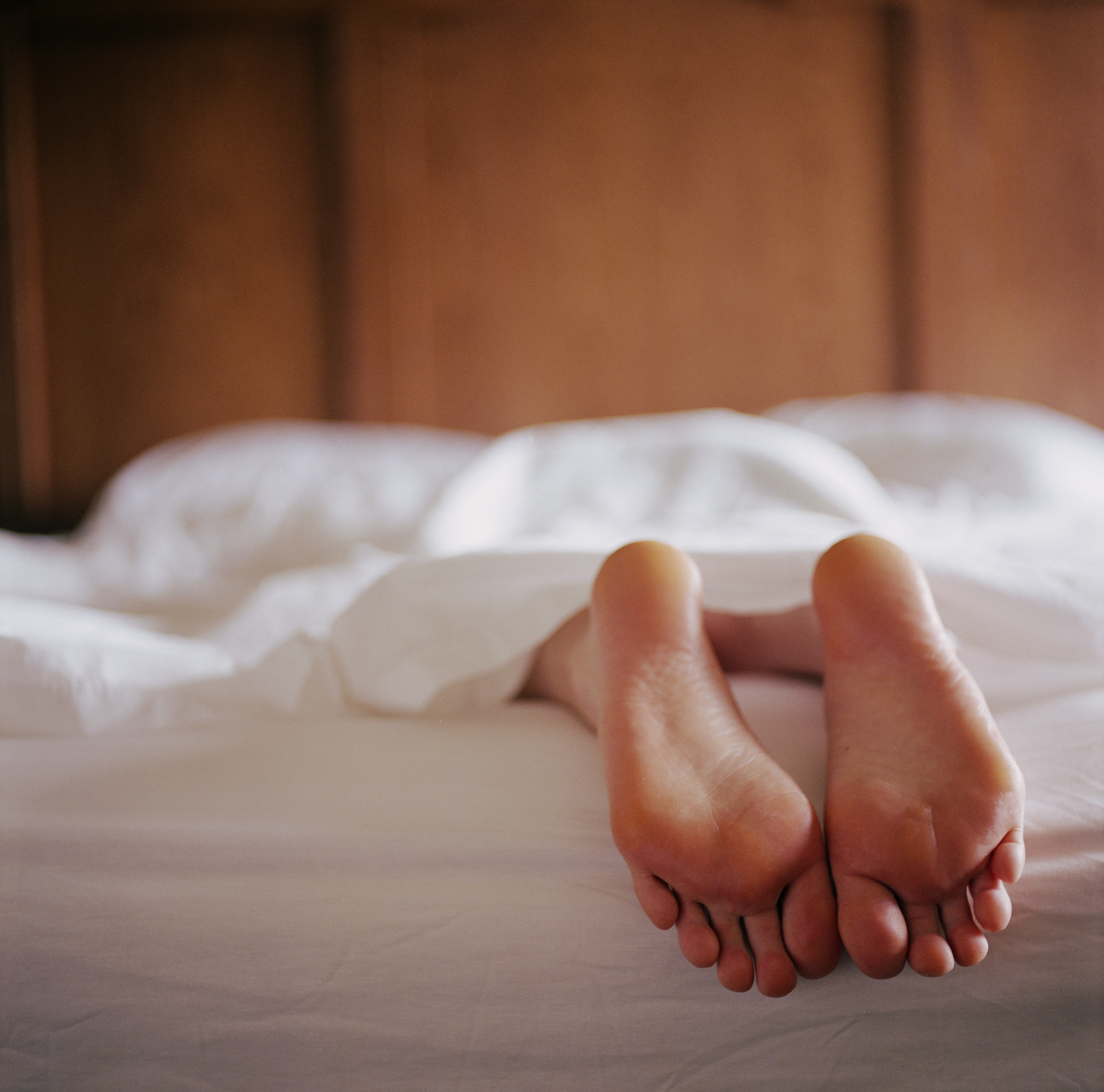
How to Get Back to Sleep After Waking Up at Night


Waking up throughout the night is normal. Most adults do it between two and six times per night—and if you’re a good sleeper, these wakings will be so brief that you likely won’t remember them, says Lynelle Schneeberg, a sleep psychologist and assistant professor of psychiatry at Yale Medicine. 

But for some people, nighttime wakings are so intrusive that they experience what Schneeberg calls “the download.”

“You wake up and think, Why am I awake? How long have I been asleep? How much longer do I have to sleep?” she says. You might start worrying about something that’s been on your mind, whether it’s a big presentation at work or a conflict with a family member. After the download, you’re up.

[time-brightcove not-tgx=”true”]

Even people who have no trouble falling asleep can struggle with night wakings. These expert tips will help you figure out what’s waking you up—and how to get back to sleep. 

Rule out medical conditions 

One good first step is to rule out intrinsic sleep disorders, says Dr. Venkata Mukkavilli, a psychiatrist specializing in sleep medicine at UT Southwestern Medical Center’s O’Donnell Brain Institute. These can include obstructive sleep apnea—a condition in which a person’s airway becomes blocked, pausing their breathing—and restless leg syndrome, a nervous system disorder characterized by an urge to move one’s legs at night. Signs of obstructive sleep apnea include snoring and waking up gasping.

Read More: How to Sleep When It’s Really Hot Outside

Other chronic medical conditions can also contribute to difficulty staying asleep at night, Mukkavilli says. These include depression, bipolar disorder, post-traumatic stress disorder (PTSD), anxiety, fibromyalgia, cancer, autoimmune diseases, and arthritis. Menopause can also cause night wakings due to hot flashes, as can an enlarged prostate, as it often leads men to urinate more frequently at night. 

Cut out alcohol and limit your caffeine

Even though alcohol might seem like it’s helping you sleep well, it’s probably doing the opposite. “It increases your sleepiness, but decreases your quality of sleep,” Mukkavilli says. People who drink alcohol regularly might fall asleep quickly, but they’ll often wake up in the middle of the night because alcohol can inhibit the body’s ability to enter a deep stage of sleep. It’s also a diuretic, so it can cause people to urinate more.   

It should come as no surprise that you should limit your coffee, tea, and soda intake as well, since caffeine is a stimulant. Schneeberg’s recommendation is to have no more than three or four eight-ounce cups of caffeinated beverages a day, preferably all before noon. “Caffeine has a half-life of three to five hours, so if you have coffee too late in the day, you might still have some caffeine in your bloodstream around bedtime,” she says.

Watch what (and when) you eat

If you find yourself waking up multiple times a night, consider moving your dinnertime earlier, says Dr. Vishesh Kapur, a professor and director of sleep medicine at the University of Washington School of Medicine. If you eat a very large meal too late at night, the digestion process could wake you up. Spicy foods, acidic foods, and fatty foods are particularly troublesome. 

Schneeberg agrees—she often tells patients to have no large meals within three hours of bedtime. But she’s all in favor of a small bedtime snack, such as toast with peanut butter or oatmeal cookies with milk. “Often it’s comforting, relaxing, and doesn’t give your body too much to digest,” she says.

Read More: How to Get Real Rest

Many people who wake up at night head to the kitchen for a middle-of-the-night munch, but Schneeberg warns against doing this. “[This] is a terrible idea actually, because then you set an alarm to get up and eat in your body,” she says. Eating crackers at 2 a.m. will teach your body to expect them. 

Move up your workout

Exercise is a wonderful way to improve your sleep quality. Research has shown it can help people fall and stay asleep because it increases production of the sleep-regulating hormone melatonin, reduces stress, improves mood, and regulates your body’s temperature, which can help you doze off.

But if you find yourself waking up multiple times a night, try not to exercise in the evening, preferably within two hours of bedtime, Mukkavilli says. Research found that intense physical activity late at night can impact sleep quality, likely because it increases your heart rate and body temperature. 

Don’t check your phone

Phones are stimulating, so checking them at night—even just to see what time it is—can keep you up longer. If you find yourself tempted to look at your phone, Kapur recommends leaving it out of your bedroom. 

The same goes for your TV, tablet, laptop, and other electronic devices. Melatonin is produced in the absence of light, Mukkavilli says, so using these devices can inhibit your body’s production of it.

Get out of bed

Most experts recommend staying in bed after night wakings and trying to fall back asleep for 15 to 20 minutes. If you’re still awake after that window, get out of bed and go to a calm, quiet place in your home to do something relaxing like reading, completing a puzzle, or listening to an audiobook, Schneeberg says. (If you find reading particularly soothing, she believes it’s OK to do this activity in bed for up to 30 minutes, as it often helps people fall back asleep.)

Avoid naps when possible

Napping can be an effective way to recharge when you’re tired. But if you’re struggling with night wakings, napping during the day—especially for too long or too late in the day—could impact your nighttime sleep quality. “Generally, if someone is having trouble with getting back to sleep after awakening at night, it’s better not to nap,” Kapur says.

Read More: How to Deal With Sweaty Feet

There are exceptions to this rule. Kapur says naps can be beneficial for people with daytime sleepiness related to obstructive sleep apnea, at least until it’s properly treated. Schneeberg also adds that many older adults tend to need less nighttime sleep as they age, with a nap added in. 

Enhance your environment

Environmental issues are a common cause of night wakings. These could include disruptive noises, like cars driving by; a bedroom that’s too warm (around 65°F is ideal); too much light coming through your window; or movement, such as little kids or pets in your bed. 

Pay attention to whether any of these are waking you up at night, and make adjustments accordingly. For example, if you always wake up because the sun peeks in at 5 a.m., hang up blackout curtains. Or, if you wake up feeling warm, set your thermostat a few degrees cooler the next night. 

Consider doing CBT-I for insomnia

There are three primary types of insomnia: sleep onset insomnia (difficulty falling asleep), sleep maintenance insomnia (difficulty staying asleep), and early waking, a subset of sleep maintenance insomnia, Mukkavilli says. 

If you’ve ruled out medical conditions and have tried to improve your sleep habits, and you’re still struggling with night wakings, consider cognitive behavioral therapy for insomnia, or CBT-I. “It’s as effective as medication,” Mukkavilli says, and it typically lasts just eight weeks. “Even though it’s a short duration, it can have a lasting effect for the rest of someone’s life.”

Unfortunately, there are only around 150 to 200 sleep therapists who practice CBT-I in the country, Mukkavilli says, so it can be difficult to get an appointment (check this list of providers to get started). If you can’t schedule an appointment right away, there are several online CBT-I tools that are very helpful, Mukkavilli says.


Categories
Sites

SE Cupp: When it comes to Hunter Biden, the GOP’s hypocrisy is on full display – CNN


The post SE Cupp: When it comes to Hunter Biden, the GOP’s hypocrisy is on full display – CNN first appeared on The Trump Investigations – trumpinvestigations.net – The News And Times.


Categories
Sites

Inside Trump’s “F–king Crazy” ‘Apprentice’ Negotiations With His Arch Frenemy Jeff Zucker – Vanity Fair


The post Inside Trump’s “F–king Crazy” ‘Apprentice’ Negotiations With His Arch Frenemy Jeff Zucker – Vanity Fair first appeared on The Trump Investigations – trumpinvestigations.net – The News And Times.


Categories
Sites

Opinion | Donald Trump, Crime and Punishment – The New York Times


The post Opinion | Donald Trump, Crime and Punishment – The New York Times first appeared on The Trump Investigations – trumpinvestigations.net – The News And Times.


Categories
Sites

Tom Hanks on potential Trump return: ‘Journey to a more perfect union has missteps’ – Yahoo Entertainment


The post Tom Hanks on potential Trump return: ‘Journey to a more perfect union has missteps’ – Yahoo Entertainment first appeared on The Trump Investigations – trumpinvestigations.net – The News And Times.